10xTravel is part of an affiliate sales network and receives compensation for sending traffic to partner sites, such as CreditCards.com. This site may earn compensation when a customer clicks on a link, when an application is approved, or when an account is opened. This compensation may impact how and where links appear on this site. This site does not include all financial companies or all available financial offers. Terms apply to American Express benefits and offers. Enrollment may be required for select American Express benefits and offers. Visit americanexpress.com to learn more. All values of Membership Rewards are assigned based on the assumption, experience and opinions of the 10xTravel team and represent an estimate and not an actual value of points. Estimated value is not a fixed value and may not be the typical value enjoyed by card members.
Citi is an advertising partner
If you’re a business owner, chances are that you’re insanely busy. So it’s understandable that you don’t want to get bogged down in learning the ins and outs of points and miles. We hear founders say this time and again during our free 30-minute business consults.
But here’s the thing. Every dollar spent on your business is an opportunity to earn points that can cut your operational costs and fund your lifestyle.
No matter what phase of growth your business is going through, credit-card rewards offer the opportunity to protect your bottom line and squeeze maximum value out of your monthly expenses. Startups can redeem points to maximize their working capital while scaling enterprises can earn hundreds of thousands of points on significant tax write-offs.
Here are the five building blocks of every successful business rewards strategy, allowing your company to maximize points earned at every level of growth.

1. Align Significant Business Expenses with Welcome Offer Spending Windows
Welcome offers are the single fastest way to supercharge your points balance. However, without careful planning, your business could end up struggling to reach the minimum spending requirements.
Most premium business cards offer welcome bonuses ranging anywhere from 80,000 to 200,000 points—with some limited-time offers as high as 400,000 points—but they typically require you to hit a spending threshold within the first three to six months of opening the card. While these spending thresholds commonly range between $10,000 and $30,000, some minimum spends can be more than $100,000 for targeted and limited-time offers.
The mistake business owners often make is opening a new card after major spending periods, leaving thousands of dollars worth of effectively free points on the table.
Instead, you need to reverse the process—forecast your largest upcoming expenses and then apply for the right card just before that spend is due. This way, you’re leveraging your business’s natural expenditure to earn thousands of dollars worth of bonus points.
When you approach welcome offers using this method, you won’t spend a dollar extra. Instead, you’re timing your expenditure strategically. This is particularly crucial for businesses with spending that fluctuates seasonally and for smaller businesses that have lower than average expenditure.
Here are some common recurring business expenses that you can use to earn your next business card welcome offer:
- Advertisement campaigns and product launches
- Annual software renewals
- Contractor payments
- Capital investments
- Equipment upgrades
- Insurance premiums
- Inventory restock cycles
- Renovation and maintenance costs
What’s even better is that many of these costs are tax-deductible, meaning that you’re earning bonus points on large tax write-offs, effectively double-dipping on perks.
Imagine your business has a $40,000 Q2 tech stack renewal coming up.
If you open a card offering 150,000 bonus points after spending $20,000, you’ll earn the bonus effortlessly, and the remaining $20,000 worth of spend will still earn base points, boosting the value of a purchase you’d already planned to make.
At a conservative valuation of 2 cents per point, a 150,000-point bonus is worth at least $3,000. Multiply that by four to five strategically timed card applications per year, and you’re looking at close to $15,000 in annual value without changing your spending behavior.
Considering that it’s often possible to redeem points for 5 to 10 cents apiece through transfer partner redemptions, the annual value of your welcome bonuses could easily soar into six-figure territory.
For business owners, earning welcome bonuses strategically is the lowest-effort, highest-ROI pillar of a business credit card rewards strategy.
2. Charge Company Taxes to a Rewards Credit Card
One of the most overlooked point-earning opportunities for business owners is also one of the biggest pain points for your business: taxes.
Federal, state, payroll and sales tax payments can easily account for hundreds of thousands in annual expenses. The Internal Revenue Service (IRS) allows credit card payments through third-party processors that charge fees between 2.89% (Pay1040) and 2.95% (ACI Payments, Inc) for commercial credit cards.
This fee scares many business owners off, but here’s the catch—the value of your points can often outweigh the fee, especially for highly valuable transferable currencies.
For instance, let’s say:
- You owe $60,000 in quarterly taxes.
- You pay through a processor charging 2.89%, costing you $1,734 in fees.
- You earn 120,000 points on a card offering 2X points per dollar spent.
At a redemption value of 2 cents per point, you’ve earned $2,400 worth of points, which works out to a net gain of $666 worth of points once you subtract the processing fee (which is tax deductible). Considering that you can redeem your points for far more than 2 cents apiece, this is a clear win.
For example, if you redeemed your 120,000 points at a value of 5 cents apiece, they’d be worth $6,000.
Now imagine a rapidly scaling business with a $500,000 annual tax burden (payments in excess of $100,000 must be coordinated directly with the payment provider). You’d earn:
- 1,000,000 points on a 2X card
- Worth at least $20,000 at 2 cents apiece
- With a credit card processing fee of $14,450
That’s a net gain of $5,550 simply for routing your tax payments through a credit card. And if you can redeem your points for more than 2 cents each, the upside grows exponentially.
For businesses with significant tax liabilities, this single tactic can create a substantial and predictable points pipeline with no additional spending required. If you can charge your taxes to a new card to earn its welcome offer, the value equation swings even further in your favor.

3. Issue Employee Cards
If your business has shifted from a one-man operation to a team of employees on payroll, issuing employee cards is the next step to unlocking extra rewards.
As the primary cardholder of a business credit card, you can add employees to your account—just like authorized users on consumer card accounts—and issue them with their own cards.
Most business credit cards allow you to set individual spending limits on each employee card, enabling you to give greater spending freedom to certain employees more than others.
Employee cards offer the exact same bonus spending category rates as the primary card, allowing your employees to rack up thousands of extra points per month on company spend. This also simplifies accounting and streamlines your business’s finances, eliminating the unnecessary back-and-forth involved in employee reimbursements.
As the primary account holder, you’re responsible for all charges made to your account, but you’ll also have all rewards credited to your account, enabling you to rack up an eye-watering balance.
Think of it this way. The average cost of a business trip is $1,771 per employee. If you have a team of 10 consultants or sales representatives taking an average of four trips per month, that works out to $70,840 in monthly travel costs.
If you issued your employees a card that earns a baseline rate of 2X miles on all purchases, you’d earn 1,700,160 miles annually on employee travel spend alone.
Your business may spend far less or even far more than these figures, but the point remains that leveraging your employees’ expenditure allows you to rack up significant point balances at a far quicker rate. That translates to more points that you can use to offset operational costs, fund your lifestyle or even use to fund your employees’ personal vacations as a workplace benefit.
Not to mention, certain employee cards offer complimentary lounge access and elite hotel status, unlocking additional travel perks for your employees, making for increased productivity and greater workplace satisfaction.
4. Maximize the Return on Your Spending
Building a high-performing credit-card rewards strategy for your business isn’t a case of spending more, but rather of ensuring every dollar is spent in the right way.
However, maximizing the return on your expenditure doesn’t look the same for every business. Instead, it depends on your business’ spending patterns, team structure, travel needs and the valuation you place on points versus cash back.
Therefore, maximizing the return on your spending begins with selecting the right card for your business. That means selecting a card that supports your business’ spending habits and preferred rewards currency.
Choose the Right Business Credit Card
If 40% to 60% of your monthly spending sits in one category, such as advertising, shipping, cloud services or travel, this should be your primary focus.
Businesses with large advertising spend will benefit from a card that earns a high rate on advertising, social media and cloud purchases, such as the American Express® Business Gold Card (see rates and fees), while consulting firms and sales teams will reap value from a card that rewards travel expenditure.
Choosing a card with elevated multipliers in your biggest categories can increase your annual earnings by more than 100% on the same spend.
For instance, if you maxed out the Amex Business Gold’s $150,000 spending cap in its 4X point category on eligible advertising and software spend, you’d earn 600,000 points annually. If you’re currently getting only 2X points on that equivalent spend, switching to the right card can easily double your earnings.
However, it’s important to note that not all spend fits neatly into a bonus category. For example, no cards earn bonus rates on contractor payments, legal fees or accountant invoices. That’s where a card with a high baseline rewards rate forms an essential part of any business’s rewards strategy.
This ensures that you receive at least 2X points on all company spending, which prevents wasted earning opportunities on large uncategorized—and often recurring—expenses.
Choosing cards with lucrative welcome offers is also key to earning large point balances quickly and can be essential for startups that need large injections of cash (via cashback offers) or points-funded travel to protect their limited working capital. While welcome offers may only form part of the short-term acquisition value of a card, they’re an essential component of any business rewards strategy that help boost your returns.
Lastly, you need to assess the long-term value of your cards. A hotel-heavy team may get more value from a co-branded hotel card while a CEO who travels internationally may value a transferable points currency. Similarly, a company that rarely flies might benefit more from cash back.
Additionally, cardholder perks, such as elite airline, hotel and rental car status or complimentary lounge access as well as annual business and travel credits, are key to assessing a card’s ongoing value.
Maximized Returns Look Different for Different Businesses
For many of us, maximizing returns translates to optimizing bonus category spend for business. And while doing so offers a ton of value, it’s not always the right approach for every type of business.
Category spend optimization requires:
- Holding a number of cards and allocating each of them to certain spending categories
- Issuing employees with these cards and ensuring they use the right card for the right purchase
- Monitoring rewards caps
- Responding to swings in seasonal spending and allocating the right type of card accordingly
For businesses with a significant number of employees and a diverse range of monthly expenses, maximizing bonus spending categories can quickly become a labor-intensive task that outweighs the incremental gain in rewards.
Similarly, high-spend businesses often earn far more points than they can ever redeem. Once your points balance outpaces your ability to redeem them, the marginal value of additional points and category maximization drops dramatically. In these cases, the definition of maximizing your returns changes.
For instance, high-spend businesses may benefit from adding a cashback card to their card portfolio, enabling them to directly improve cash flow, reduce operating costs directly, fund payroll or reinvest into growth, among other things.
Likewise, high-spend businesses or those that are looking for a simple card strategy without hyperfocusing on category maximization may instead want to focus on cards that:
- Earn a high baseline rewards rate
- Offer elite status, free night awards, lounge access perks or companion certificates in exchange for reaching annual minimum spending thresholds
By focusing on these types of cards, your business can still maximize its return on every dollar spent by spending toward a valuable goal.
Lastly, it’s also important to diversify your points. Having 5 million Chase Ultimate Rewards points is no good if you find the deal-of-the-century with All Nippon Airways (ANA).
For this reason, having a good balance of transferable currencies, such as American Express Membership Rewards, Chase Ultimate Rewards and Capital One Miles, ensures that you have maximum flexibility when redemption time comes around.
5. Spend Toward Airline and Hotel Status
As illustrated above, your rewards strategy will differ depending on the size of your business and its spending patterns. For high-spend businesses that are flush with points and miles, spending toward airline and hotel elite status is a great way to continue maximizing the return on your business’s expenditure.
For example, if you charge $200,000 to your Citi® / AAdvantage Business™ World Elite Mastercard® within a calendar year, you’ll earn American Airlines AAdvantage Executive Platinum status.
As an Executive Platinum member, you’ll enjoy systemwide upgrade benefits among many other premium perks, making business travel a whole lot more comfortable. You’ll also get Oneworld Emerald status as an Executive Platinum member, offering alliance-wide perks.
As the card offers 1X Loyalty Points per dollar spent, with additional Loyalty Reward level bonuses as you climb the spending ladder, this can be a valuable end to put your spending toward.
Likewise, if you charge $420,000 to the United Club℠ Business Card, you’d earn the 28,000 Premier Qualifying Points (PQP) required for United Premier 1K status. You’d then need to fly a minimum of just four United flights to qualify for Premier 1K status.
You could also charge $255,000 to your Delta SkyMiles® Reserve Business American Express Card (see rates and fees), thanks to the card’s 2,500 MQD headstart, to earn Diamond Medallion status, Delta Air Lines’ highest status tier.
If you fly a lot for business, chances are that you also stay in hotels frequently. Therefore, it can make sense to leverage your business’s spending to earn you elite hotel status, too.
For instance, you can earn World of Hyatt Globalist status by charging $120,000 to your World of Hyatt Business Credit Card. Globalist status unlocks late checkout, free parking on free night award stays, 48-hour guaranteed availability and numerous other elite benefits.
Similarly, you can get Hilton Honors Diamond status by charging $40,000 to your Hilton Honors Business Card.
So if the number of points you earn far outpaces the amount you can redeem, consider switching your strategy and spending toward hotel and airline elite status.
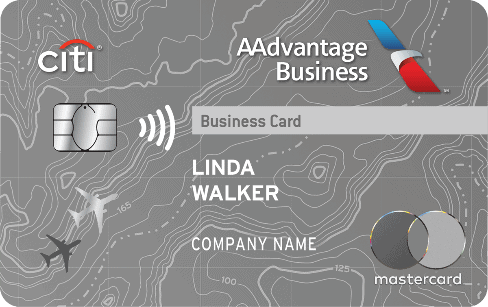
Citi® / AAdvantage Business™ World Elite Mastercard®
For a limited time, earn 75,000
American Airlines AAdvantage® bonus miles
after spending $5,000 in purchases within the first 5 months of account opening.
Annual Fee: $99, waived for the first 12 months


Delta SkyMiles® Reserve Business American Express Card
Earn 125,000
Bonus Miles
after spending $15,000 in purchases on your new Card in your first 6 months of Card Membership. Offer ends 4/1/26.
Annual Fee:
$650
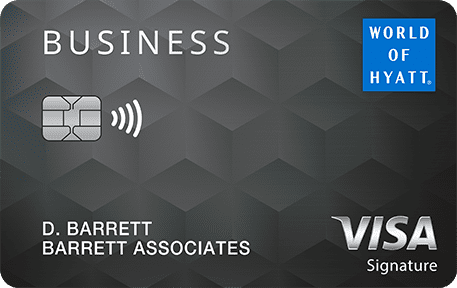
World of Hyatt Business Credit Card
80,000
Bonus Points
after you spend $10,000 on purchases in your first 3 months from account opening.
Annual Fee: $199

Spend Your Way to Increased Savings: Final Thoughts
Your business is already spending the money. So the real question is whether you mind those dollars quietly disappearing into your expense reports or if you want them to earn you free flights, elite status and cut your operating costs in the process.
By forecasting your company’s major expenses, choosing the right cards and leveraging employee spending, you can turn outgoing transactions into incoming rewards.
Start small—earn a welcome bonus, issue an employee card and charge your taxes to your card. And remember: It’s not about spending more, but rather about changing the way you pay. When you do that consistently, your everyday business expenses become your strategic advantage.

New to the world of points and miles? The Chase Sapphire Preferred® Card is the best card to start with.
With a bonus of 75,000 bonus points after you spend $5,000 on purchases in the first 3 months from account opening. , 5x points on travel booked through the Chase TravelSM Portal and 3x points on restaurants, streaming services, and online groceries (excluding Target, Walmart, and wholesale clubs), this card truly cannot be beat for getting started!
after spending $5,000 in purchases within the first 5 months of account opening.
Annual Fee: $99, waived for the first 12 months

after you spend $5,000 on purchases in the first 3 months your account is open
Annual Fee: $695
after spending $15,000 in purchases on your new Card in your first 6 months of Card Membership. Offer ends 4/1/26.
Annual Fee:
$650
after you spend $10,000 on purchases in your first 3 months from account opening.
Annual Fee: $199
Editors Note: Opinions expressed here are author’s alone, not those of any bank, credit card issuer, hotel, airline, or other entity. This content has not been reviewed, approved or otherwise endorsed by any of the entities included within the post.
10xTravel is part of an affiliate sales network and receives compensation for sending traffic to partner sites, such as CreditCards.com. This site may earn compensation when a customer clicks on a link, when an application is approved, or when an account is opened. This compensation may impact how and where links appear on this site. This site does not include all financial companies or all available financial offers. Terms apply to American Express benefits and offers. Enrollment may be required for select American Express benefits and offers. Visit americanexpress.com to learn more. All values of Membership Rewards are assigned based on the assumption, experience and opinions of the 10xTravel team and represent an estimate and not an actual value of points. Estimated value is not a fixed value and may not be the typical value enjoyed by card members.
Editors Note: Opinions expressed here are author’s alone, not those of any bank, credit card issuer, hotel, airline, or other entity. This content has not been reviewed, approved or otherwise endorsed by any of the entities included within the post.
bonus cash back
after you spend $6,000 on purchases in the first 3 months from account opening
to use on Capital One Travel
in your first cardholder year, plus earn 75,000 bonus miles once you spend $4,000 on purchases within the first 3 months from account opening - that’s equal to $1,000 in travel
bonus points
after you spend $5,000 on purchases in the first 3 months from account opening.

Membership Rewards® Points
after you spend $6,000 in eligible purchases on your new Card in your first 6 months of Card Membership. Welcome offers vary and you may not be eligible for an offer. Apply to know if you’re approved and find out your exact welcome offer amount – all with no credit score impact. If you’re approved and choose to accept the Card, your score may be impacted.