10xTravel is part of an affiliate sales network and receives compensation for sending traffic to partner sites, such as CreditCards.com. This site may earn compensation when a customer clicks on a link, when an application is approved, or when an account is opened. This compensation may impact how and where links appear on this site. This site does not include all financial companies or all available financial offers. Terms apply to American Express benefits and offers. Enrollment may be required for select American Express benefits and offers. Visit americanexpress.com to learn more. All values of Membership Rewards are assigned based on the assumption, experience and opinions of the 10xTravel team and represent an estimate and not an actual value of points. Estimated value is not a fixed value and may not be the typical value enjoyed by card members.
Note: Some of the offers mentioned below may have changed or may no longer be available. The content on this page is accurate as of the posting date; however, some of our partner offers may have expired. You can view current offers here.
A few weeks ago we asked you about business card denials after seeing a wave of reports in the community. The early numbers pointed to something specific: applicants using their SSN were getting denied far more often than applicants using an EIN, even at the same point in their 5/24 count. We said at the time we weren’t ready to call it confirmed, and we asked for more data.
We put out an updated poll, with better questions this time, and 73 of you answered. Here’s what it showed.
The gap held, and it’s bigger than before
Of the 73 responses, 49 people applied using their SSN and 24 applied with an EIN. The final outcomes:
SSN applicants: 25 of 49 denied, a 51% denial rate.
EIN applicants: 6 of 24 denied, a 25% denial rate.
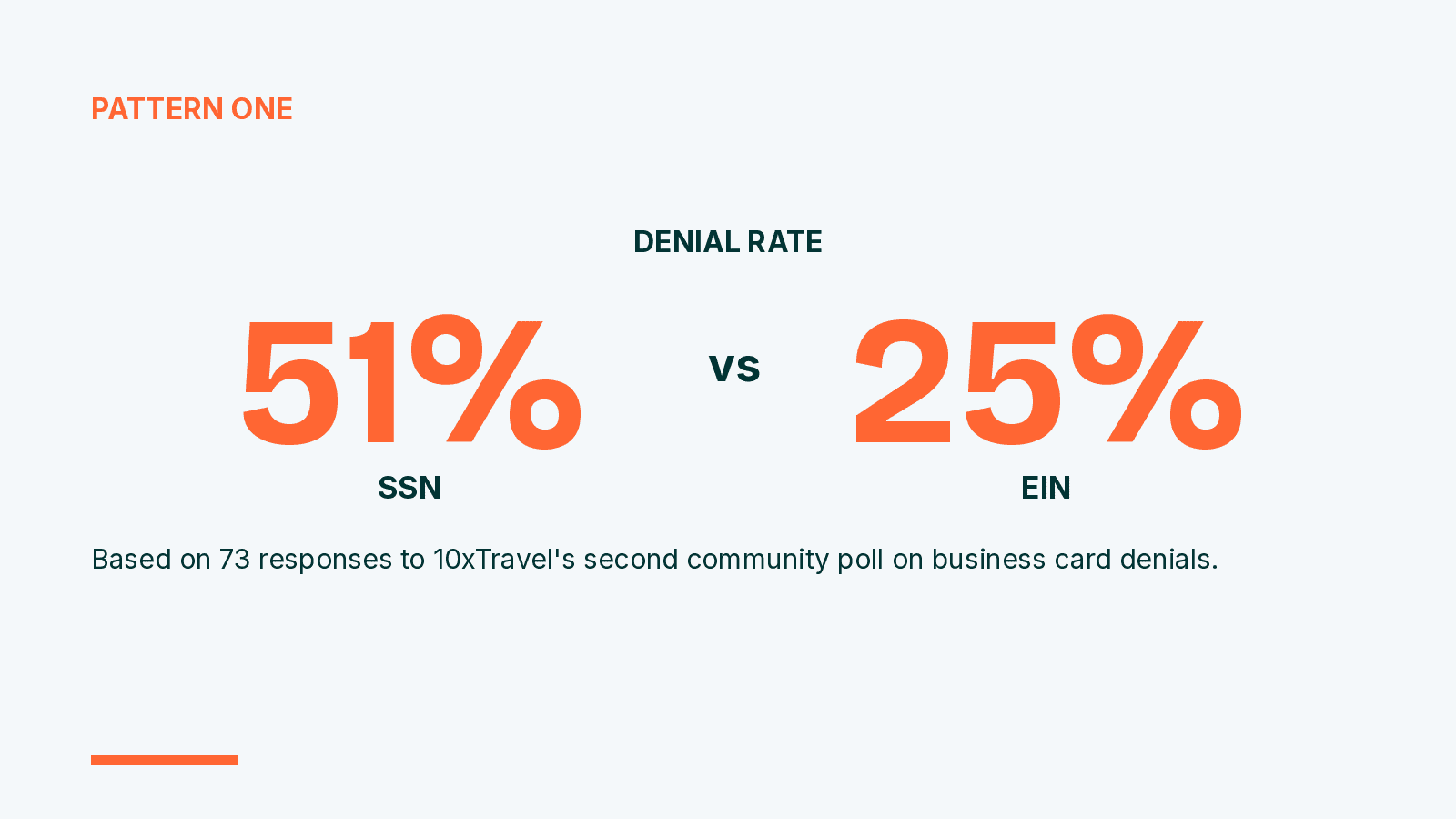
That’s a 26-point gap. The first round showed a 25-point gap. Two separate groups of people, two separate months, same direction, nearly identical size. That’s no longer a fluke reading, that’s a real pattern.
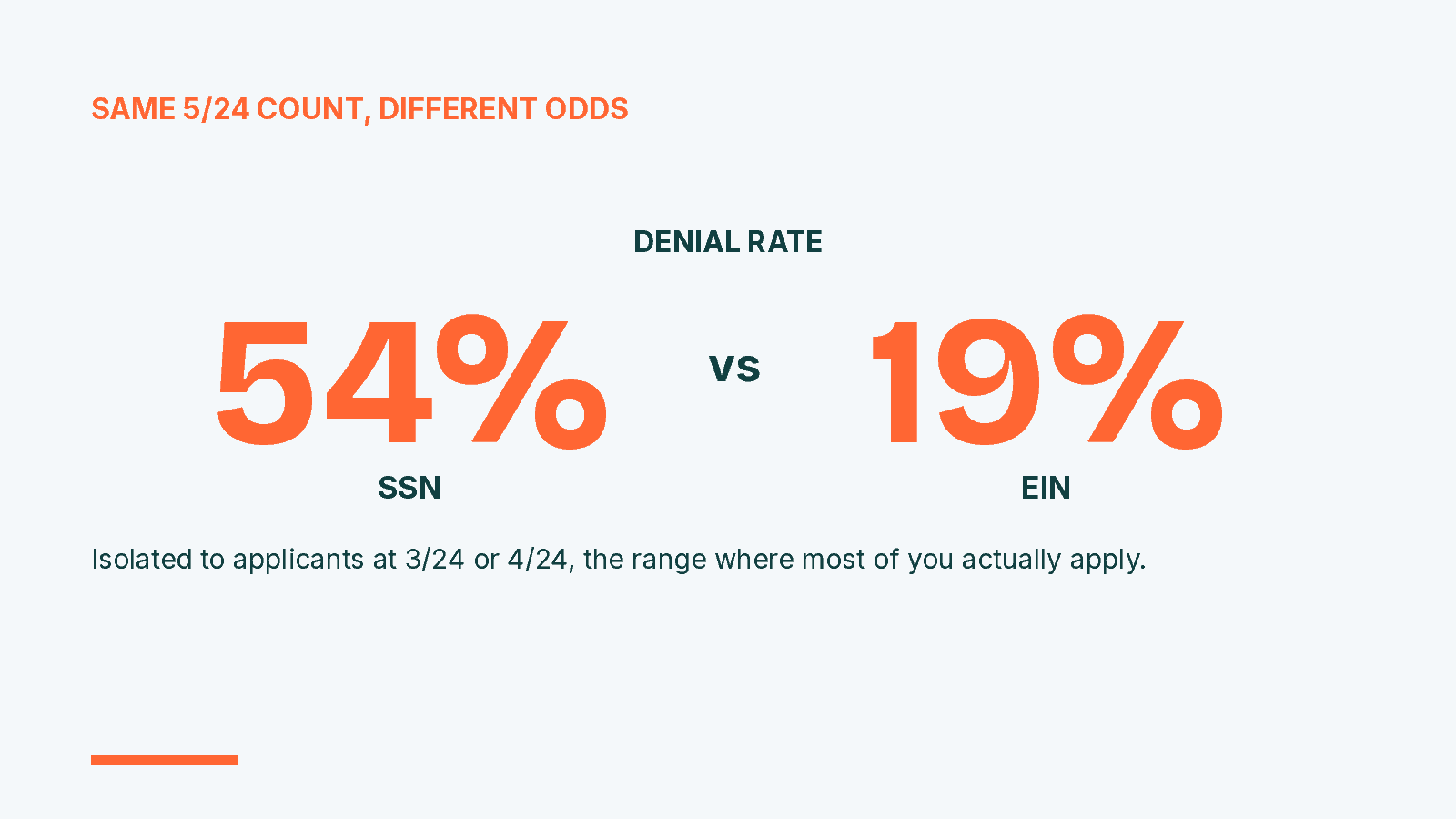
Narrowing it to just the 3/24 and 4/24 range, which is where most of you sit when you apply, the gap didn’t shrink. SSN applicants at that range were denied 54.3% of the time. EIN applicants at the same range were denied 18.8% of the time. We want to be honest that the exact EIN number moved around some between our two survey rounds, which tells us that specific slice is still a small sample. But the overall SSN versus EIN story has now shown up twice, in the same direction, which is the part we’re confident in.
Something new this round: the card you apply for matters just as much
We didn’t have enough data to look at this in round one. This time, almost everyone told us which card they applied for, and the pattern was sharp. We’re looking specifically at people in that same 3/24 to 4/24 range, and this includes everyone surveyed (both SSN and EIN) so this is an apples-to-apples comparison:
The Chase Ink family and Sapphire Reserve for Business℠: 7 of 32 denied, 21.9%.
United, Southwest, World of Hyatt, and IHG cards combined: 13 of 17 denied, 76.5%.
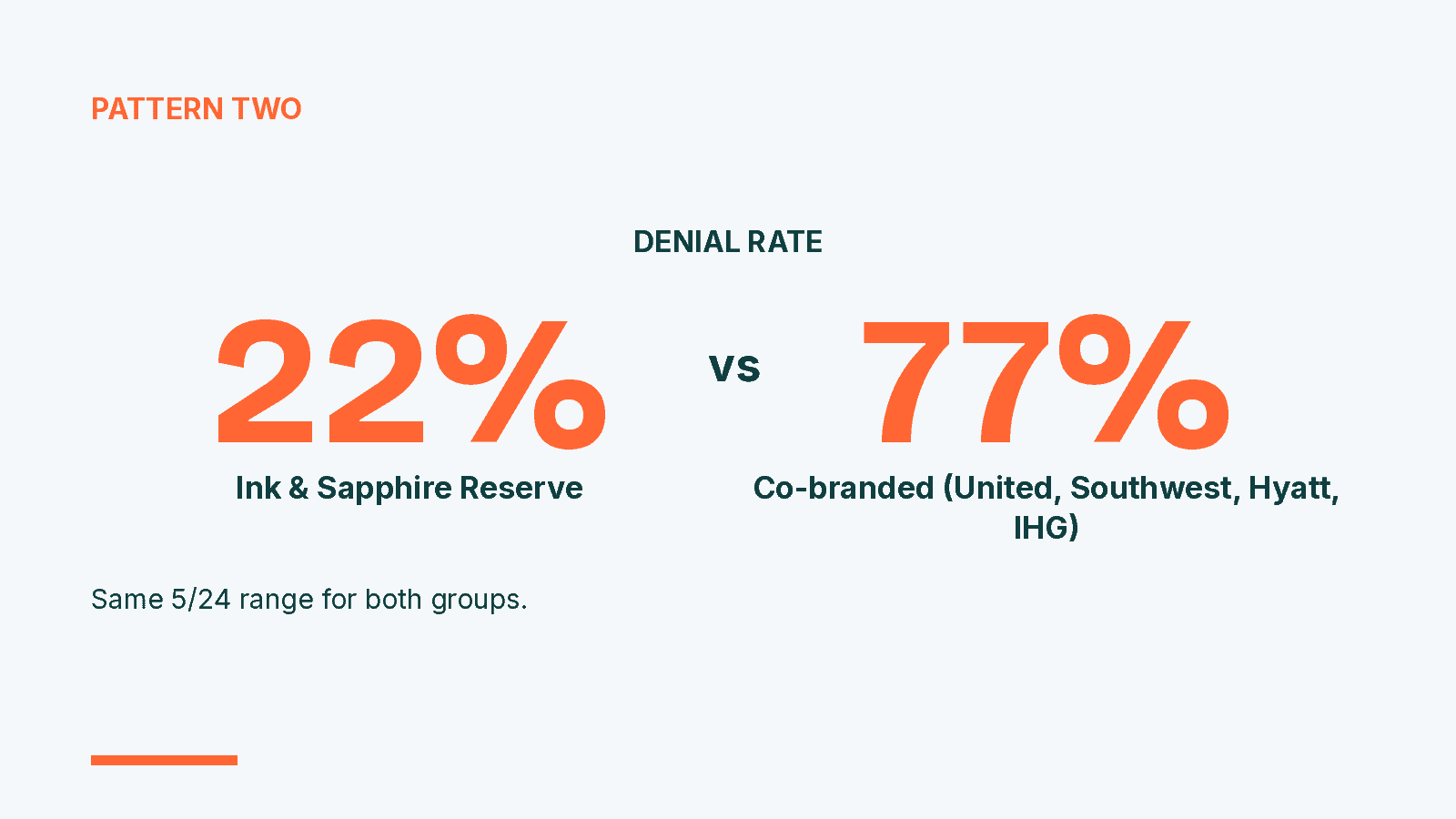
That’s a massive difference, and it’s one of the clearest patterns in either round of this survey. If you’re applying for a co-branded card right now, the data says you’re facing meaningfully steeper odds than someone applying for an Ink card or the Sapphire Reserve for Business, even at the exact same point in your 5/24 count.
We don’t know for certain why, but here’s a theory worth putting out there. Co-branded cards split the cost of your welcome bonus with the airline or hotel partner. It’s possible that shared cost gives the bank more incentive to be selective about who actually gets approved for those specific products. That’s a theory, not a confirmed reason, but it’s consistent with what the numbers are showing.
Two smaller findings worth knowing
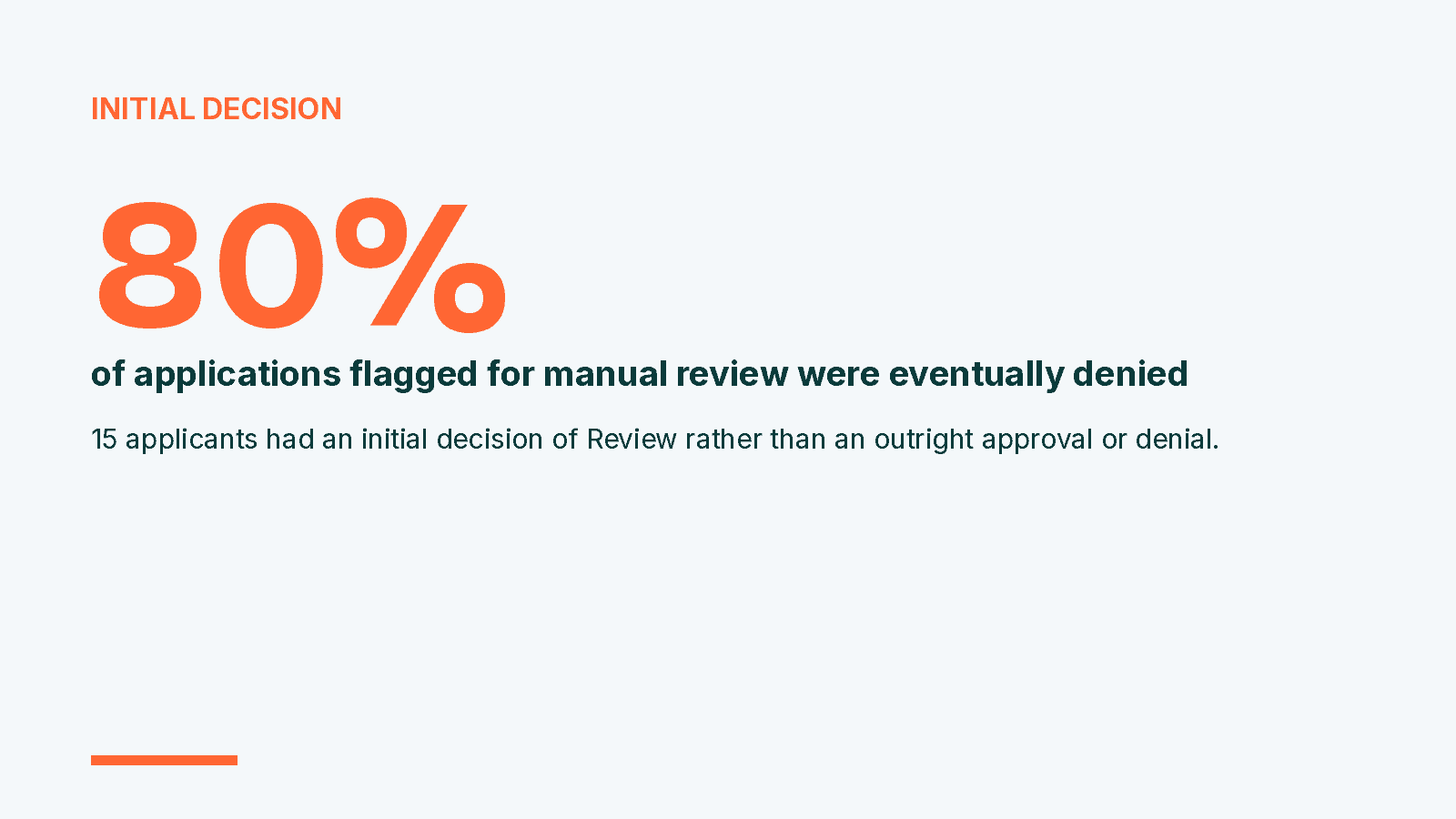
If your application gets flagged for manual review instead of an instant decision, that’s closer to a soft denial than a coin flip. In this round, 15 people had their initial decision come back as “under review.” Of those 15 people, 12 of them (80%) were ultimately denied.
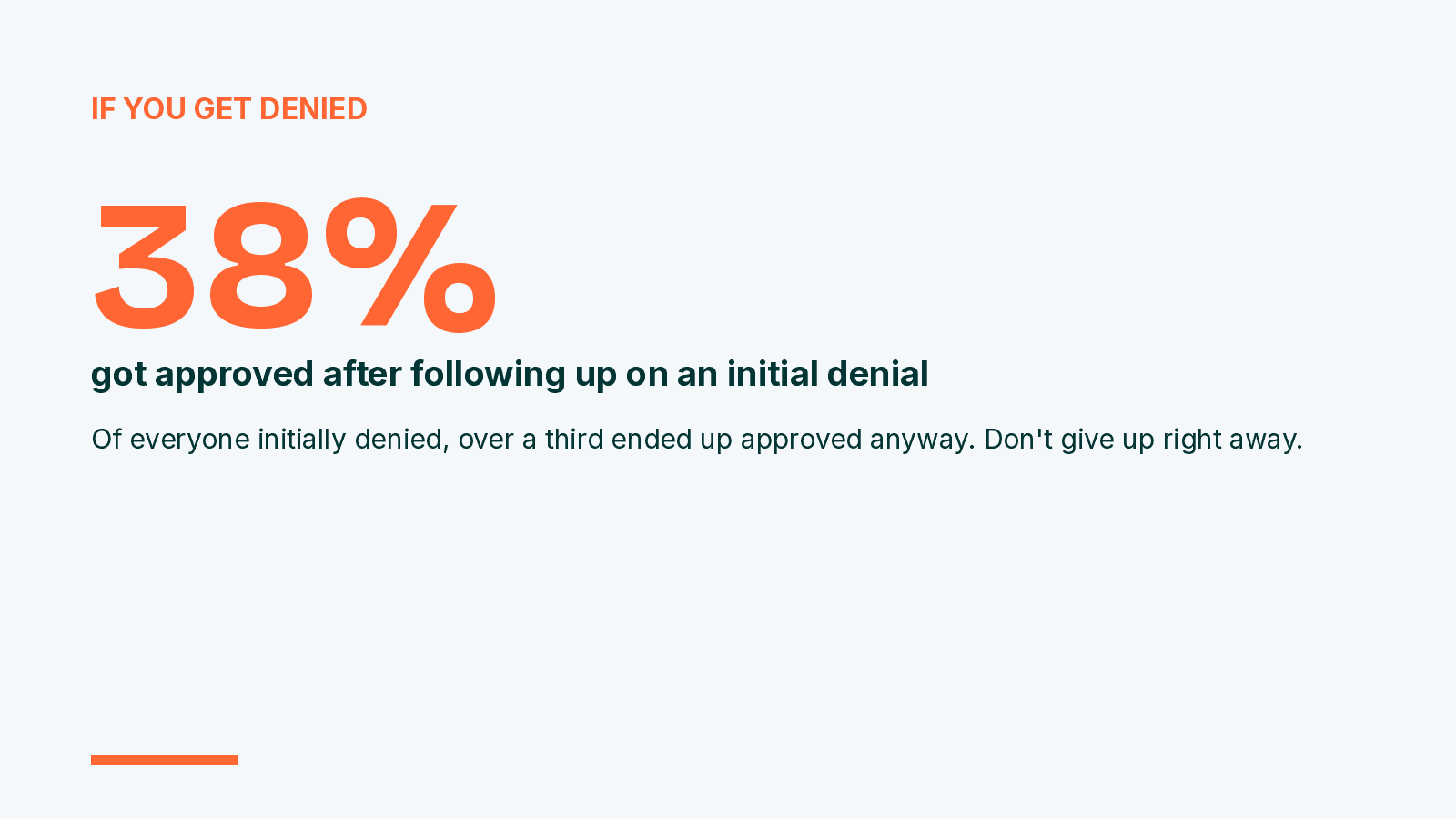
A denial doesn’t always stick, either. In our data, 38.5% of people who followed up after being denied ended up getting approved anyway. If you get denied, it’s worth not giving up right away.
What we’re not going to claim
We looked at revenue reported on the application and how long the business had existed. Neither showed a pattern reliable enough to put in front of you. Reporting a higher revenue figure didn’t meaningfully improve approval odds in our data, and we’re not going to repeat advice that isn’t backed by what people actually told us.
Where this leaves us
We’re not running this poll a third time. Two rounds and over 150 combined responses is a solid base, and the two clearest findings, the SSN versus EIN gap and the Ink versus co-branded gap, showed up consistently enough that we think they’re worth knowing before your next application. This was never a scientific study, it’s a community of people comparing notes, and we think that’s exactly where its value is.
New to the world of points and miles? The Capital One Venture Rewards Credit Card is the best card to start with.
Current offer: Limited Time Offer: Enjoy a $300 stays credit, plus earn 75K bonus miles once you spend $4,000 on purchases within 3 months from account opening.
Earn 5X miles on hotels, vacation rentals and rental cars booked through Capital One Travel; 2X miles on all purchases.
Editors Note: Opinions expressed here are author’s alone, not those of any bank, credit card issuer, hotel, airline, or other entity. This content has not been reviewed, approved or otherwise endorsed by any of the entities included within the post.
10xTravel is part of an affiliate sales network and receives compensation for sending traffic to partner sites, such as CreditCards.com. This site may earn compensation when a customer clicks on a link, when an application is approved, or when an account is opened. This compensation may impact how and where links appear on this site. This site does not include all financial companies or all available financial offers. Terms apply to American Express benefits and offers. Enrollment may be required for select American Express benefits and offers. Visit americanexpress.com to learn more. All values of Membership Rewards are assigned based on the assumption, experience and opinions of the 10xTravel team and represent an estimate and not an actual value of points. Estimated value is not a fixed value and may not be the typical value enjoyed by card members.
Editors Note: Opinions expressed here are author’s alone, not those of any bank, credit card issuer, hotel, airline, or other entity. This content has not been reviewed, approved or otherwise endorsed by any of the entities included within the post.
bonus cash back
after you spend $6,000 on purchases in the first 3 months from account opening.
earn 75K bonus miles
once you spend $4,000 on purchases within 3 months from account opening.
bonus points
after you spend $5,000 on purchases in the first 3 months from account opening.
Membership Rewards® Points
after you spend $8,000 in eligible purchases on your new Card in your first 6 months of Card Membership. Welcome offers vary and you may not be eligible for an offer. Apply to know if you’re approved and find out your exact welcome offer amount – all with no credit score impact. If you’re approved and choose to accept the Card, your score may be impacted.