10xTravel is part of an affiliate sales network and receives compensation for sending traffic to partner sites, such as CreditCards.com. This site may earn compensation when a customer clicks on a link, when an application is approved, or when an account is opened. This compensation may impact how and where links appear on this site. This site does not include all financial companies or all available financial offers. Terms apply to American Express benefits and offers. Enrollment may be required for select American Express benefits and offers. Visit americanexpress.com to learn more. All values of Membership Rewards are assigned based on the assumption, experience and opinions of the 10xTravel team and represent an estimate and not an actual value of points. Estimated value is not a fixed value and may not be the typical value enjoyed by card members.
Parenthood is overwhelming. You have a million-and-one life lessons to impart on your children while ensuring they’re happy, healthy, educated and a thousand other things. But one of the best life lessons to teach your kids is the value of money management and financial well-being.
While that might be hard to get your kids excited about, it’s essential to ensure they understand the dos and don’ts of financial health and wealth.
A key part of financial health is credit: how to build your credit score, how to protect it and how to avoid financial ruin when taking out a line of credit. Using credit to buy things you can’t afford is easy; dealing with the consequences of doing so is far more difficult.
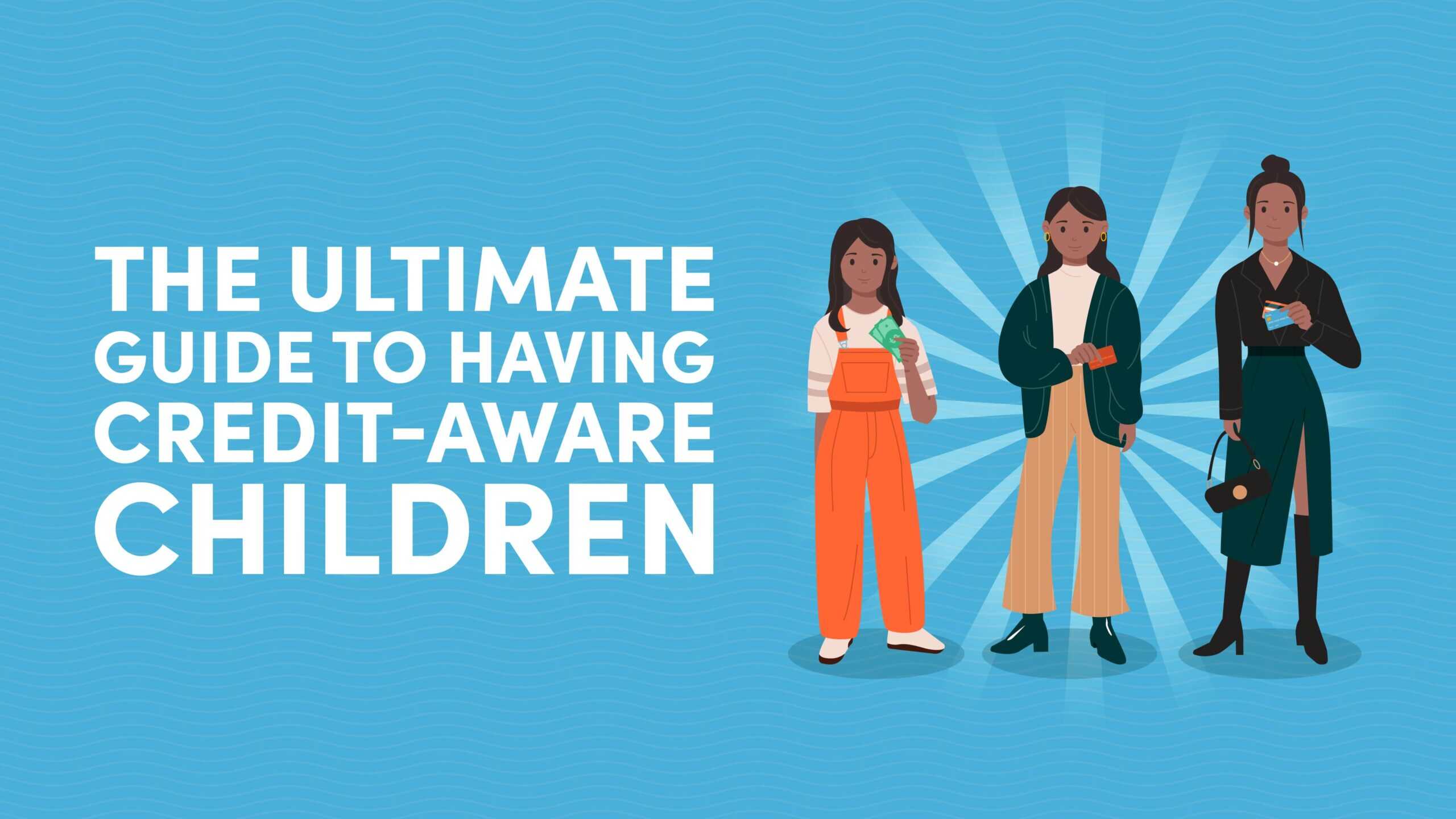
In this ultimate guide, we’ll run through the key strategies you can use to make your children credit-aware and set them up for financial success. We’ve broken these strategies down by age group, so you can focus on the best strategies for your children’s specific ages.

Credit Strategies for Preteens and Younger
Lessons in Credit and Money Management
For kids who aren’t yet teenagers, you’ll want to focus on teaching them how credit works and the value of money management.
The easiest and most effective way to teach them these lessons is to turn it into a game. You know your kids better than anyone, so the exact game or method you use will be suited to their interests and personalities. However, whatever the game is, it should teach them the value of taking out credit, the importance of paying off your debts on time and the pitfalls of failing to do the latter.
As a bonus, you could also teach them how credit scores work by pretending to build their own credit as part of the game.
Here’s an example.
Let’s say you give your child pocket money on a regular basis (weekly or monthly). And, they happen to want a new bicycle. However, they don’t currently have enough money to pay for it. That’s where you come in as the lender, offering them a “loan” to make up the difference, which they can pay back in installments.
You can then tweak the game to teach them specific lessons and habits as you see fit.
For instance, you could set an exact date by which they need to pay you every month, emphasizing the value of timely payments. You could also take non-monetary forms of payment, to make it more manageable and fun for your kids. For example, you could count homework, learning, household chores or the completion of any other productive tasks as a form of payment, allowing your kids to keep more of their money while learning the value of timely credit repayment.
If your kids are late with payments, you could consider charging them “interest”—be it higher repayments or more household tasks—but remember to keep it as fun as possible for your kids; otherwise, they’ll lose interest in the game and forget the life lesson. At this stage, it’s far more important to reward good borrowing habits than punish bad ones. That way, they’ll stay engaged and take more from the experience.
Depending on how well they paid you back, you could then determine their “credit score.”
For example, if they paid you back on time and did a great job, you could show them how their positive payment history as a borrower opens up new possibilities to them in the future. The next time they‘re short of cash and want to buy something, you could extend them a greater line of credit. And the more often they take out a line of credit with you and pay you back on time, the longer their history is as a borrower and thus the more reliable they become.
That way, they’ll learn what goes into a credit score and how they can improve their own score later in life.
You can spin it however you like and augment the game to suit your kids. The main point is to motivate your children to become reliable borrowers. If they understand that they get more of what they want when they make repayments on time and that the more often they do that, the better the results will be, then you’ve set them up for success in the real world.

Credit Growth for Teenagers
Add Your Children as Authorized Users
Once your kids cross into the confusing and turbulent land of their teenage years, you can consider adding them as an authorized user to one of your existing credit card accounts.
An authorized user has their own credit card that’s connected to your account as the primary cardholder. That means all their spending earns points, miles or cash back that posts to your account. However, it also means that you’re the one to foot the bill—primary cardholders are solely responsible for authorized user spending.
While there’s no federal minimum age requirement for authorized users, card issuers have their own rules. Some issuers apply no age restrictions to authorized users, while others stipulate a minimum age. For example, American Express and Barclays require their authorized users to be at least 13 years old, Capital One requires them to be 18 years old and Chase doesn’t have any age requirements for authorized users.
Adding your child as an authorized user offers a range of benefits, as well as a few potential drawbacks to consider.
First, adding your child as an authorized user can help them build their own credit score. The keyword here is “can.” Depending on the card issuer as well as your own credit history, your child may or may not build their credit score as an authorized user.
Not every card issuer reports authorized user activity to the three major credit bureaus (Equifax, TransUnion and Experian). If your card issuer is one that doesn’t, your kid’s status as an authorized user won’t help them build their own credit score. Likewise, certain card issuers report authorized user activity from a specific age onward only. For instance, American Express reports authorized user spending from age 18 and up.
Nevertheless, adding your kid as an authorized user can still help them understand how a credit card works and give them a sense of financial responsibility. Even if it doesn’t build their actual credit score, it enables them to practice using and paying off a credit card within their means and with a safety net. Some card issuers enable you to set spending limits on authorized user cards, which is ideal for giving kids the freedom of a credit card while minimizing the potential risks involved.
If your card issuer does report authorized user activity for kids under 18, your kid has the potential to increase their credit score. Technically, they don’t even need to use their card to do so.
When you add your child as an authorized user, they will effectively inherit (or at least be associated with) your payment history and credit score—good or bad. So if you have an immaculate credit history, it can help boost your kid’s credit score. Lenders don’t usually distinguish between primary cardholder and authorized user payment activity, meaning that simply adding your child to your account without them ever touching their card can help boost their score.
The caveat to this method is that your child will inherit both the good and the bad.
That means if you have late payments, significant debts, high credit utilization and other factors negatively affecting your credit score, adding your child as an authorized user will associate them with this negative payment history and credit profile. Likewise, if your child makes a large purchase using their card that you can’t pay off, that will negatively affect both of your credit scores—this is where trust, education and preset spending limits are essential elements of the authorized user strategy.
Whether or not you allow your child to use their authorized user card is up to you. If you’re trying to impart a lesson, enabling your child to spend and pay off their own authorized user card is a great way to go about doing this. However, if you’re interested purely in increasing your child’s credit score, with the least hassle and risk involved, you can add them to your account without ever giving them their card.

Credit Building for Young Adults
Apply for a Secured Card or Student Card
When your kids have left the nest—or are soon to do so—it’s time for them to get their own credit card.
As per the CARD Act of 2009, you need to be a minimum of 21 years of age to apply for a credit card. However, if your child has their own independent income or if you’re willing to be their co-signer, they can apply for a card when they turn 18.
Depending on their situation, your child can apply for either a student card or a secured card. While similar, these two types of cards have a few notable differences.
A student card gives students access to credit without needing an extensive credit history. This makes it easy for your child to begin building their credit history through regular spending and timely balance payments. As their credit history expands and credit score improves, their credit limit should also increase.
However, if your child isn’t a student and is already in a full-time job, they might be better suited to a secured card. A secured card doesn’t require applicants to have a strong credit history, as the applicant makes a deposit on the card that serves as collateral. It also serves as your credit limit. So if your kid makes a $200 deposit on their secured card, that’ll also be their credit limit.
Using either type of card can be a great stepping stone for building your kid’s credit score. It also helps them manage their money and make punctual payments. In some cases, both student and secured cards offer rewards on spending such as cash back, which can be particularly useful for students and young adults to help offset living costs.
Apply for a Credit Builder Loan
If you want your child to build their credit score while creating a fund for themselves—be it for emergencies, living costs or other financial needs—you should consider applying for a credit builder loan.
When your child applies for a credit builder loan, the lender will deposit the loan into a certificate of deposit (CD) or savings account. Your child will then make monthly payments plus interest on the loan, until the loan term is finished. They will then have access to the balance plus either a portion of the interest already paid or the interest earned through the savings account.
This positive payment history will be reported to the credit bureaus, enabling your child to build their credit history and score. Likewise, they’ll have a lump sum of money saved at the end of the payment term, setting themselves up for greater financial stability.
Just ensure that you’re aware of the fees involved, the length of the payment term and that you’re able to pay off the loan.
Build Your Child’s Credit Score With Student Loans
If your kid is going to a trade school or university, they’ll likely need to take out student loans to pay for their tuition. While student loans can be a financial burden, they’re also a great opportunity to help your kids build their credit.
By making regular student loan payments, your child will add to their credit mix while creating a positive payment history, helping them to boost their credit score.
They can even opt to start paying off parts of their loans during their time at college, to reduce interest accumulation and start building their credit even quicker.
Just keep in mind that student loans are a significant financial commitment which shouldn’t be taken out simply for the purposes of building credit—having a secured card, being an authorized user and taking out a credit builder loan will all boost your kid’s credit score without making student loan payment necessary too. Defaulting on student loan payments will hurt your credit score significantly, so ensure you’re ready to take on the financial responsibility.
To Co-Sign or Not to Co-Sign?
Parents can co-sign for their children when they apply for starter credit cards and loans. This increases the likelihood of your child being approved for these products by making you financially liable for debt payment.
On the one hand, co-signing can help give your kids a great start in the world of credit building and gives them a security net. On the other hand, your credit score is on the line if things go south.
You may want to teach your child the value of protecting your own credit score by not co-signing for them. Alternatively, if you can trust your child to be financially responsible and you’re willing to take on the associated risks, co-signing can open up their options when it comes to approval for credit-related products.
Put Your Kids on the Road to Credit Success
Building your credit score is one of life’s (not-so-fun) games. It’s an easy game to play and win at, but if you don’t know the rules, you can end up in trouble.
Make sure your kids know the rules, how to play and set them up for success by imparting the principles of responsible credit usage and financial management.
Once they’ve built their credit score, they can apply for one of the best beginner credit cards and start traveling the world on points and miles and saving their cash for down payments, emergency funds and many of life’s other expenses.

New to the world of points and miles? The Chase Sapphire Preferred® Card is the best card to start with.
With a bonus of 75,000 bonus points after you spend $5,000 on purchases in the first 3 months from account opening. , 5x points on travel booked through the Chase TravelSM Portal and 3x points on restaurants, streaming services, and online groceries (excluding Target, Walmart, and wholesale clubs), this card truly cannot be beat for getting started!
Editors Note: Opinions expressed here are author’s alone, not those of any bank, credit card issuer, hotel, airline, or other entity. This content has not been reviewed, approved or otherwise endorsed by any of the entities included within the post.
10xTravel is part of an affiliate sales network and receives compensation for sending traffic to partner sites, such as CreditCards.com. This site may earn compensation when a customer clicks on a link, when an application is approved, or when an account is opened. This compensation may impact how and where links appear on this site. This site does not include all financial companies or all available financial offers. Terms apply to American Express benefits and offers. Enrollment may be required for select American Express benefits and offers. Visit americanexpress.com to learn more. All values of Membership Rewards are assigned based on the assumption, experience and opinions of the 10xTravel team and represent an estimate and not an actual value of points. Estimated value is not a fixed value and may not be the typical value enjoyed by card members.
Editors Note: Opinions expressed here are author’s alone, not those of any bank, credit card issuer, hotel, airline, or other entity. This content has not been reviewed, approved or otherwise endorsed by any of the entities included within the post.
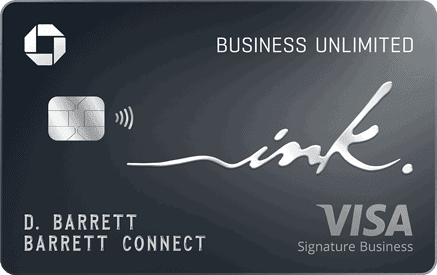
bonus cash back
after you spend $6,000 on purchases in the first 3 months from account opening
to use on Capital One Travel
in your first cardholder year, plus earn 75,000 bonus miles once you spend $4,000 on purchases within the first 3 months from account opening - that’s equal to $1,000 in travel
bonus points
after you spend $5,000 on purchases in the first 3 months from account opening.

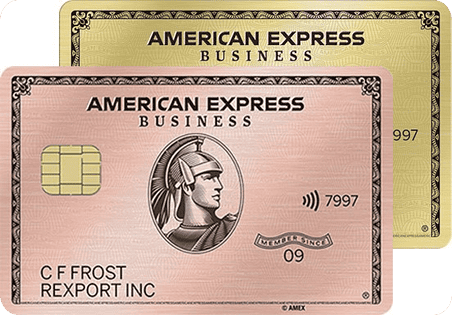
Membership Rewards® Points
after you spend $6,000 in eligible purchases on your new Card in your first 6 months of Card Membership. Welcome offers vary and you may not be eligible for an offer. Apply to know if you’re approved and find out your exact welcome offer amount – all with no credit score impact. If you’re approved and choose to accept the Card, your score may be impacted.