10xTravel is part of an affiliate sales network and receives compensation for sending traffic to partner sites, such as CreditCards.com. This site may earn compensation when a customer clicks on a link, when an application is approved, or when an account is opened. This compensation may impact how and where links appear on this site. This site does not include all financial companies or all available financial offers. Terms apply to American Express benefits and offers. Enrollment may be required for select American Express benefits and offers. Visit americanexpress.com to learn more. All values of Membership Rewards are assigned based on the assumption, experience and opinions of the 10xTravel team and represent an estimate and not an actual value of points. Estimated value is not a fixed value and may not be the typical value enjoyed by card members.
Note: Some of the offers mentioned below may have changed or may no longer be available. The content on this page is accurate as of the posting date; however, some of our partner offers may have expired. You can view current offers here.
Bilt’s reputation hinges on a single idea: your rent or mortgage is probably your biggest monthly expense, and it shouldn’t be a rewards dead zone.
That premise hasn’t changed. What has changed is how Bilt allows you to earn rewards on your housing costs.
With the launch of Bilt 2.0, the company has moved from a one-card experiment to a tiered credit card ecosystem, adding complexity, flexibility and—depending on your spending profile—either more benefits or more friction.
The question now is whether any version of Bilt still makes sense for you, given your spending patterns and broader card strategy.
This guide breaks down what’s changed, what’s stayed the same and how to evaluate your Bilt 2.0 credit card options.

What’s Changed with Bilt 2.0
The original Bilt Mastercard® launched as a category-defying product: a $0 annual fee card that allowed renters to earn transferable points on rent with no transaction fees. That alone made Bilt unique, but it also made it hard to scale.
Bilt’s original no-annual-fee card limited revenue per user, the ability to segment customers by spend and incentives for higher engagement or loyalty.
Bilt 2.0 reflects a strategic pivot that puts Bilt in line with other mainstream card issuers while retaining its core selling point. The result is a multitier card lineup designed to reward high-spend users and incentivize them to channel all spending through their Bilt 2.0 rewards card.
Bilt has also expanded as a lifestyle platform, offering partnerships and perks with a range of merchants as well as its own internal rewards currency to spend with these partners.
Core Features That Stayed the Same
Despite major structural changes, Bilt preserved the foundational elements that made the original card unique.
All Bilt cards still allow rent—and now mortgage payments—to be made through Bilt without paying transaction fees.
Payments continue to be processed through a linked bank account rather than a credit line, meaning housing costs do not affect credit utilization or available credit.
Bilt Points also remain unchanged, with no expiry date (unless your account is inactive for 18 months) and a long list of lucrative airline and hotel partners.
New Benefits Introduced Across the Lineup
With 2.0, Bilt has added complexity. There are now three Bilt cards, with annual fees ranging from $0 to $495 (see rates and fees), all of which offer the ability to earn up to 1.25X points on housing payments or 4% back in Bilt Cash on nonhousing spend (up to $100 of unused Bilt Cash rolls over to the next year).
However, Bilt’s former rule—that you needed to use your card five times within a billing cycle to earn points—has been replaced with an even stricter requirement.
Under the Housing-only option, your everyday spending determines the points multiplier on housing payments, but primary cardholders still receive a minimum of 250 Bilt points per billing cycle when at least one eligible housing payment is made. You’ll need to spend the equivalent of about 75% of your housing payment to earn 1X points per dollar. This introduces a significant opportunity cost to holding a Bilt card that didn’t exist before.
Cardholders can also now choose whether they earn Bilt points or Bilt Cash. If you opt to earn points, you have to put a minimum amount of nonhousing spend on your card, which is a percentage of your housing payment. The more you spend on the card, the higher the points multiplier will be, as shown below:
| Points multiplier on housing payments | Percentage of non-housing spend required (relative to housing spend) |
|---|---|
| 0.5X | 25% |
| 0.75X | 50% |
| 1X | 75% |
| 1.25X | 100% |
So if you spend $2,000 on rent, you’d need to put the following amounts of nonhousing spend on your card to earn a given points multiplier:
- 0.5X: $500
- 0.75X: $1,000
- 1X: $1,500
- 1.25X: $2,000
If you opt for Bilt Cash, you’ll earn a flat rate of 4% Bilt Cash on everyday spending, in addition to base points. You can use your Bilt Cash to unlock points on housing payments at a conversion rate of $30 in Bilt Cash for every 1,000 Bilt points.
That means you’d need to spend $1,500 in everyday purchases to earn $60 in Bilt Cash. Using that $60 of Bilt Cash, you could then earn 2,000 points on a $2,000 rental or mortgage payment.
You can alternate between Bilt Cash and Bilt points each month, with the new selection taking effect for the following billing cycle.
Each card also offers separate bonus spending categories for everyday purchases, albeit with limited category diversification compared to other travel rewards cards.
Additionally, the annual-fee-incurring Bilt rewards cards offer a selection of cardholder perks, such as hotel credits and complimentary airport lounge access.
Bilt’s cards are now best suited to high spenders who can put enough nonhousing purchases on their card and still have enough leftover spending to charge to additional cards.

Breaking Down the Bilt Card Options
The original Wells Fargo-issued Bilt Mastercard® has been discontinued and replaced by the Bilt 2.0 card lineup. The Bilt Card options now include a tiered lineup of rewards cards, with annual fees to suit every spending profile. Let’s check them out.
The Bilt Blue Card
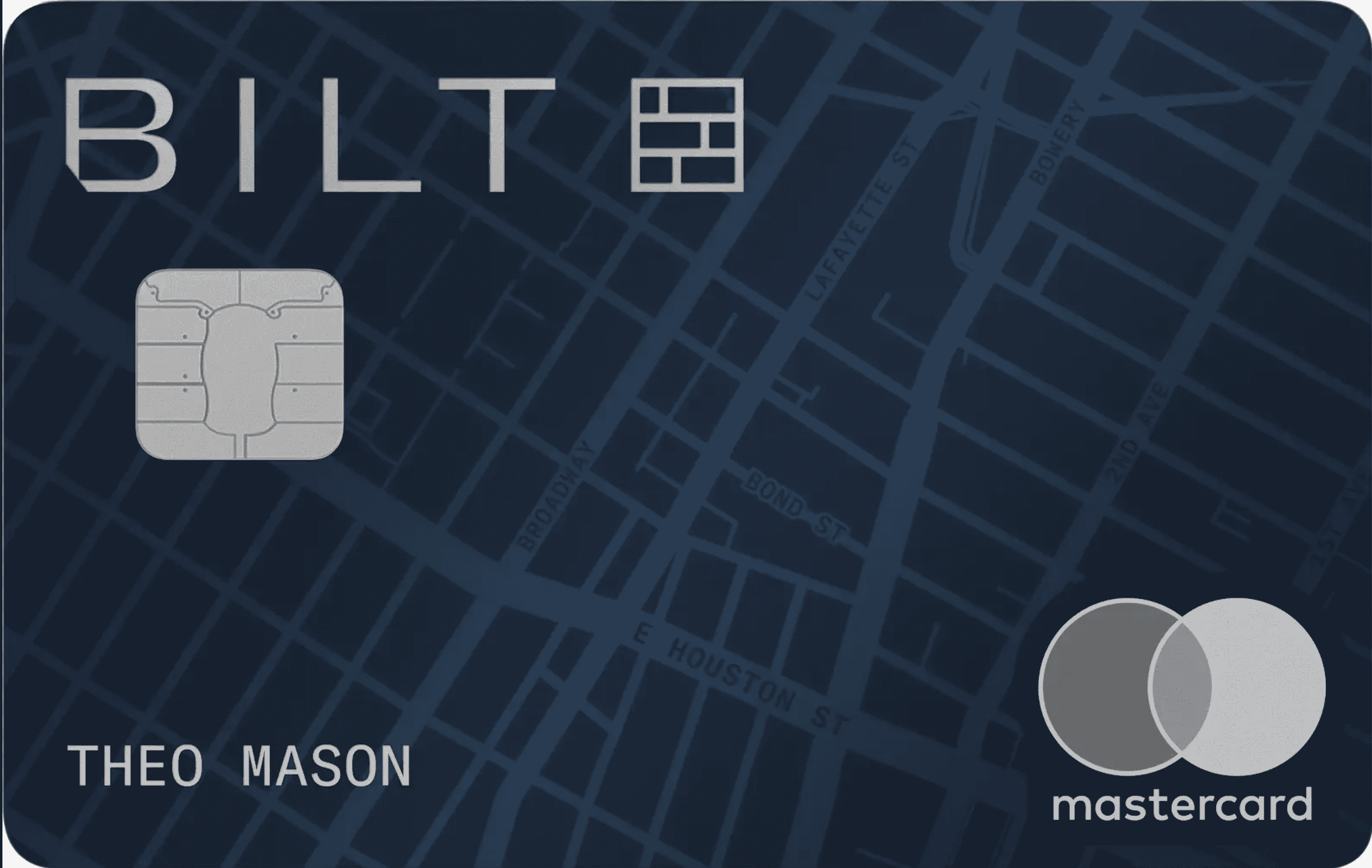
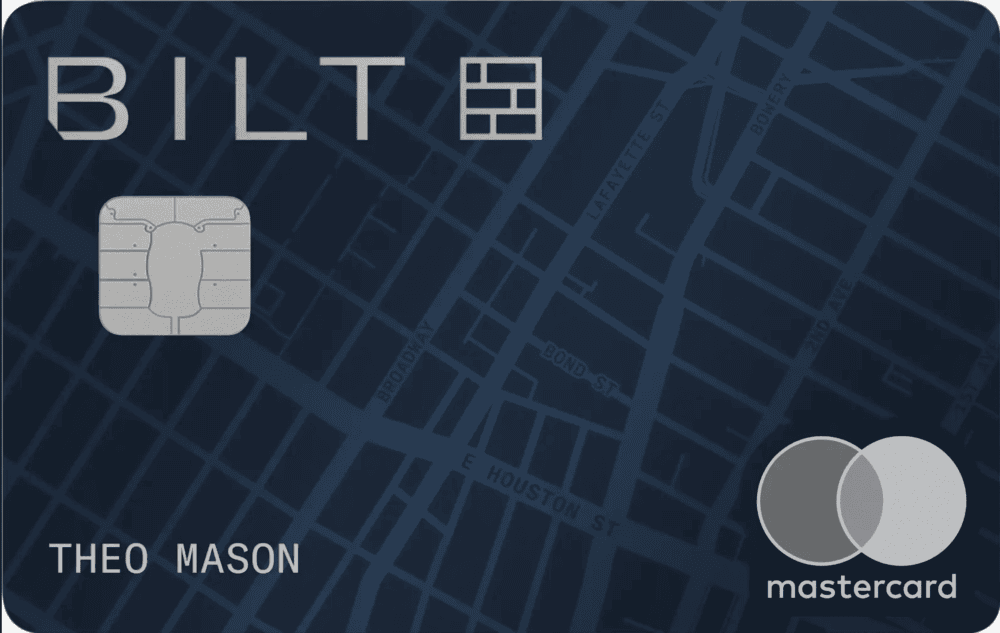
The Bilt Blue Card (see rates and fees) remains the closest version to the original Bilt Mastercard®.
It has a $0 annual fee and offers 1X points on purchases, while still enabling rent payments and access to transfer partners.
This version is best suited to renters or homeowners who want to earn a return on housing costs without investing too heavily in the Bilt rewards system. It works well as a complement to other cards rather than a replacement, particularly if you already optimize dining, travel and grocery spending across other cards.
However, you still need to make nonhousing purchases with the Bilt Blue Card equal to at least 75% of your monthly rent or mortgage payments to earn 1X points on housing spend.
Welcome offer: $100
Bilt Cash
when you apply and are approved. At the end of each calendar, any Bilt Cash balance over $100 will expire.
Premium Card Alternatives
In addition to the Bilt Blue Card, Bilt offers two annual-fee incurring cards:
- Bilt Obsidian Card: $95 annual fee (see rates and fees)
- Bilt Palladium Card: $495 annual fee (see rates and fees)
These cards offer additional bonus spending categories, including a flat rate of 2X points on all purchases for Bilt Palladium cardholders. Bilt Obsidian cardholders can earn either 3X points on groceries (on up to $25,000 per year in spending, then 1X points thereafter) or 3X points on dining with no cap, in addition to 2X points on travel spend.
The Bilt Obsidian Card offers a $100 hotel credit, issued as two semiannual $50 statement credits, for eligible Bilt Travel Portal hotel bookings of at least two nights.
The Bilt Palladium Card also offers complimentary Priority Pass membership and a $400 annual Bilt Travel Hotel credit, issued as two semiannual $200 statement credits, for eligible Bilt Travel Portal hotel bookings of at least two nights. Additionally, the Bilt Palladium Card offers $200 in Bilt Cash (up to $100 of your Bilt Cash balance rolls over into the next calendar year).
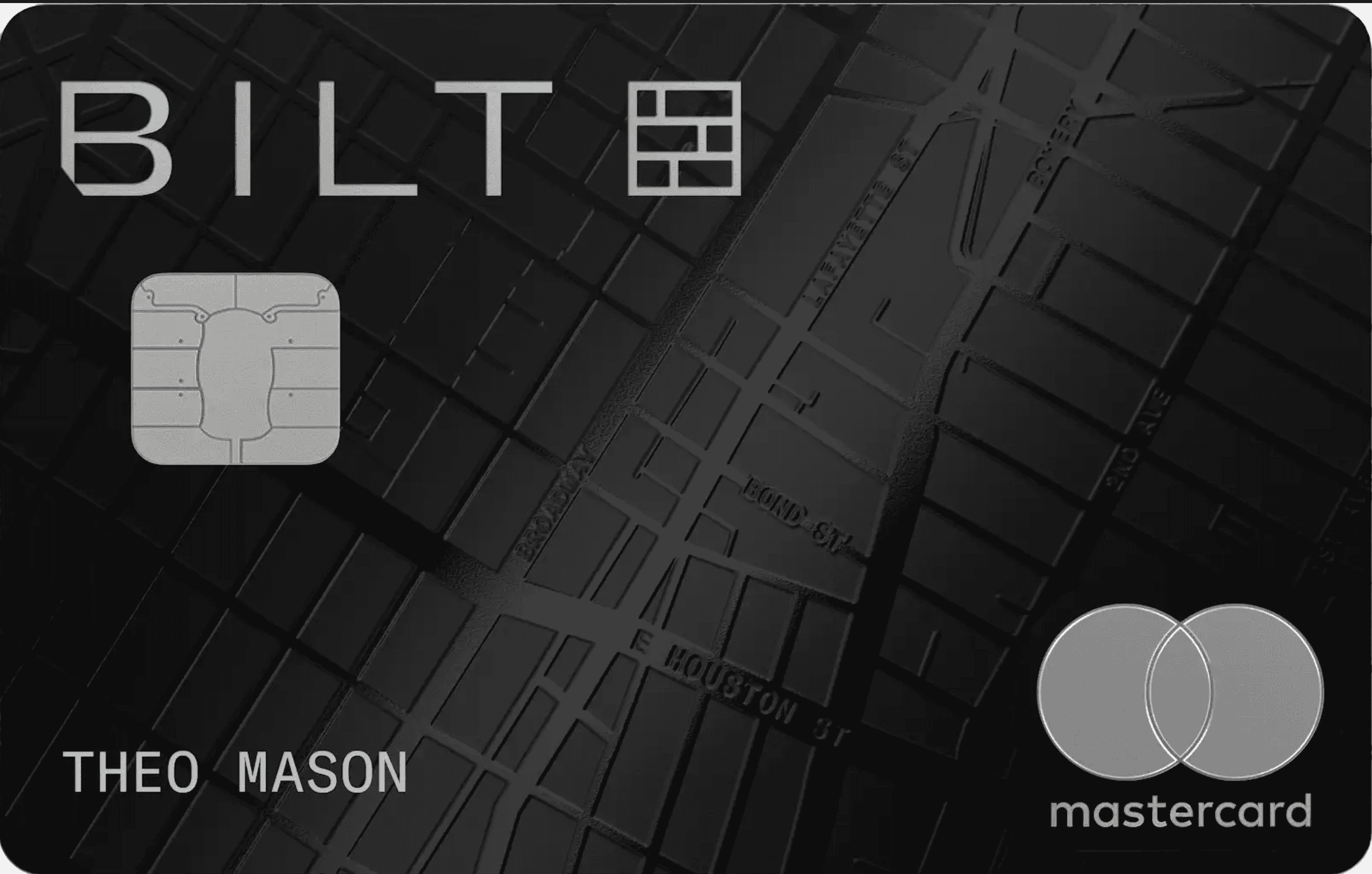
Welcome offer: $200
Bilt Cash
when you apply and are approved. At the end of each calendar, any Bilt Cash balance over $100 will expire.
Annual Fee: $95
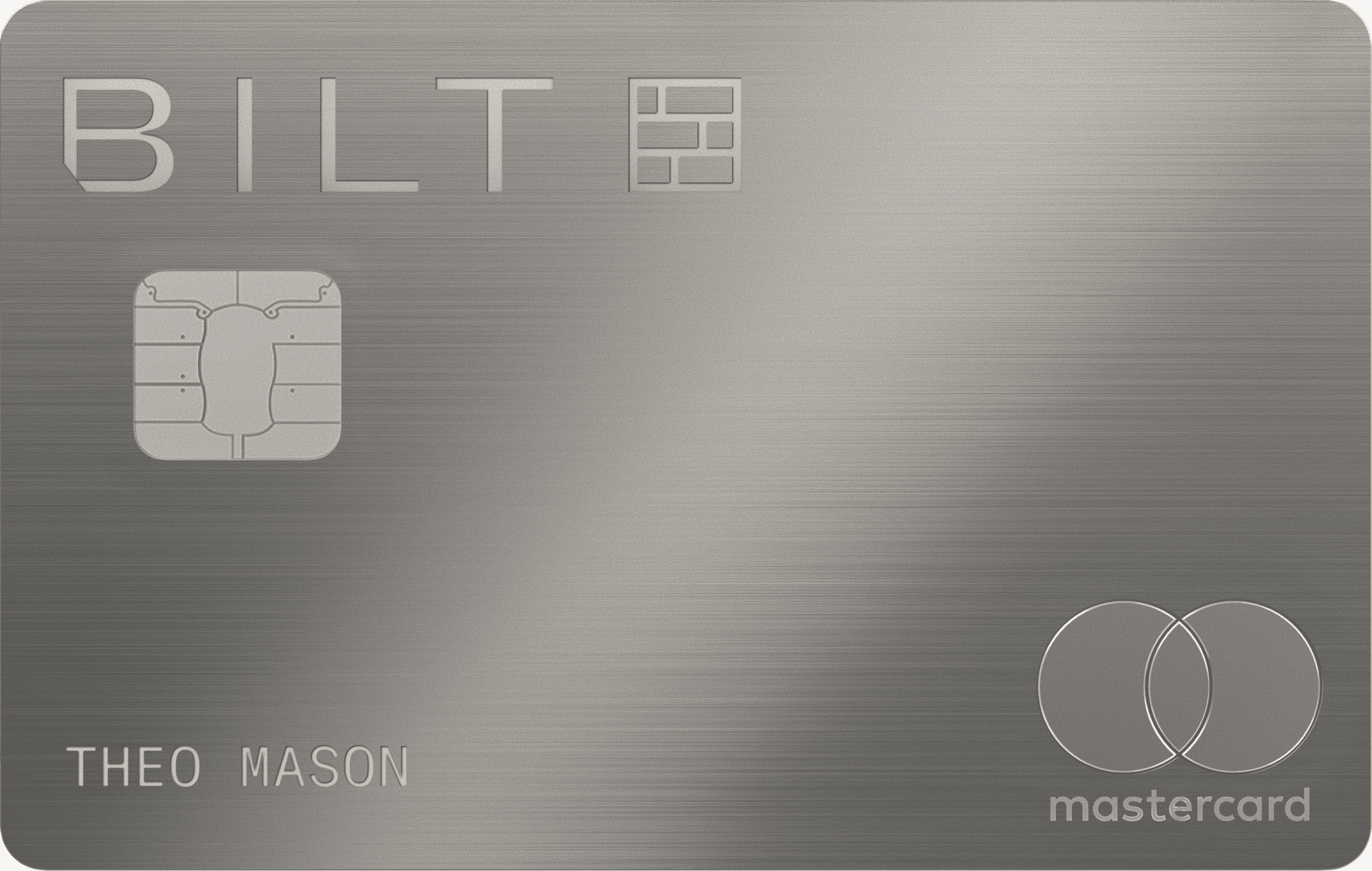
Welcome bonus (subject to approval): 50,000 Bilt Points
+ Gold Status after spending $4,000 on everyday purchases in the first 90 days + $300 of Bilt Cash. At the end of each calendar, any Bilt Cash balance over $100 will expire.
Annual Fee: $495
Bilt 2.0 Rewards Structure and Redemption Options
Regardless of which Bilt credit card you hold, all rewards funnel into the same system. There is no tier-specific currency and no degradation in redemption value based on card level.
Bilt Points can be redeemed in several ways, including through the Bilt Travel portal, for statement credits at a fixed value or by transferring them to partner airline and hotel loyalty programs.
As with most transferable currencies, the value you extract depends heavily on how you redeem them. Portal bookings offer a fixed value of 1.25 cents per point, while transfers offer the potential for significantly higher returns.
Bilt also layers in its secondary internal rewards currency, Bilt Cash, which operates independently of Bilt points. You can redeem Bilt Cash within Bilt’s ecosystem for things such as fitness classes, dining credits, ride services, hotel bookings and limited-time promotions. Bilt Cash can also be converted into points for housing rewards.
Transfer Partners and Point Values
You can transfer Bilt points to the following airline loyalty programs at a 1:1 ratio:
- Aer Lingus AerClub
- Air Canada Aeroplan
- Air France-KLM Flying Blue
- Alaska and Hawaiian Airlines Atmos Rewards
- Avianca Lifemiles
- Cathay Pacific Asia Miles
- Emirates Skywards
- Etihad Guest
- Iberia Club
- Japan Airlines Mileage Bank
- Qatar Airways Privilege Club
- Southwest Rapid Rewards
- TAP Air Portugal Miles&Go
- The British Airways Club
- Turkish Airlines Miles&Smiles
- United MileagePlus
- Virgin Atlantic Flying Club (and Virgin Red)
Those with Bilt Blue status need to transfer a minimum of 2,000 Bilt points, while those with Silver, Gold or Platinum Bilt Status need to transfer a minimum of 1,000 Bilt points.
These are lucrative transfer partners that cover all three major airline alliances, allowing you to redeem your Bilt points for outsized value.
You can also transfer your points to Bilt’s hotel partners at the following ratios:
- Accor Live Limitless: 3:2
- Hilton Honors: 1:1
- I Prefer Hotel Rewards: 1:2
- IHG One Rewards: 1:1
- Marriott Bonvoy: 1:1
- World of Hyatt: 1:1
- Wyndham Rewards: 1:1
This gives you a wealth of options when it comes time to redeem your points.

Rent Payments: How Each Card Handles Your Biggest Monthly Expense
From a mechanical standpoint, rent and mortgage payments work the same way across all Bilt cards. Payments are processed through ACH from a linked bank account, and they don’t count toward your credit utilization ratio.
There are no premium-card-only rent benefits. No Bilt Card earns more than 1.25X on housing payments, and no card bypasses the nonhousing spending thresholds required to unlock full earning potential.
While the cards don’t differ in how rent is paid, the higher-tier cards offer stronger points multipliers on nonhousing purchases. This doesn’t change the underlying math of housing points, but it does make it easier to justify routing everyday spending through Bilt to earn points on housing in the first place.
In practice, users who can align their spending behavior with Bilt’s thresholds are rewarded. Otherwise, your return on housing payments will be inconsistent, and the value of holding a Bilt card will be reduced.
Choosing the Bilt 2.0 Credit Card That Fits You
Choosing the right Bilt card starts with understanding that rental or mortgage payments alone generally earn only the 250-point minimum under the Housing-only option; earning a higher multiplier requires qualifying everyday spending. The determining factor is how much nonhousing spending you can realistically route through your card without sacrificing better opportunities elsewhere.
If your rent or mortgage is large, predictable and matched by equally high everyday spending, Bilt can turn housing costs into a significant source of transferable points. In that scenario, the Bilt Palladium Card may make sense, particularly if you value simplicity and are willing to centralize your spending.
If your spending is lower, irregular or already optimized across multiple cards, Bilt becomes harder to justify. The opportunity cost of meeting Bilt’s thresholds can quickly outweigh the points earned on housing, especially when welcome offers and higher category multipliers are available elsewhere.
Rather than asking which Bilt card is best, the more useful question is whether Bilt fits naturally into your existing strategy or forces you to change behavior to make the numbers work.

Our Take on the Bilt 2.0 Changes
While the Bilt credit card 2.0 relaunch is ambitious and pushes the brand beyond a pure rent-rewards product into a broader lifestyle platform, the expanded lineup is unlikely to resonate with most points-and-miles enthusiasts focused on maximizing their return per dollar spent.
The limiting factor is opportunity cost.
Under Bilt’s 2.0 structure, your everyday spending must equal at least 75% of your housing-payment amount during the billing cycle to earn 1X points on that housing payment. For many travelers, that level of monthly spend is better deployed toward meeting minimum spending requirements on new cards or toward lucrative bonus category multipliers.
Even when using the Bilt Cash path, the conversion remains relatively inefficient: every $30 in Bilt Cash, earned at a 4% rate, unlocks just 1,000 points on housing spend, a tradeoff that struggles to compete with alternative uses of that same spend.
Within the lineup, the Bilt Palladium Card is the standout option. Its $495 annual fee is largely offset by annual credits, and the flat 2X earning structure removes much of the friction inherent in Bilt’s tiered system.
However, for travelers whose goal is to funnel spend toward the highest-value redemptions with minimal constraints, the incremental gains these cards offer are difficult to justify relative to the complexity they introduce.
For a full breakdown of the program, including its pros, cons and tradeoffs, check out our Bilt Rewards review.
New to the world of points and miles? The Capital One Venture Rewards Credit Card is the best card to start with.
Current offer: Limited Time Offer: Enjoy a $300 stays credit, plus earn 75K bonus miles once you spend $4,000 on purchases within 3 months from account opening.
Earn 5X miles on hotels, vacation rentals and rental cars booked through Capital One Travel; 2X miles on all purchases.
when you apply and are approved. At the end of each calendar, any Bilt Cash balance over $100 will expire.
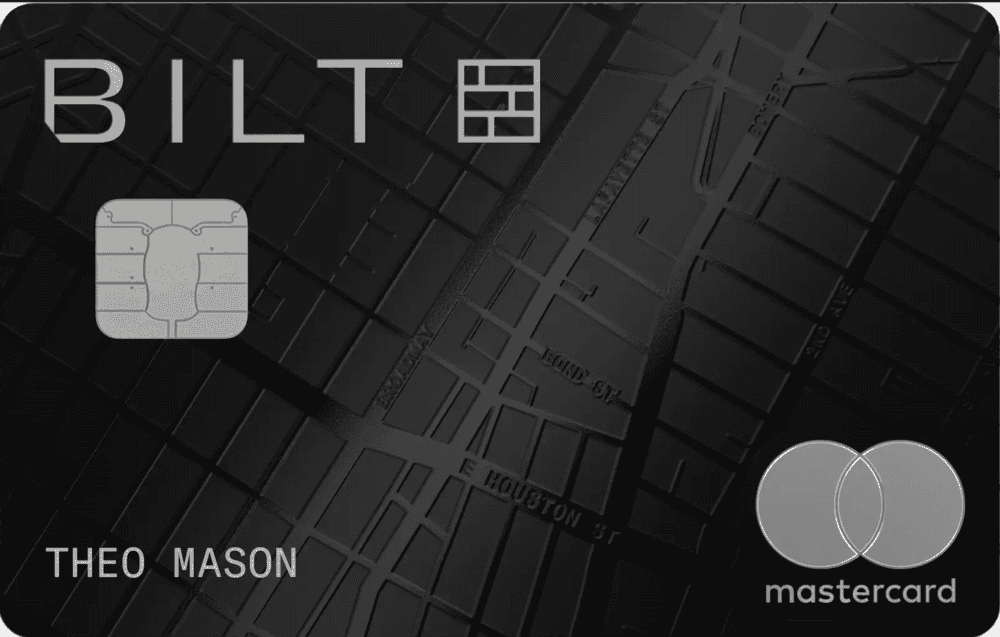
when you apply and are approved. At the end of each calendar, any Bilt Cash balance over $100 will expire.
Annual Fee: $95
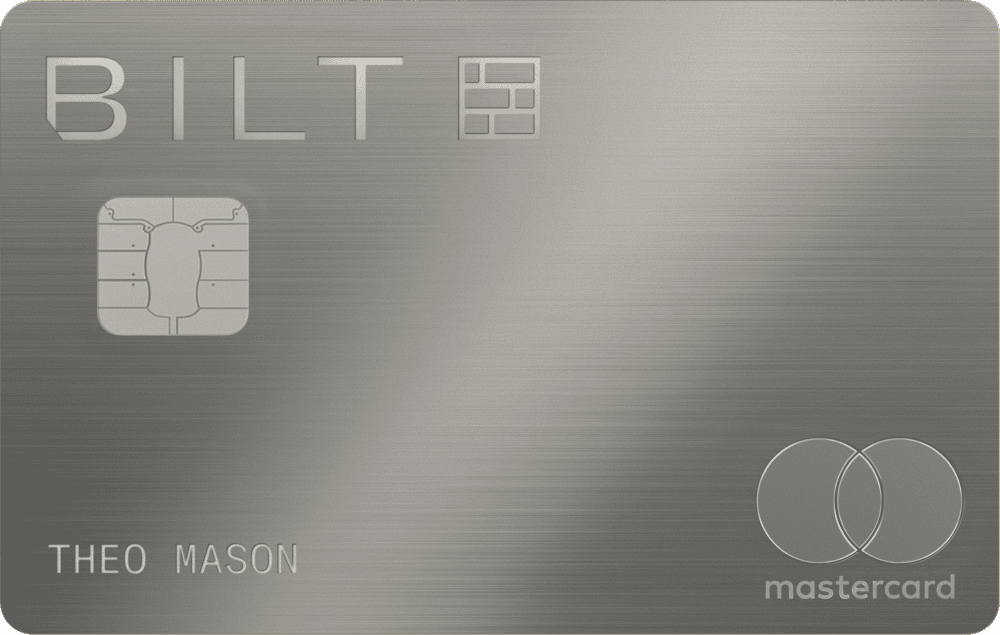
+ Gold Status after spending $4,000 on everyday purchases in the first 90 days + $300 of Bilt Cash. At the end of each calendar, any Bilt Cash balance over $100 will expire.
Annual Fee: $495
Editors Note: Opinions expressed here are author’s alone, not those of any bank, credit card issuer, hotel, airline, or other entity. This content has not been reviewed, approved or otherwise endorsed by any of the entities included within the post.
10xTravel is part of an affiliate sales network and receives compensation for sending traffic to partner sites, such as CreditCards.com. This site may earn compensation when a customer clicks on a link, when an application is approved, or when an account is opened. This compensation may impact how and where links appear on this site. This site does not include all financial companies or all available financial offers. Terms apply to American Express benefits and offers. Enrollment may be required for select American Express benefits and offers. Visit americanexpress.com to learn more. All values of Membership Rewards are assigned based on the assumption, experience and opinions of the 10xTravel team and represent an estimate and not an actual value of points. Estimated value is not a fixed value and may not be the typical value enjoyed by card members.
Editors Note: Opinions expressed here are author’s alone, not those of any bank, credit card issuer, hotel, airline, or other entity. This content has not been reviewed, approved or otherwise endorsed by any of the entities included within the post.
bonus cash back
after you spend $6,000 on purchases in the first 3 months from account opening.
earn 75K bonus miles
once you spend $4,000 on purchases within 3 months from account opening.
bonus points
after you spend $5,000 on purchases in the first 3 months from account opening.
Membership Rewards® Points
after you spend $8,000 in eligible purchases on your new Card in your first 6 months of Card Membership. Welcome offers vary and you may not be eligible for an offer. Apply to know if you’re approved and find out your exact welcome offer amount – all with no credit score impact. If you’re approved and choose to accept the Card, your score may be impacted.