10xTravel is part of an affiliate sales network and receives compensation for sending traffic to partner sites, such as CreditCards.com. This site may earn compensation when a customer clicks on a link, when an application is approved, or when an account is opened. This compensation may impact how and where links appear on this site. This site does not include all financial companies or all available financial offers. Terms apply to American Express benefits and offers. Enrollment may be required for select American Express benefits and offers. Visit americanexpress.com to learn more. All values of Membership Rewards are assigned based on the assumption, experience and opinions of the 10xTravel team and represent an estimate and not an actual value of points. Estimated value is not a fixed value and may not be the typical value enjoyed by card members.
Note: Some of the offers mentioned below may have changed or may no longer be available. The content on this page is accurate as of the posting date; however, some of our partner offers may have expired. You can view current offers here.
Citi is an advertising partner.
The information related to Citi Custom Cash® Card has been collected by 10xTravel and has not been reviewed or provided by the issuer or provider of this product or service.
For many consumers, groceries are one of the biggest expense categories each month. This is especially true if you’re buying food for an entire family. In fact, the average annual expenditure for “food at home” at the end of 2024 was $6,224 (or about $519 per month), according to a survey from the Bureau of Labor Statistics. And by now that number has surely risen. So, with so much money going toward groceries each month, you’ll want to make sure you have a credit card that offers the best possible rewards in that category.
However, determining the best grocery store credit card for you can be difficult, considering there are quite a few credit card options offering different spending bonuses and perks and charging different annual fees.
And, when it comes to earning rewards on grocery purchases, not all food purchases are created equal. Whereas purchases with certain grocery chains may trigger your spending bonuses, depending on your card, purchases with some superstores like Walmart or Target may not. So, you’ll want to make sure that the store at which you shop most often will earn rewards with your card.
In this article, we’ll help you find the best credit card for groceries based on your spending habits and budgetary needs. We’ll also explain how these credit cards’ spending bonuses work and how you can maximize their benefit.
Grocery Credit Card Rewards
Before we identify some of the best credit cards for grocery store purchases, let’s first explain how earning rewards on grocery store purchases works. Whether or not you earn elevated rewards on your grocery haul depends largely on where you shop.
So, in the following sections, we’ll give a brief introduction to merchant category codes (MCCs) and explain which businesses are commonly not considered “grocery stores” and therefore not eligible for elevated rewards.
The Role of Merchant Category Codes (MCCs) in Earning Rewards
Merchant category codes (MCCs) are four-digit codes that credit card networks (such as Visa, Mastercard and American Express) use to identify different types of businesses. For example, the current American Express MCC for grocery stores is 5411.
Now, let’s say that you have the Blue Cash Everyday® Card from American Express, which earns 3% cash back at U.S. supermarkets on up to $6,000 in eligible purchases per calendar year, then 1% (Rates & Fees). When you make a purchase, American Express uses the merchant code assigned to the merchant to determine whether the purchase falls within an eligible rewards category. If the merchant is categorized as an eligible U.S. supermarket, the purchase can qualify for the 3% cash back rate, subject to the Card’s terms. Cash Back is received in the form of Reward Dollars that can be redeemed as a statement credit or at Amazon.com checkout.
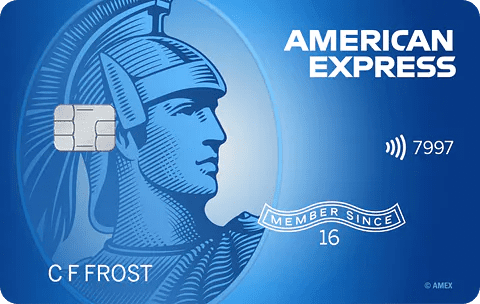
Blue Cash Everyday® Card from American Express
As High As $200
Cash Back
You may be eligible for as high as $200 cash back after spending $2,000 in purchases on your new Card in the first 6 months. Welcome offers vary and you may not be eligible for an offer. Cash back is received as Reward Dollars, redeemable for statement credit or at Amazon.com checkout. Terms Apply.
However, let’s say that you do a portion of your grocery shopping at 7-Eleven. American Express specifically identifies 7-Eleven as an example of a convenience store, and convenience stores are not considered U.S. supermarkets for purposes of earning additional rewards. Because the merchant is not categorized as an eligible U.S. supermarket, purchases there would not qualify for the Blue Cash Everyday® Card’s 3% U.S. supermarket cash back rate and would generally earn the Card’s standard 1% cash back on other eligible purchases.
So, before you sign up for a grocery rewards credit card, you’ll want to make sure that the stores that you shop with have MCCs that will trigger the elevated spending bonus on that card.
Common Exclusions from “Grocery Store” Bonus Categories
There are some types of businesses that are commonly excluded from the “grocery store” category by most credit cards (despite the fact that you may do your grocery shopping with them). Here are some examples of businesses that aren’t typically considered to be grocery stores:
- Superstores (such as Walmart, Target or Kmart)
- Wholesale clubs (such as Costco or Sam’s Club)
- Convenience stores (such as 7-Eleven or Circle K)
- Discount stores (such as Dollar General, Dollar Tree or Family Dollar)
- Online grocery delivery services (such as Amazon Fresh, Instacart or Shipt)
There are some exceptions and some credit cards may consider some of the businesses above to be grocery stores. However, in most cases, these businesses won’t code as grocery stores or supermarkets.

Best Credit Card for Grocery Delivery Services
As mentioned above, online grocery delivery services typically don’t code as “grocery store” purchases. However, in today’s world, these services are becoming increasingly popular.
So, if you often use online grocery delivery services, you’ll want to add a credit card to your wallet that earns good rewards for these purchases. Let’s take a look at some of the best credit cards for online grocery delivery.
Top Card Recommendations for Online Grocery & Delivery
With the growing popularity of online grocery delivery services, it’s increasingly important to identify credit cards that earn good rewards on this type of spending. Let’s take a look at two of the best credit cards for rewards on online grocery delivery services.
Instacart Mastercard®
If your grocery delivery service of choice is Instacart, you may want to consider signing up for the Instacart Mastercard® (issued by Chase). This card has no annual fee and offers cash back on purchases with Instacart and in several other spending categories.
Here are the spending bonuses currently offered by the Instacart Mastercard®:
- 5% cash back on qualifying Instacart.com and Instacart app purchases on the first $6,000 spent annually
- 5% cash back on Chase Travel℠ purchases
- 2% cash back at restaurants (including orders on Instacart powered by Uber Eats), gas stations and select streaming services
- 1% cash back on all other purchases
These are excellent spending bonuses for a no-annual-fee card. Plus, since Instacart purchases don’t qualify as grocery purchases with some other credit cards, if most of your grocery shopping is done through Instacart, this is the best card to reward your grocery spending.
Other Cards
There are certain credit cards that include certain online grocery delivery services as part of the “grocery stores” spending category. And, luckily, these include some of the best credit cards for grocery rewards available. However, whether or not these purchases qualify may depend on the delivery service you’re using, the specific merchants that you’re ordering from through your online delivery service and the card you have.
According to user testimonies, Instacart bills per merchant, which can dictate whether or not you earn your card’s spending bonus. For instance, if you were to order from Kroger through Instacart, you’d probably earn a “grocery store” spending bonus. However, if you were to get a delivery from Best Buy through Instacart (which is a service they offer), this wouldn’t earn the spending bonus.
It’s impossible to come up with a specific set of rules that applies to whether or not online grocery purchases code as “grocery store” purchases or not. If you’re interested in a specific credit card and you want to know if a specific delivery service codes as a “grocery store” with that card, we recommend calling the customer service line of that card’s issuer.
Top Credit Cards for Grocery Shopping: Picking Your Perfect Match
Because groceries are one of the top spending categories for most consumers, there are quite a few credit cards that offer elevated spending bonuses for grocery spending.
However, these cards differ in several key ways. For one, some cards earn cash back whereas others earn rewards points.
Additionally, some cards charge annual fees while others do not. For those who don’t like paying for their credit card each year, no-annual-fee cards are a good option.
For these reasons, we’ll identify the best credit cards for grocery spending in three categories: best cashback cards, best points-earning cards and best no-annual-fee cards.
Best Cashback Options
For those who want a credit card that earns easy-to-understand rewards, a cashback card is a simple way to save with every purchase. Essentially, these cards earn a percentage of the purchase amount in cash back every time you use your card. For instance, if you spend $100 and your cashback rewards rate is 1%, you’d earn $1 in cash back on that purchase.
You can then redeem the cash back you’ve earned as a statement credit, direct deposit or check in most cases. These cashback cards make earning rewards simple and easy.
In the following sections, we’ll look at some of the best credit cards for grocery spending that offer cashback rewards.
Blue Cash Preferred® Card from American Express
The Blue Cash Preferred® Card from American Express doesn’t charge an annual fee for the first year and then charges an annual fee of $95 every subsequent year. And cardholders will earn 6% cash back at U.S. supermarkets on up to $6,000 in spending per calendar year, then 1% (Rates & Fees). Cash Back is received in the form of Reward Dollars that can be redeemed as a statement credit or at Amazon.com checkout.
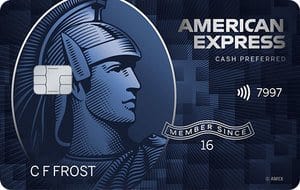
Blue Cash Preferred® Card from American Express
As High As $300
Cash Back
Find Out Your Offer. You may be eligible for as high as $300 cash back after spending $3,000 in purchases on your new Card in the first 6 months. Welcome offers vary and you may not be eligible for an offer. Cash back is received as Reward Dollars, redeemable for statement credit or at Amazon.com checkout. Terms Apply.
Annual Fee:
$0 introductory annual fee for your first year, then $95.
Here are the spending bonuses offered by the Blue Cash Preferred Card:
- 6% cash back at U.S. supermarkets (on up to $6,000 in purchases per calendar year, then 1%)
- 6% cash back on select U.S. streaming subscriptions
- 3% cash back on transit (including taxis, rideshare, parking, tolls, trains, buses, and more)
- 3% cash back at U.S. gas stations
- 1% cash back on all other purchases
If you were to spend $6,000 annually on groceries, you’d earn a total of $360 in cash back per year with the Blue Cash Preferred Card. You’d also earn cash back by using this card to pay for streaming services, transit and gas station purchases. All in all, for a card with an annual fee of $95, the Blue Cash Preferred offers great spending bonuses.
As with all Amex cards, purchases made with superstores, convenience stores, warehouse clubs and meal-kit delivery services are not considered supermarket purchases and won’t trigger the 6% cashback rewards.
It’s worth noting that Blue Cash Preferred® Card Members can get up to $10 back per month in statement credits, up to $120 annually, after using an enrolled Card for an eligible subscription purchase, including a bundle subscription purchases at select entertainment and news providers. Enrollment is required, and subscriptions are subject to auto-renewal.
Prime Visa
One option for earning rewards on Whole Foods Market and Amazon Fresh purchases is the Prime Visa (issued by Chase). This no-annual-fee card offers unlimited 5% cash back on Amazon Fresh and Whole Foods grocery purchases. An eligible Prime membership is required to earn 5% back on qualifying purchases.
Here are the spending bonuses offered by this Chase Amazon credit card:
- 5% cash back at Amazon.com, Amazon Fresh, Whole Foods Market and on Chase Travel℠ purchases (with an eligible Amazon Prime membership)
- 2% cash back at gas stations, restaurants and on local transit and commuting (including rideshare)
- 1% cash back on all other purchases
The card offers unlimited 5% back on qualifying Amazon.com and Whole Foods Market purchases with an eligible Prime membership. However, in order to earn this 5% back rate, you’ll need to have an eligible Amazon Prime membership.
One drawback of this card is that it only earns 1% cash back on purchases from all other grocery stores apart from Whole Foods Market and Amazon Fresh. So, if you do the majority of your grocery shopping at another supermarket chain, this probably isn’t the card for you.
Best Points-Earning Cards
Many credit cards earn rewards in the form of points instead of cash back. Points are generally considered to be more valuable than cash back since they can be transferred to partner travel loyalty programs. By using these transfer partners, you can often redeem your points at a value of more than 1 cent per point.
For example, American Express Membership Rewards ®points can be transferred to a variety of frequent flyer programs at a 1:1 ratio, including Air Canada Aeroplan. By transferring Amex points to Air Canada Aeroplan and then using them to book a flight, you could potentially get several cents per point in value.
Of course, if you have no interest in redeeming your points for travel, you can still redeem them for statement credits to offset past purchases (typically at a rate of 1 cent per point). In this case, your points would be essentially the same as cash back.
In the following sections, we’ll look at some of the best points-earning cards that offer good rewards on grocery store purchases.
American Express® Gold Card
For consumers willing to pay a $325 annual fee (Rates & Fees), the American Express® Gold Card offers elevated rewards on U.S. supermarket purchases. Card Members earn 4X Membership Rewards® points at U.S. supermarkets on up to $25,000 in purchases per calendar year, then 1X points for the rest of the year.
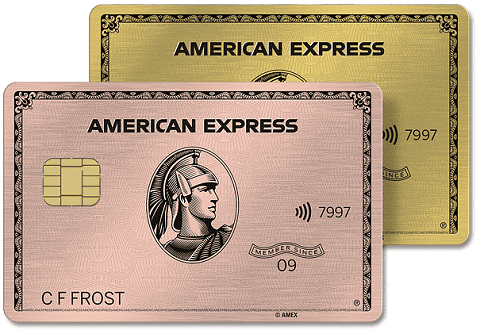
You may be eligible for as high as 100,000
Membership Rewards® Points
after you spend $8,000 in eligible purchases on your new Card in your first 6 months of Card Membership. Welcome offers vary and you may not be eligible for an offer. Apply to know if you’re approved and find out your exact welcome offer amount – all with no credit score impact. If you’re approved and choose to accept the Card, your score may be impacted.
Annual Fee:
$325
Here are all of the spending bonuses offered by the Amex Gold card:
- 4X Membership Rewards® points at restaurants worldwide (on up to $50,000 in purchases per calendar year, then 1X)
- 4X Membership Rewards® points at U.S. supermarkets (on up to $25,000 in purchases per calendar year, then 1X)
- 5X Membership Rewards® points on prepaid hotels booked through AmexTravel.com or the Amex Travel App™
- 3X Membership Rewards® points on flights booked directly with airlines or through AmexTravel.com or the Amex Travel App™
- 2X Membership Rewards® points on prepaid car rentals booked through AmexTravel.com or the Amex Travel App™ and cruises booked and paid through AmexTravel.com
- 1X Membership Rewards® points on all other eligible purchases
As you can see, the Amex Gold offers elevated rewards on both U.S. supermarket and restaurant purchases. Both 4X Membership Rewards® points categories have annual spending limits: up to $50,000 in purchases per calendar year at restaurants worldwide and up to $25,000 in purchases per calendar year at U.S. supermarkets. Purchases above these respective limits earn 1X points for the rest of the calendar year.
It’s worth noting that superstores, convenience stores, warehouse clubs and meal-kit delivery services are not considered U.S. supermarkets and therefore do not qualify for the Amex Gold Card’s 4X U.S. supermarket earning rate.
In addition to offering excellent spending bonuses, the Amex Gold card includes some great statement credits and other benefits that can help you offset the $325 annual fee (Rates & Fees), including:
- Up to $10 in Uber Cash monthly (up to $120 annually) for eligible U.S. Uber rides and orders after adding the Gold Card to your Uber account
- Up to $7 in monthly statement credits on eligible purchases at U.S. Dunkin’ locations (up to $84 per calendar year). Enrollment required.
- Up to $50 in statement credits on eligible Resy purchases from January through June and up to $50 from July through December (up to $100 per calendar year). Enrollment required.
- Up to $10 in statement credits monthly on eligible purchases at Grubhub (including Seamless), Buffalo Wild Wings, Five Guys, The Cheesecake Factory and Wonder (up to $120 annually). Enrollment required.
- Receive a $100 credit toward eligible charges on qualifying stays of two consecutive nights or more booked with The Hotel Collection through AmexTravel.com or the Amex Travel App™. Eligible charges vary by property.
Card Members who fully use the available Uber Cash, Dunkin’, Resy and Dining benefits could receive up to $424 in annual value from these benefits, which exceeds the card’s $325 annual fee. Enrollment and other terms apply to certain benefits.
Citi Strata Premier® Card
The Citi Strata Premier® Card has a $95 annual fee, which is lower than the $325 annual fee of the Amex Gold Card. The card earns bonus rewards on both supermarket and restaurant purchases, including 3X ThankYou® Points at restaurants and supermarkets.

Earn 60,000
bonus ThankYou® Points
after spending $4,000 in the first 3 months of account opening, redeemable for $600 in gift cards or travel rewards at thankyou.com.
Annual Fee: $95

Here are the spending bonuses offered by the Citi Strata Premier:
- 10X points on hotels, car rentals and attractions booked through CitiTravel.com
- 3X points on air travel, other hotel purchases, restaurants, supermarkets, gas stations and EV charging stations
- 1X points on all other purchases
The Citi Strata Premier® Card earns 3X ThankYou® Points at supermarkets, restaurants, and gas & EV charging stations. The card also earns 10X ThankYou® Points on hotels, car rentals and attractions booked through CitiTravel.com. The card has a $95 annual fee.
According to the card’s terms and conditions, purchases made at general merchandise/discount superstores; freezer/meat locker provisioners; dairy product stores; miscellaneous food/convenience stores; drugstores; warehouse/wholesale clubs; specialty food markets; bakeries; candy, nut, and confectionery stores; and meal-kit delivery services do not qualify for the 3X ThankYou® Points supermarket earning rate. Purchases made at online supermarkets or through grocery delivery services also may not qualify if the merchant does not classify itself as a supermarket using the supermarket merchant code.
The Strata Premier Card also offers $100 off a single hotel stay of $500 or more (excluding taxes and fees) booked through CitiTravel.com once per calendar year.
No Annual Fee Grocery Cards
If you don’t want to worry about offsetting your credit card’s annual fee, there are several no-annual-fee cards that offer good rewards on grocery purchases.
In the following sections, we’ll identify some of the best credit cards for groceries that don’t charge an annual fee.
Citi Custom Cash® Card
Although the Citi Custom Cash® Card is no longer accepting new applications, existing cardmembers can continue to earn 5% cash back on purchases in their top eligible spend category each billing cycle, on up to the first $500 spent, then 1% thereafter. Grocery stores are one of the eligible categories, so existing cardmembers can earn the 5% rate on qualifying grocery-store purchases when grocery stores are their top eligible spending category for the billing cycle.

Citi Custom Cash® Card
$200
cash back
after you spend $1,500 on purchases in the first 6 months of account opening. This bonus offer will be fulfilled as 20,000 ThankYou® Points, which can be redeemed for $200 cash back.
Here are the spending bonuses offered by the Citi Custom Cash Card:
- 5% cash back on purchases in your top eligible spend category each billing cycle, up to the first $500 spent, then 1% thereafter
- Eligible categories include restaurants, gas stations, grocery stores, select travel, select transit, select streaming services, drugstores, home improvement stores, fitness clubs and live entertainment
- 4% additional cash back on hotels, car rentals and attractions booked with Citi Travel
- Unlimited 1% cash back on all other purchases
So, for instance, if you were to spend $500 on eligible grocery-store purchases each billing cycle and grocery stores were your top eligible spend category each billing cycle, you could earn $25 in cash back per billing cycle, or $300 over 12 billing cycles.
Purchases at general merchandise/discount superstores, wholesale/warehouse clubs, and candy, nut and confectionery stores do not qualify for the Citi Custom Cash® Card’s Grocery Stores rewards category. Purchases made at online supermarkets or through grocery delivery services also do not qualify if the merchant does not classify itself as a supermarket using the supermarket merchant category code.
Capital One Savor Cash Rewards Credit Card
Another good no-annual-fee cashback credit card for grocery spending is the Capital One Savor Cash Rewards Credit Card. This card earns unlimited 3% cash back at grocery stores and in other major spending categories.
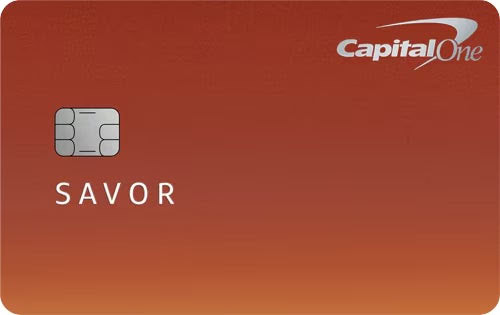
Capital One Savor Cash Rewards Credit Card
Earn $200
Cash Back
after you spend $500 on purchases within 3 months from account opening
Here are the spending bonuses offered by the Capital One Savor Cash Rewards Card:
- 8% cash back on purchases made through the Capital One Entertainment ticketing platform
- 5% cash back on hotels, vacation rentals and rental cars booked through Capital One Travel
- 3% cash back at grocery stores, on dining, entertainment and popular streaming services
- Unlimited 1% cash back on all other purchases
The Capital One Savor Cash Rewards card has no annual fee and offers bonus cash back in several categories, including unlimited 3% cash back at grocery stores and on dining. Unlike the Citi Custom Cash® Card, which earns 5% cash back on the top eligible spend category on up to the first $500 spent each billing cycle and 1% thereafter, the Savor Cash Rewards card does not place a spending cap on its 3% grocery-store earning rate. The Citi Custom Cash® Card is no longer accepting new applications as of May 28, 2026, although existing cardmembers can continue to use the card and its benefits.
Grocery purchases made at gas stations, convenience stores, warehouse clubs, discount stores and superstores do not qualify for the 3% grocery-store cash-back rate and instead earn 1% cash back.

Making the Most of Your Grocery Credit Card
Now that you’ve determined which grocery card to add to your wallet, let’s take a look at a few strategies and common mistakes to avoid so that you can use your card to its fullest potential.
Shopping Strategies
Signing up for a credit card that offers good supermarket rewards will help maximize your savings at the grocery store. However, let’s look at some strategies to help you earn even more rewards.
Remember to Use Your Grocery Rewards Card
For those who have multiple credit cards in their wallet, it’s important to make sure you use the card that earns the best rewards on groceries when checking out at the grocery store.
Personally, I find it helpful to write labels and stick them on my credit cards so I can remember which spending categories to use each card for. For example, I have one card labeled “groceries and restaurants” and another one labeled “travel.”
Stack Savings from Supermarket Loyalty Programs and Coupon Apps
Many supermarket chains have their own loyalty programs (such as Albertsons for U, Kroger Plus, Club Publix and more) that offer rewards similar to those earned by your credit card. Likewise, you can earn even more rewards by downloading a cashback app like Ibotta, Fetch or Rakuten, which reward you for purchases you make with a linked card.
You can utilize all three of these rewards-earning methods at the same time for maximum savings. So, for a single purchase, you could earn rewards with your credit card, your supermarket loyalty program and your cashback app.
Common Mistakes to Avoid
Finally, let’s take a look at some common mistakes to avoid when it comes to using credit cards to earn rewards on supermarket purchases.
Not Tracking Reward Category Limits
If your card offers elevated rewards on grocery spending up to a certain limit per billing cycle or per year, it’s important to track that spending limit. For instance, existing Citi Custom Cash® cardmembers can earn 5% cash back on purchases in their top eligible spend category—which could be grocery stores—on up to the first $500 spent each billing cycle. After the first $500 spent in that category during the billing cycle, purchases in that category earn 1% cash back.
Keeping track of your spending can help you determine when another card may offer a higher rewards rate. For example, the Chase Freedom Unlimited® earns 1.5% cash back on purchases that don’t qualify for one of its higher rewards categories. Therefore, after reaching the Citi Custom Cash® Card’s $500 top-category spending threshold for the billing cycle, you could shift qualifying grocery purchases to the Chase Freedom Unlimited® to earn 1.5% cash back instead of 1%.

Earn a $200
Bonus
after you spend $500 on purchases in your first 3 months from account opening
Using the Wrong Card at the Wrong Store
Many credit cards exclude warehouse clubs such as Costco from their grocery-store bonus categories, so it’s important to check how your card defines eligible grocery purchases.
For Costco members, one option is the Costco Anywhere Visa® Card by Citi. The card earns 2% cash back on all other purchases from Costco and Costco.com. It also earns 5% cash back on gas purchased at Costco and 4% on other eligible gas and EV charging purchases, with the 5% and 4% rates applying to the first $7,000 in combined purchases per year, then 1%.
If your usual grocery rewards card excludes warehouse clubs from its grocery bonus category, using that card at Costco may not earn the same elevated rewards rate that you receive at qualifying grocery stores.


New to the world of points and miles? The Capital One Venture Rewards Credit Card is the best card to start with.
Current offer: Limited Time Offer: Enjoy a $300 stays credit, plus earn 75K bonus miles once you spend $4,000 on purchases within 3 months from account opening.
Earn 5X miles on hotels, vacation rentals and rental cars booked through Capital One Travel; 2X miles on all purchases.
Find Out Your Offer. You may be eligible for as high as $300 cash back after spending $3,000 in purchases on your new Card in the first 6 months. Welcome offers vary and you may not be eligible for an offer. Cash back is received as Reward Dollars, redeemable for statement credit or at Amazon.com checkout. Terms Apply.
Annual Fee:
$0 introductory annual fee for your first year, then $95.
after you spend $8,000 in eligible purchases on your new Card in your first 6 months of Card Membership. Welcome offers vary and you may not be eligible for an offer. Apply to know if you’re approved and find out your exact welcome offer amount – all with no credit score impact. If you’re approved and choose to accept the Card, your score may be impacted.
Annual Fee:
$325
after spending $4,000 in the first 3 months of account opening, redeemable for $600 in gift cards or travel rewards at thankyou.com.
Annual Fee: $95
after you spend $1,500 on purchases in the first 6 months of account opening. This bonus offer will be fulfilled as 20,000 ThankYou® Points, which can be redeemed for $200 cash back.
after you spend $500 on purchases within 3 months from account opening
Editors Note: Opinions expressed here are author’s alone, not those of any bank, credit card issuer, hotel, airline, or other entity. This content has not been reviewed, approved or otherwise endorsed by any of the entities included within the post.
10xTravel is part of an affiliate sales network and receives compensation for sending traffic to partner sites, such as CreditCards.com. This site may earn compensation when a customer clicks on a link, when an application is approved, or when an account is opened. This compensation may impact how and where links appear on this site. This site does not include all financial companies or all available financial offers. Terms apply to American Express benefits and offers. Enrollment may be required for select American Express benefits and offers. Visit americanexpress.com to learn more. All values of Membership Rewards are assigned based on the assumption, experience and opinions of the 10xTravel team and represent an estimate and not an actual value of points. Estimated value is not a fixed value and may not be the typical value enjoyed by card members.
Editors Note: Opinions expressed here are author’s alone, not those of any bank, credit card issuer, hotel, airline, or other entity. This content has not been reviewed, approved or otherwise endorsed by any of the entities included within the post.
bonus cash back
after you spend $6,000 on purchases in the first 3 months from account opening.
earn 75K bonus miles
once you spend $4,000 on purchases within 3 months from account opening.

bonus points
after you spend $5,000 on purchases in the first 3 months from account opening.
Membership Rewards® Points
after you spend $8,000 in eligible purchases on your new Card in your first 6 months of Card Membership. Welcome offers vary and you may not be eligible for an offer. Apply to know if you’re approved and find out your exact welcome offer amount – all with no credit score impact. If you’re approved and choose to accept the Card, your score may be impacted.