10xTravel is part of an affiliate sales network and receives compensation for sending traffic to partner sites, such as CreditCards.com. This site may earn compensation when a customer clicks on a link, when an application is approved, or when an account is opened. This compensation may impact how and where links appear on this site. This site does not include all financial companies or all available financial offers. Terms apply to American Express benefits and offers. Enrollment may be required for select American Express benefits and offers. Visit americanexpress.com to learn more. All values of Membership Rewards are assigned based on the assumption, experience and opinions of the 10xTravel team and represent an estimate and not an actual value of points. Estimated value is not a fixed value and may not be the typical value enjoyed by card members.
Choosing the right card for your company isn’t just about increasing spending power. The card you use becomes part of your business’s financial architecture, affecting cash flow, accounting efficiency, employee spending control, liability and even your ability to scale.
As a business owner, you need to decide whether a business credit card or a corporate card is better suited to your company’s spending patterns, financial goals and current growth phase.
While small-business credit cards offer a wealth of lucrative rewards, particularly for travel-heavy businesses, corporate cards—once reserved for enterprise organizations—are increasingly used by high-growth startups, medium-sized companies and distributed teams.
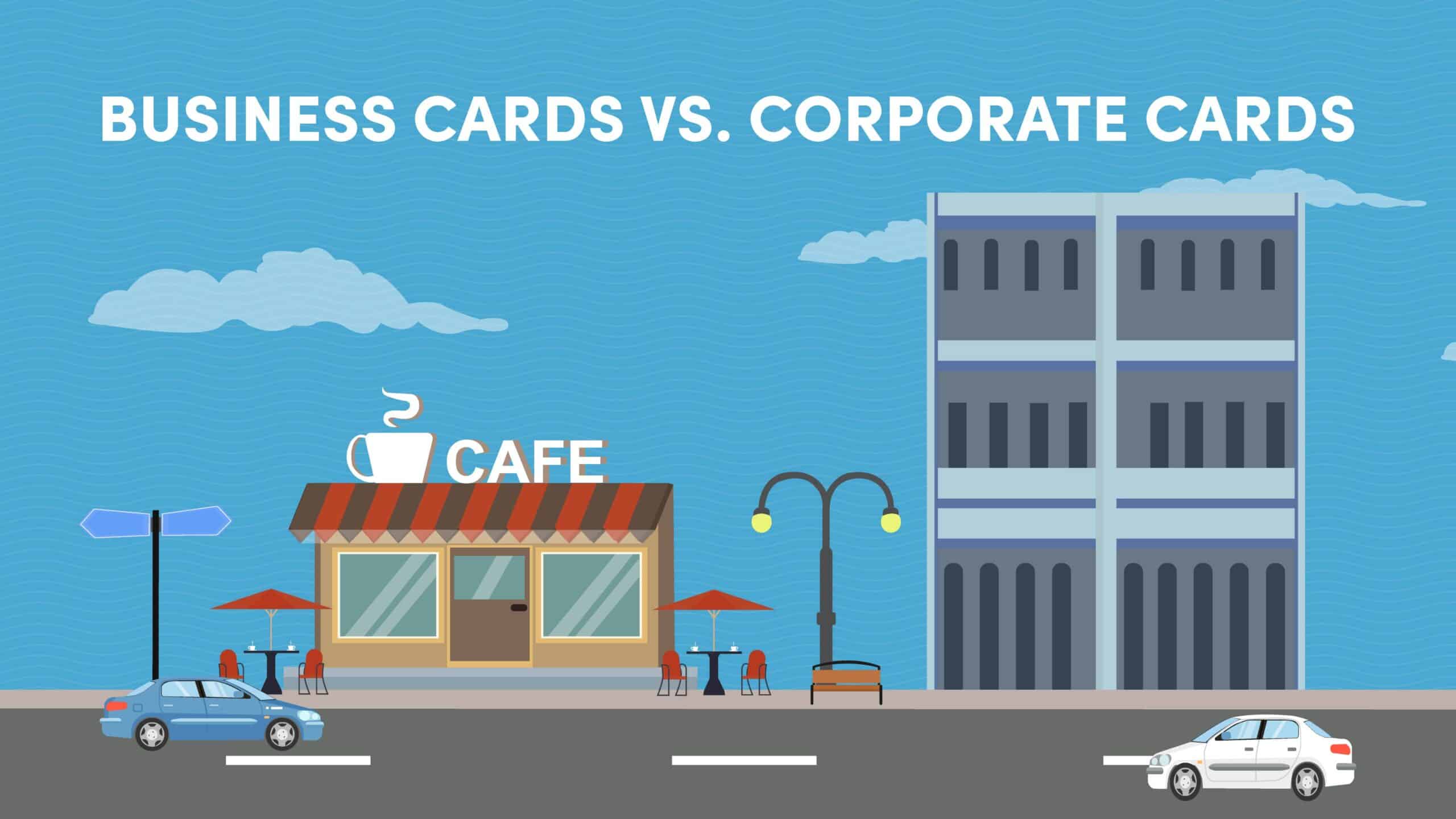
Small-business credit cards and corporate cards are built for fundamentally different needs. This guide breaks down both card types, shows their advantages and limitations, and helps you determine when it’s the right time to upgrade from a business card to a corporate card.

What Is a Small-Business Credit Card?
A small-business credit card, often simply called a “business card,” is a revolving credit line issued to a business but typically backed by the business owner’s personal guarantee.
Business card issuers take your personal credit score into account for a business credit card application as well as both your personal income and business’s revenue. However, business card activity may be reported to business credit bureaus, enabling you to improve your company’s credit score through responsible card usage.
These business cards are designed for smaller businesses, including but not limited to S-corps, LLCs, freelancers, sole proprietors and early-stage startups.
Business cards typically allow you to carry a balance (although some are charge cards that require you pay off the balance in full each month). They also tend to offer strong rewards categories on key business spending categories, such as fuel, office supplies, advertising and travel, because issuers compete heavily for small-business users.
The rewards offered by small-business credit cards can help businesses at different stages of development.
For instance, startups can use points earned through bonus category spending and welcome offers to cover travel costs or reduce operational expenses through cash back. This protects a growing company’s working capital, particularly during periods of low revenue or high outgoings.
More established businesses can strategically forgo redeeming points on certain large purchases that qualify for tax deductions and instead charge the purchase to their business card, allowing them to rack up thousands of points to cover other operating expenses.
Businesses also can use their rewards to offer points-funded vacation travel to their employees as a workplace benefit, assuming the company is flush with points.
These are just a few of the ways that small-business credit cards can accelerate your business’s growth and efficiency.
Small-business credit cards also allow you to issue employee cards tied to the main account and put spending limits on each individual card. All rewards earned on employee cards are credited to your account, but you’ll also be liable for all charges made.
Speaking of liability, business cards typically hold you personally liable for all charges and can affect your personal credit score both positively and negatively as a result. Therefore, it’s key to avoid late payments and to not treat your business card as a financing tool (unless you have the capital to pay your balance off before its due date).

What Is a Corporate Card?
Corporate cards are commercial spending tools issued to a company rather than to an individual owner, and they follow corporate underwriting standards. They don’t usually require a personal guarantee because it’s the company that typically assumes liability for all charges made (although certain corporate cards offer combined liability structures).
These cards are typically used by mid-market and enterprise organizations, but fintech issuers such as Brex and Ramp have lowered barriers in the last few years, allowing certain startups to qualify for a corporate card.
Unlike small-business cards, corporate cards often require:
- A minimum annual revenue (sometimes in the millions)
- A minimum number of cardholders
- Minimum card spend (typically in the six-figure range)
- Strong business credit or cash balances
- Financial statements or banking relationships
Sole proprietors and single-member LLCs generally won’t qualify for a corporate card and are better off utilizing a small-business card.
Additionally, corporate cards don’t usually offer revolving lines of credit. Many require the balance to be paid in full each month, but some fintech offerings have introduced hybrid models.
For companies with large teams, corporate cards can ease expense reporting and eliminate the work involved in employee reimbursements. Thanks to the spending controls and integration options offered by corporate cards, they also help reduce the risk of fraudulent transactions, giving your company increased oversight.
Corporate Cards: Pros and Cons
Corporate cards come with some significant benefits that can increase efficiency for growing enterprises. These include:
- Stronger spending controls and compliance tools: Corporate cards offer real-time controls, enabling businesses to restrict spending by amount, time, location, merchant category or specific vendor.
- No personal liability: Because the company—not the owner—holds liability, corporate cards protect personal credit and avoid the risk of owners being personally responsible for employee misuse. This is essential for businesses with tens or hundreds of employees spending using a company card.
- Streamlined expense management: Automatic receipt capture, centralized statements and category rules eliminate manual reconciliation, saving businesses time.
- Better visibility into company spending: Finance teams can monitor every purchase in real time. This visibility reduces surprise expenses and improves forecasting accuracy.
- Dedicated account management: Most corporate programs provide an account manager who helps with cardholder issues, fraud disputes, customization and program optimization. This frees up the business owner’s time for other more pressing tasks.
With the pros in mind, here are some of the main cons to consider before applying for a corporate card:
- Higher eligibility requirements: Corporate cards require significant annual revenue and spending in addition to numerous employees and the business’s financial documentation. The requirements are harder to meet than those for a business card.
- Fees and administrative overhead: Many corporate card programs charge annual or per-cardholder fees. Some also charge platform or integration fees, but modern fintech issuers may waive these. While some small-business cards also charge fees, it’s important to understand that corporate cards aren’t a $0 annual fee alternative.
- Rewards are often less valuable: One of the main drawbacks is that corporate card rewards are typically simpler and less lucrative. Business cards often offer 3X to 5X multipliers in key categories in addition to luxury travel perks and lucrative welcome offers. In contrast, corporate cards commonly offer 1% to 2% cash back across general spending and tend to issue rewards exclusively as cash back.
- Most require full monthly payment: Corporate cards often operate like charge cards. If your cash flow isn’t stable, this can be restrictive.

When to Transition from a Business Card to a Corporate Card
There’s no specific revenue threshold that forces a business to upgrade to a corporate card. Instead, the right moment to switch to a corporate card is often when the logistical complexity of company-wide spending exceeds the convenience and value of a business card.
Here are some key instances where you may consider switching to a corporate card.
1. You Have Multiple Employees Making Purchases Regularly
If you have a large team, each of whom spends with an employee business card regularly, that’s a lot of transactions to track.
Switching to a corporate card can give you better oversight and access to tools to streamline expense management.
2. Your Monthly Spend Is in the Six-Figure Range
At higher spending levels, the visibility and controls of corporate cards generate outsized value. Additionally, the added security of increased visibility is essential for preventing fraudulent activity.
3. You Want to Remove Personal Liability
Many business owners are surprised to learn that business card debt can appear on personal credit reports. If your business is scaling or if you simply want to protect your personal finances, a corporate card is a safer long-term option.
4. You Need Better Spending Controls, Budget Enforcement or Fraud Protection
As teams grow and spending diversifies, fraud risk increases. Having access to advanced spending controls and reporting features reduces the risk of fraudulent activity and also makes for easier budget enforcement.
5. You’re Preparing for Audits, Fundraising or Acquisition
Corporate cards provide cleaner documentation, centralized statements and superior visibility, all of which are critical during due diligence checks. Investors and acquirers prefer companies with hardened financial controls. Switching to corporate cards in anticipation for audits or acquisition can be a smart move.
Final Thoughts
There is no universally “better” credit card for all businesses—only the card that fits your operational needs, lifestyle, business goals and stage of growth.
A small-business credit card is ideal for early-stage companies, single-owner operations or any business that values flexibility and competitive rewards. It’s easy to qualify for, simple to manage and excellent for boosting cash flow and funding award travel.
However, if your business begins to scale rapidly with more employees, multiple departments, larger budgets, regular travel and frequent recurring expenses, a corporate card could be the superior tool. Corporate cards reduce liability, tighten controls and give your finance team real-time visibility into company-wide spending.
Whether your company processes $5,000 per month or $500,000, the right card can streamline operations, reduce financial risk, boost rewards and provide a foundation for sustainable growth.

New to the world of points and miles? The Chase Sapphire Preferred® Card is the best card to start with.
With a bonus of 75,000 bonus points after you spend $5,000 on purchases in the first 3 months from account opening. , 5x points on travel booked through the Chase TravelSM Portal and 3x points on restaurants, streaming services, and online groceries (excluding Target, Walmart, and wholesale clubs), this card truly cannot be beat for getting started!
Editors Note: Opinions expressed here are author’s alone, not those of any bank, credit card issuer, hotel, airline, or other entity. This content has not been reviewed, approved or otherwise endorsed by any of the entities included within the post.
10xTravel is part of an affiliate sales network and receives compensation for sending traffic to partner sites, such as CreditCards.com. This site may earn compensation when a customer clicks on a link, when an application is approved, or when an account is opened. This compensation may impact how and where links appear on this site. This site does not include all financial companies or all available financial offers. Terms apply to American Express benefits and offers. Enrollment may be required for select American Express benefits and offers. Visit americanexpress.com to learn more. All values of Membership Rewards are assigned based on the assumption, experience and opinions of the 10xTravel team and represent an estimate and not an actual value of points. Estimated value is not a fixed value and may not be the typical value enjoyed by card members.
Editors Note: Opinions expressed here are author’s alone, not those of any bank, credit card issuer, hotel, airline, or other entity. This content has not been reviewed, approved or otherwise endorsed by any of the entities included within the post.
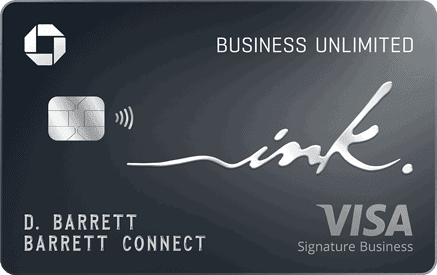
bonus cash back
after you spend $6,000 on purchases in the first 3 months from account opening
to use on Capital One Travel
in your first cardholder year, plus earn 75,000 bonus miles once you spend $4,000 on purchases within the first 3 months from account opening - that’s equal to $1,000 in travel
bonus points
after you spend $5,000 on purchases in the first 3 months from account opening.

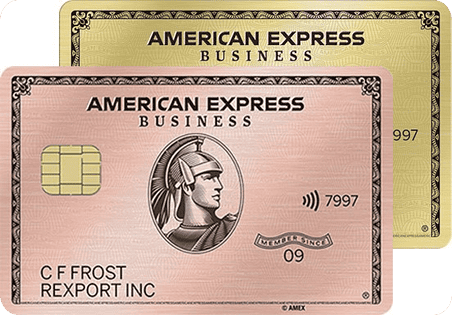
Membership Rewards® Points
after you spend $6,000 in eligible purchases on your new Card in your first 6 months of Card Membership. Welcome offers vary and you may not be eligible for an offer. Apply to know if you’re approved and find out your exact welcome offer amount – all with no credit score impact. If you’re approved and choose to accept the Card, your score may be impacted.