10xTravel is part of an affiliate sales network and receives compensation for sending traffic to partner sites, such as CreditCards.com. This site may earn compensation when a customer clicks on a link, when an application is approved, or when an account is opened. This compensation may impact how and where links appear on this site. This site does not include all financial companies or all available financial offers. Terms apply to American Express benefits and offers. Enrollment may be required for select American Express benefits and offers. Visit americanexpress.com to learn more. All values of Membership Rewards are assigned based on the assumption, experience and opinions of the 10xTravel team and represent an estimate and not an actual value of points. Estimated value is not a fixed value and may not be the typical value enjoyed by card members.
Note: Some of the offers mentioned below may have changed or may no longer be available. The content on this page is accurate as of the posting date; however, some of our partner offers may have expired. You can view current offers here.
Running a business means spending a lot of money on software subscriptions, advertising, travel, shipping, phone bills and more. A smart business credit card rewards strategy can turn that spending into free flights, hotel stays or cash back. But most small business owners leave serious value on the table, either by using the wrong card for a purchase, ignoring welcome bonuses or cashing out points at a fraction of their worth.
This guide explains how to build a business credit card rewards strategy that actually works, from picking the right cards to redeeming points for maximum value.
Why Strategic Card Use Matters for Business Spending
Business spending is different from personal spending in a few key ways: The volume is higher, it tends to concentrate on specific categories (such as advertising or telecom) and it’s often more predictable from month to month.
That predictability is an advantage. Unlike personal spending, which can be scattered and hard to plan around, business expenses are often recurring, which makes it much easier to match them to the right card and consistently earn at elevated rates.

Where Do Businesses Leave Rewards on the Table?
The biggest missed opportunity is using a flat-rate card (or no rewards card at all) for spending that could be earning 3X-4X points.
Common examples include:
- Running Google or Meta ads on a card that earns 1X points
- Paying phone, internet or Software as a Service (SaaS) bills on a catch-all card instead of one with telecom bonuses
- Booking travel on a card without travel category bonuses
- Ignoring welcome bonuses entirely, which can be worth hundreds or thousands of dollars in travel
How Does Employee Spending Affect Your Rewards Potential?
Every dollar an employee spends on an authorized employee card contributes to your rewards balance at no extra cost on most business cards.
The Ink Business Preferred® Credit Card, for example, offers free employee cards. So if you have a team of five people each putting $2,000 a month on the card in bonus categories, that’s $10,000 a month earning 3X points. These are points you’d otherwise be leaving behind.
The catch is you need visibility into what employees are spending and where. Most business cards offer spending controls and transaction tracking, which makes it easier to route spending to the right card.
What Should Your Rewards Strategy Optimize For?
Your strategy depends on your goals:
- Travel rewards: Transferable points currencies (Chase Ultimate Rewards, American Express Membership Rewards®, Capital One miles) offer the most flexibility and typically the highest value per point when redeemed for flights and hotels via transfer partners.
- Cash back: If travel isn’t a priority, flat-rate cashback cards simplify the math. You earn a set percentage back on every purchase — no program management required.
- Hybrid approach: Many business owners do both, using a travel rewards card for high-spend categories and a cashback card for everything else.
For most small business owners who travel at all, travel rewards can easily outperform cash back in raw value. But this only makes sense if you actually redeem the points for travel.
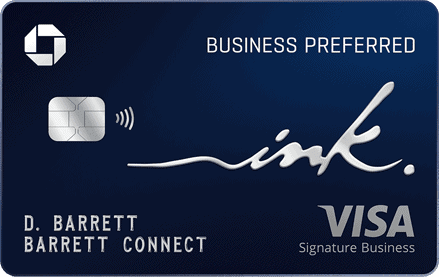
Chase Ink Business Preferred® Credit Card
100,000
bonus points
after you spend $8,000 on purchases in the first 3 months from account opening.
Annual Fee: $95

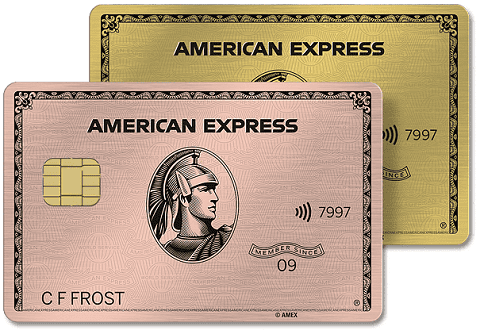
American Express® Business Gold Card
You may be eligible for as high as 200,000
Membership Rewards® points
after spending $15,000 in eligible purchases on your new Card in your first 3 months of Membership. Welcome offers vary and you may not be eligible for an offer.
Annual Fee:
$375
Matching Card Features to Your Spending Profile
The best business credit cards for points aren’t necessarily the ones with the highest earning rates — they’re the ones that match your actual spending. Likewise, the best business credit cards with rewards are only valuable if those rewards align with where your money actually goes.
Before picking a card, do a quick audit of where your business spends money. Pull three months of bank or credit card statements and categorize your expenses. You’ll likely find that a large chunk falls into two or three categories.
What Are the High-Reward Categories Worth Targeting?
Most business cards earn bonus points in some combination of these categories:
- Travel (flights, hotels, car rentals)
- Advertising (social media and search engine ads)
- Shipping
- Internet, cable and phone services
- Office supplies
- Dining at restaurants
- Software and cloud services
- Gas stations
The Ink Business Preferred® Credit Card earns 3X points per dollar on the first $150,000 spent per account anniversary year in travel, shipping, internet/cable/phone services and advertising purchased with search engines or social media sites. If your business spends heavily in any of those categories, it’s one of the best business cards for small business.
The American Express® Business Gold Card (rates and fees) takes a different approach: It automatically earns 4X Membership Rewards points on the top two categories where your business spends the most each billing cycle (from six eligible categories and on up to $150,000 annually). That flexibility is useful if your spending shifts month to month. The card adapts without any action required on your part. The annual fee is $375.
When Do Annual Fees Actually Pay Off?
A card with an annual fee pays off when the rewards and benefits you use exceed what you’d earn with a no-fee alternative.
For the Ink Business Preferred® Credit Card ($95 annual fee), the math is straightforward. If you spend at least $3,167 per year in bonus categories at 3X versus a 1X card, you’ll generate enough extra points to cover the fee (assuming roughly 1 cent per point in value).
For the American Express® Business Gold Card ($375 annual fee), you’d need to spend $9,375 in 4X categories just to break even on the fee. But if you maximize the benefit of up to $395 in annual statement credits (for purchases at Grubhub and office supply stores and Walmart+ membership, enrollment required) and spend consistently in 4X categories, the value can add up quickly.
As a rule of thumb, if a premium card has benefits you’ll actually use, do the math on those credits before comparing earning rates.
Welcome Bonuses: Timing and Requirements
Welcome bonuses are the fastest way to accumulate points — often worth more than a full year of organic earning. Most business cards require spending a set amount within the first three months of opening your account.
Planning Major Purchases Around Bonus Periods
Time your application around a large, planned business expense, such as a software renewal, equipment purchase, inventory buy or seasonal marketing push. If a $5,000 purchase is coming up, it makes sense to open a new card and let that spend go toward your minimum spending requirement.
Meeting Minimum Spend Without Manufactured Spending
You don’t need to invent spending to hit a minimum. Legitimate options include:
- Prepaying business expenses (annual software subscriptions or insurance premiums)
- Paying estimated quarterly taxes by card (a processing fee applies — factor that in)
- Routing existing recurring expenses to the new card as soon as it arrives
- Consolidating vendor payments that you normally pay by check or Automated Clearing House

Which Card Should Handle Each Type of Business Expense?
A single card almost never maximizes rewards across all spend categories. Most businesses with meaningful monthly spending benefit from a multi-card setup: one card for high-value categories and a catch-all for everything else.
Travel and Transportation: Where Cards Compete Hardest
For travel spending, the Ink Business Preferred® Credit Card earns 3X Ultimate Rewards points on travel (flights, hotels, car rentals and more) on the first $150,000 spent each year. Those points transfer at 1:1 to over a dozen airline and hotel programs, including United MileagePlus, World of Hyatt, Air Canada Aeroplan and British Airways Club, opening up some of the best redemption options in the industry.
For businesses without concentrated travel spending, the Capital One Venture Business credit card earns a flat 2X miles on every purchase with no category restrictions, plus 5X miles on hotels, vacation rentals and rental cars booked through Capital One Business Travel. Miles transfer to more than 15 airline and hotel partners. The annual fee is $95.
Office Supplies, Telecom and Recurring Services
The Ink Business Preferred® Credit Card offers 3X points on internet, cable and phone services on the first $150,000 spent annually. The Chase Ink Business Preferred® is especially valuable if telecom is a major line item: phone bills for a team, multiple SaaS subscriptions and a dedicated internet line all qualify.
For office supply purchases specifically, the Ink Business Cash® Credit Card earns 5% cash back in the form of statement credits (or 5X points when paired with an Ultimate Rewards card) on office supply store purchases and internet, cable and phone services on the first $25,000 spent annually.
How Should You Handle Advertising and Marketing Spend?
Advertising spend on platforms such as Google Ads, Meta and LinkedIn is one of the most underutilized bonus categories for small business owners.
The Ink Business Preferred® Credit Card earns 3X points on advertising purchases with social media sites and search engines on the first $150,000 combined annually. If your business runs $3,000 a month in digital ads, that’s 108,000 bonus points per year on advertising alone.
The American Express® Business Gold Card can match or beat that if advertising is one of your top two monthly spending categories, earning 4X Membership Rewards points automatically.
How Do Payment Processors Affect Category Coding?
This is where things get tricky. When you pay for ads through a third-party payment processor (like a Facebook Ads account billed through PayPal or Stripe), the transaction may code as a payment processor rather than an advertising purchase, which means no bonus points.
To ensure you earn bonus category rewards on advertising, pay ad platforms directly with your card whenever possible rather than through an intermediary processor. Check a few recent statements to confirm how your ad platform charges are coding before committing your full ad spend to a single card.

Earn 100,000
Miles
once you spend $10,000 on purchases within the first 3 months from account opening.
Annual Fee: $95
How Can You Maximize Category Bonuses Throughout the Year?
Beyond picking the right card for each category, there are a few additional ways to squeeze more value out of your business spending.
Shopping Portal Stacking for Online Business Purchases
Chase Ultimate Rewards and Amex Membership Rewards both offer online shopping offers or portals where you can earn additional points on top of your card’s base earning rate when you click through to shop at participating retailers.
For example, purchasing office supplies through Chase’s Shop and Earn or an issuer shopping portal after already using a 3X card can meaningfully increase your total return. These portals take only seconds to check before making an online purchase and cost nothing to use.
Leveraging Business Partnerships and Loyalty Programs
Co-branded airline business credit cards and hotel business credit cards can add value if your business travel is concentrated with a specific carrier or hotel brand. The key benefit: elite-qualifying miles or nights, plus bonus earning on that brand’s purchases.
For most small business owners, though, flexible transferable points currencies offer more value than co-branded cards because you’re not locked into one airline or hotel chain and you can shift where you redeem based on availability and route.
Transfer Partners: When Direct Earning Beats Generic Points
Transferable points, including Chase Ultimate Rewards, Amex Membership Rewards and Capital One miles, all shine brightest when you move them to airline or hotel partners rather than cashing them out for statement credits or gift cards.
Chase Ultimate Rewards transfer to partners such as United MileagePlus, World of Hyatt, Air Canada Aeroplan, and British Airways Club at a 1:1 ratio. Amex Membership Rewards transfer to Delta SkyMiles, Air France-KLM Flying Blue, ANA Mileage Club, Singapore Airlines | KrisFlyer and others. Capital One miles transfer to Air Canada Aeroplan, Turkish Airlines Miles&Smiles, British Airways Club and more than 15 other programs.
Keep an eye on transfer bonuses — issuers periodically offer 20%-30% bonus miles when transferring to specific partners, which can stretch your points significantly further.
Status Benefits and Elite Tier Acceleration
Some co-branded cards come with automatic elite status or count card spending toward elite qualification. The World of Hyatt Credit Card, for example, gives five qualifying night credits per year plus two additional qualifying nights for every $5,000 spent. If you’re a business owner who stays at Hyatt properties regularly, that status acceleration can be worth more than the card’s earning rate alone.

Redemption Strategies That Preserve Maximum Value
Earning a lot of points doesn’t matter if you redeem them at one-quarter of their potential value. Redemption is where most small business owners give back value they’ve worked hard to earn.
Travel Redemptions: Direct Booking vs. Transfer Partners
Most transferable points programs offer two main paths:
- Book through the issuer portal (Chase Travel℠, American Express Travel®, Capital One Travel) at a fixed rate — typically 1-1.5 cents per point.
- Transfer to an airline or hotel partner and book an award, where value can range from 1.5 cents to well over 2 cents per point depending on the route and program.
Transfer partners almost always offer higher value on premium cabin flights and partner hotel redemptions. The trade-off is flexibility; award space availability can vary, and the booking process takes more time.
For business owners booking economy domestic travel with no flexibility on dates, the portal is often the simpler and more competitive choice. For international business class or aspirational hotel stays, transfers are usually the better play.
When Does Cash Back Actually Win?
Cash back makes sense in a few specific situations:
- Your business is seasonal and you need to preserve cash flow.
- You don’t travel enough to redeem points for meaningful travel value.
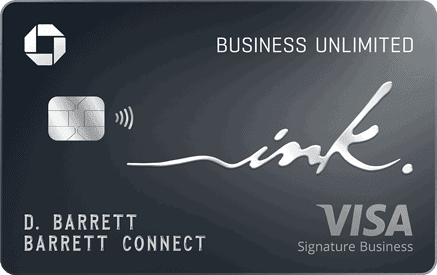
- You’re holding a no-annual-fee catch-all card (such as the Ink Business Unlimited® Credit Card, which earns 1.5X on all purchases) and the cash back exceeds what you’d get from points.
The risk with cash back is if you ever do want to use points for travel, you’ve already redeemed them at the lowest possible rate. Many business owners find it worthwhile to hold transferable points even if they’re not sure how they’ll redeem them yet. You can always choose cash back later if needed, but you can’t undo a past cashback redemption.
Avoiding Devaluation: Points That Don’t Expire
Chase Ultimate Rewards points don’t expire as long as your account is open. Amex Membership Rewards points don’t expire as long as your account remains open and in good standing, and Capital One miles don’t expire for the life of the account.
That said, loyalty programs do devalue over time. What costs 40,000 points today might cost 55,000 in two years, so don’t hoard points indefinitely. Earn them with a purpose in mind, and redeem them within a reasonable window.
Advanced Tactics for Serious Points Earners
Once your core card setup is optimized, there are a few higher-level strategies worth considering.
Should You Pay Taxes and Large Invoices With a Credit Card?
The IRS accepts credit card payments through authorized processors, which charge a fee of roughly 1.87%-1.98% per transaction. Whether that fee is worth paying depends on what you’re earning.
If you’re earning 3X points worth roughly 1.5-2 cents each, a $10,000 tax payment could net you 30,000 points (worth $450-$600 in travel value) after a roughly $198 processing fee — a meaningful net positive. Run the numbers based on your earning rate and how you plan to redeem.
The same logic applies to large vendor invoices. If a vendor accepts credit cards without a surcharge, route the payment through your highest-earning card.
Which Employee Card Policies Maximize Company Rewards?
A few simple policies go a long way:
- Issue employee cards for all team members who make regular purchases.
- Designate which card handles which spend category (e.g., all ads on the Ink Business Preferred®, all travel on a travel card).
- Set individual spending limits per employee card.
- Review transactions monthly, both for category accuracy and to catch any spending that should shift to a different card.
Most issuers, including Chase and Capital One, offer free employee cards with no additional fee and the same earning rates as the primary card.
Which Mistakes Cost Businesses the Most Rewards?
Making these mistakes could mean that you’re leaving a lot of rewards on the table:
- Using the wrong card for a category: Routing ad or telecom spend through a 1X card instead of a 3X card is the most common way business owners leave points behind.
- Applying for cards with no welcome bonus plan: If you’re going to meet a minimum spend requirement anyway, you should be earning a welcome bonus. Plan applications around large purchases.
- Ignoring points balances until they’re needed: Knowing your redemption options before you need to book gives you more flexibility and usually better value.
Carrying Balances: The Fastest Way to Erase Rewards Value
Interest charges on a carried balance will quickly wipe out the value of any points earned. A 20%+ annual percentage rate on a $5,000 balance generates hundreds of dollars in interest per month. No rewards earning rate can offset that.
Business rewards cards are tools for businesses with positive cash flow. If you’re carrying a balance month to month, interest elimination should take priority over rewards optimization.
Ignoring Program Changes and Devaluations
Airlines and hotels update their award charts — sometimes with notice and sometimes without. A program you earned 100,000 points in last year may have restructured pricing by the time you redeem.
To stay informed, follow 10xTravel for program updates and devaluation alerts. When a significant devaluation is announced, it’s often worth accelerating a redemption you’ve been planning rather than waiting.

Building Your Rewards Optimization System
You don’t need a complicated system. Here’s a simple framework to get started and keep it running:
- Audit your spending: Pull three months of expenses and categorize them, then identify your top two or three spend categories.
- Match cards to categories: Select one primary card for your highest-spend category and a flat-rate catch-all for everything else. Most small businesses only need two cards to start.
- Set up employee cards: Issue employee cards and designate which card handles which purchases.
- Plan your first welcome bonus: Apply for a new card before a large planned expense, not after.
- Review quarterly: Check your points balances, confirm categories are coding correctly and look for transfer bonuses or new redemption opportunities.
The best business credit card rewards strategy is one you’ll actually maintain. Start simple, add complexity as your spending and comfort level grow and redeem with intention.

New to the world of points and miles? The Capital One Venture Rewards Credit Card is the best card to start with.
Current offer: Limited Time Offer: Enjoy a $300 stays credit, plus earn 75K bonus miles once you spend $4,000 on purchases within 3 months from account opening.
Earn 5X miles on hotels, vacation rentals and rental cars booked through Capital One Travel; 2X miles on all purchases.
Editors Note: Opinions expressed here are author’s alone, not those of any bank, credit card issuer, hotel, airline, or other entity. This content has not been reviewed, approved or otherwise endorsed by any of the entities included within the post.
10xTravel is part of an affiliate sales network and receives compensation for sending traffic to partner sites, such as CreditCards.com. This site may earn compensation when a customer clicks on a link, when an application is approved, or when an account is opened. This compensation may impact how and where links appear on this site. This site does not include all financial companies or all available financial offers. Terms apply to American Express benefits and offers. Enrollment may be required for select American Express benefits and offers. Visit americanexpress.com to learn more. All values of Membership Rewards are assigned based on the assumption, experience and opinions of the 10xTravel team and represent an estimate and not an actual value of points. Estimated value is not a fixed value and may not be the typical value enjoyed by card members.
Editors Note: Opinions expressed here are author’s alone, not those of any bank, credit card issuer, hotel, airline, or other entity. This content has not been reviewed, approved or otherwise endorsed by any of the entities included within the post.
bonus cash back
after you spend $6,000 on purchases in the first 3 months from account opening.
earn 75K bonus miles
once you spend $4,000 on purchases within 3 months from account opening.

bonus points
after you spend $5,000 on purchases in the first 3 months from account opening.
Membership Rewards® Points
after you spend $8,000 in eligible purchases on your new Card in your first 6 months of Card Membership. Welcome offers vary and you may not be eligible for an offer. Apply to know if you’re approved and find out your exact welcome offer amount – all with no credit score impact. If you’re approved and choose to accept the Card, your score may be impacted.