10xTravel is part of an affiliate sales network and receives compensation for sending traffic to partner sites, such as CreditCards.com. This site may earn compensation when a customer clicks on a link, when an application is approved, or when an account is opened. This compensation may impact how and where links appear on this site. This site does not include all financial companies or all available financial offers. Terms apply to American Express benefits and offers. Enrollment may be required for select American Express benefits and offers. Visit americanexpress.com to learn more. All values of Membership Rewards are assigned based on the assumption, experience and opinions of the 10xTravel team and represent an estimate and not an actual value of points. Estimated value is not a fixed value and may not be the typical value enjoyed by card members.
Note: Some of the offers mentioned below may have changed or may no longer be available. The content on this page is accurate as of the posting date; however, some of our partner offers may have expired. You can view current offers here.
If you know how to work the system, you can often find yourself booking flights for a fraction of the price that most other travelers pay. And let’s face it—scoring a great flight deal is almost as enjoyable as the trip itself.
One of the most powerful yet underutilized strategies for saving big on airfare is the use of positioning flights.
Whether you’re trying to stretch the value of your points further, unlock access to premium cabins or simply lower the total cost of a trip, understanding how positioning flights work can open up a number of lucrative opportunities.
In this guide, we’ll cover exactly what a positioning flight is, when it makes sense and how you can use it to find amazing deals. You’ll also learn about how to look for cheap flights, common mistakes to avoid and how to build your first itinerary step by step. By the end, you’ll have a framework you can put into action the next time you search for flights.

What is a Positioning Flight and Why Does it Matter?
A positioning flight is a separate ticket that you book to reach a different airport—usually a major hub—where flights to your final destination are significantly cheaper or where there is greater award availability.
Instead of booking a trip directly from your home airport to your final destination, you “position” yourself somewhere else first, often saving hundreds of dollars or thousands of points in the process.
Think of positioning flights as a preliminary flight before your “actual” itinerary begins.
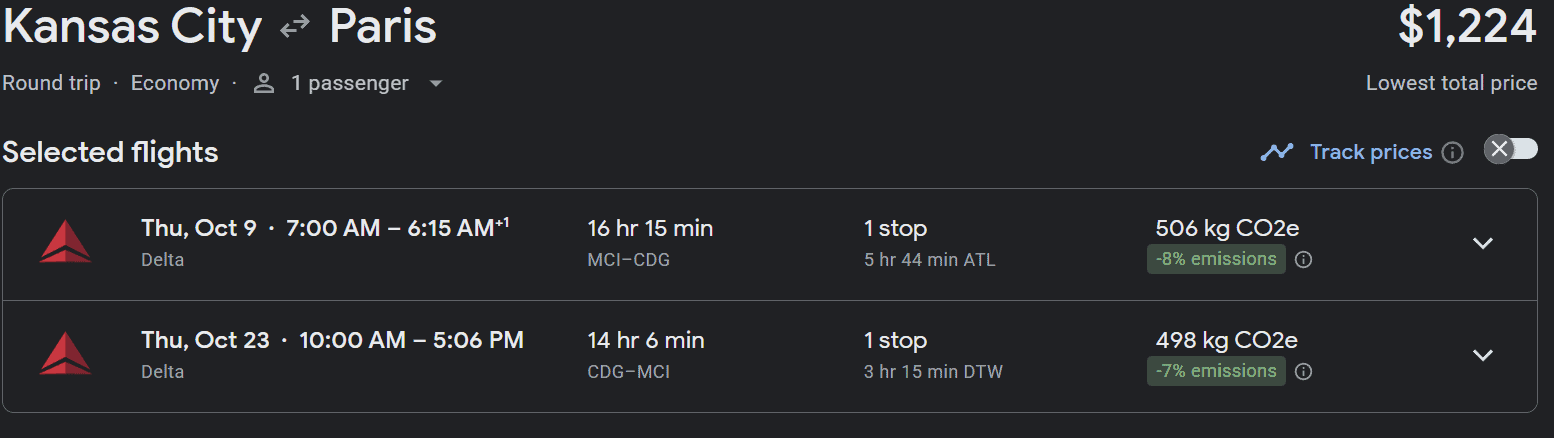
For instance, imagine you live in Kansas City and want to fly to Paris. A round-trip economy ticket from Kansas City (MCI) to Paris (CDG) might cost $1,224.
Source: Google Flights
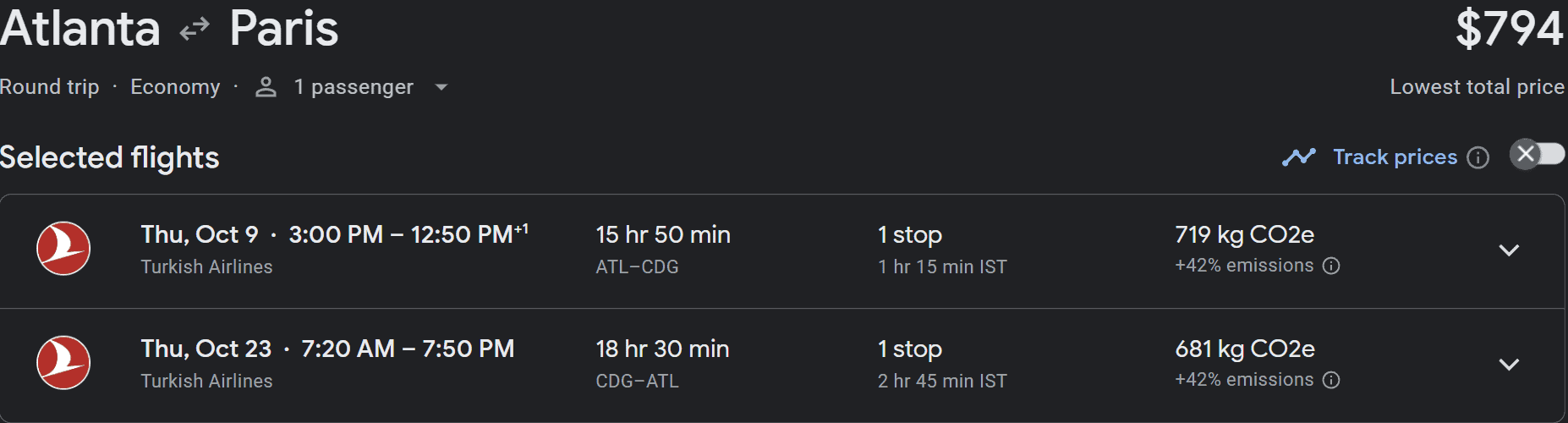
However, if you were to first fly from Atlanta instead of Kansas City, you could pay $794 for a round-trip ticket to Paris.
Source: Google Flights
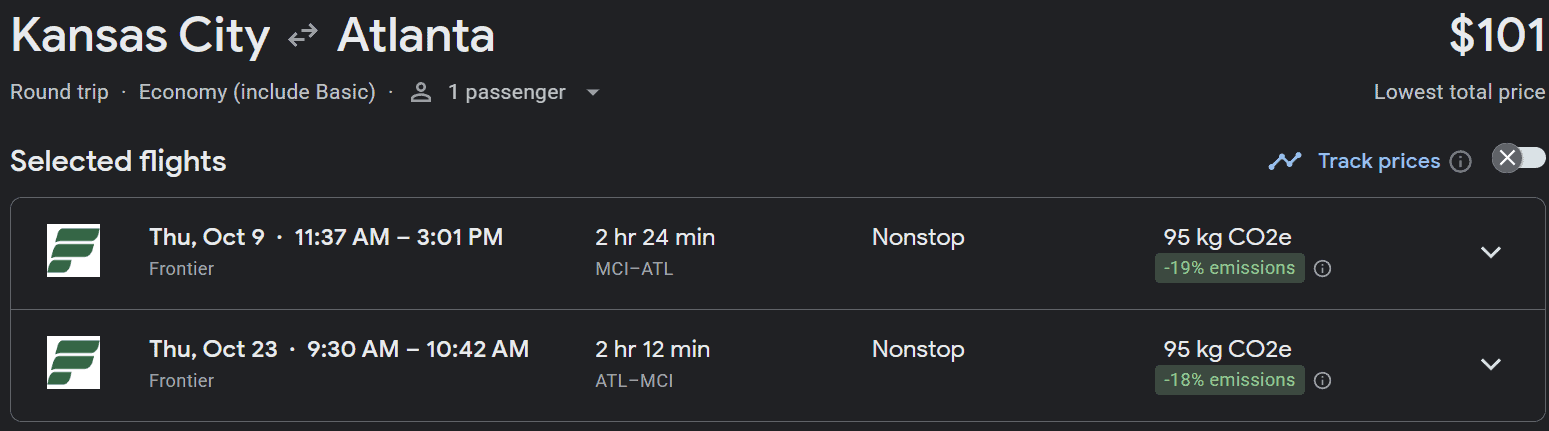
And luckily, a round-trip ticket from Kansas City to Atlanta costs just $101.
Source: Google Flights
In this case, you’d pay a total of $895 instead of $1,224. That works out to savings of $329, simply by using a positioning flight.
How Positioning Flights Differ From Regular Flights
Positioning flights aren’t simply another leg of your round-trip itinerary.
There are some key differences between round-trip tickets with a connection vs. positioning flights. Here’s how they differ:
- Ticketing. Positioning flights are booked separately to your round-trip tickets, often—though not always—on a different airline.
- Purpose. The goal of positioning flights is not to start your trip immediately, but to reach a hub where the primary itinerary begins.
- Risks. If your positioning flight is delayed or cancelled, the airline operating your primary itinerary isn’t responsible for rebooking you. This can lead to you missing your primary flight or paying hefty rebooking fees, defeating the purpose of the positioning flight.
- Integration. It’s on you to manage your baggage, layovers and timing. You’ll need to recheck your baggage between your positioning flight and primary flight, and ensure you leave plenty of time between flights to mitigate the effects of delays.
So before you jump on board the positioning flight bandwagon, it’s important to understand both the risks involved and the need for careful planning.
The Economics of This Strategy
The math behind positioning flights is straightforward.
Simply add the cost of your positioning flight to the primary airfare you’re targeting.
If the total is still cheaper than booking directly from your hometown—and especially if it also gets you a better product, such as lie-flat business class seats—it’s a solid deal.
For instance, let’s say you’re based in Traverse City, Michigan, and are planning the ultimate scuba diving trip to Manado in North Sulawesi, Indonesia. If you were to fly directly from Traverse City (TVC) to Manado (MDC), you’d pay $2,191 round-trip in economy.
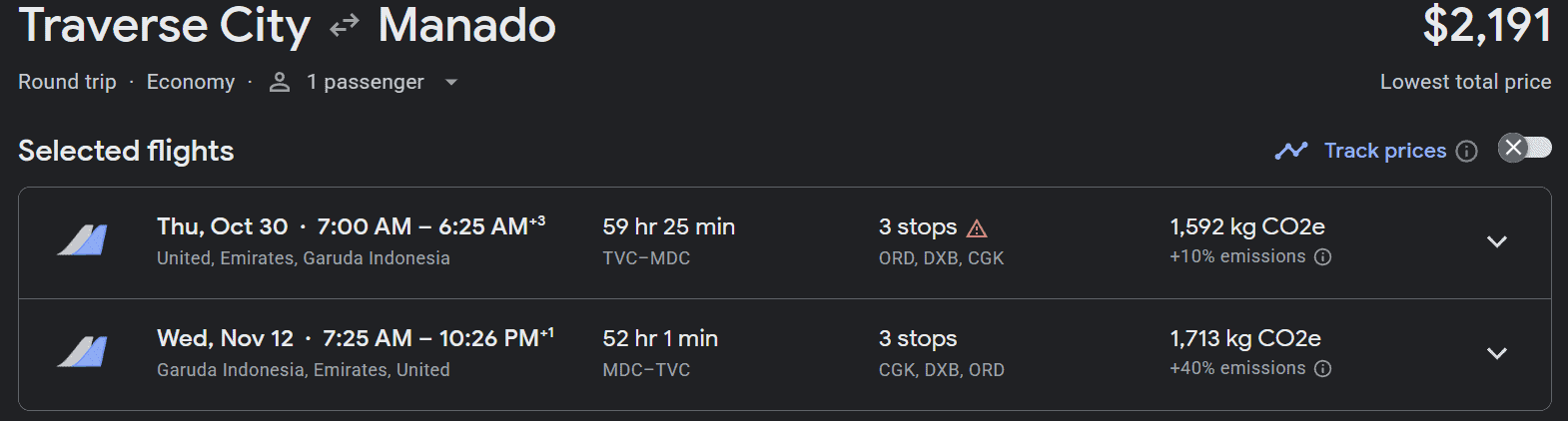
Source: Google Flights
Alternatively, if you were able to fly from Los Angeles (LAX) to Manado, you’d pay $949 round-trip in economy.
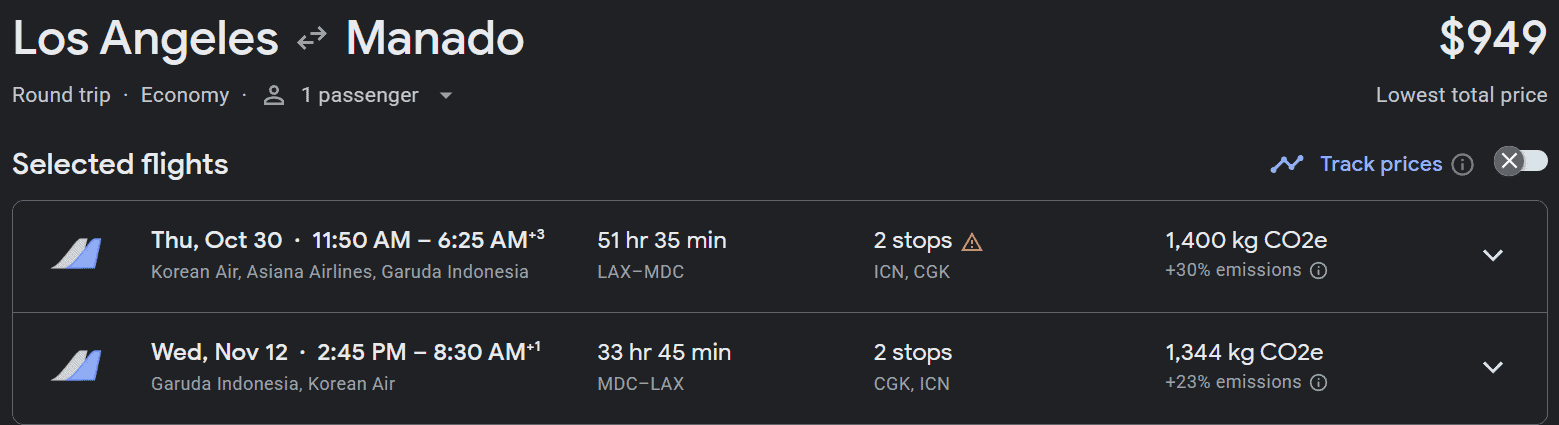
Source: Google Flights
And to get from Traverse City to Los Angeles, it’ll cost you $287 round-trip with United Airlines.
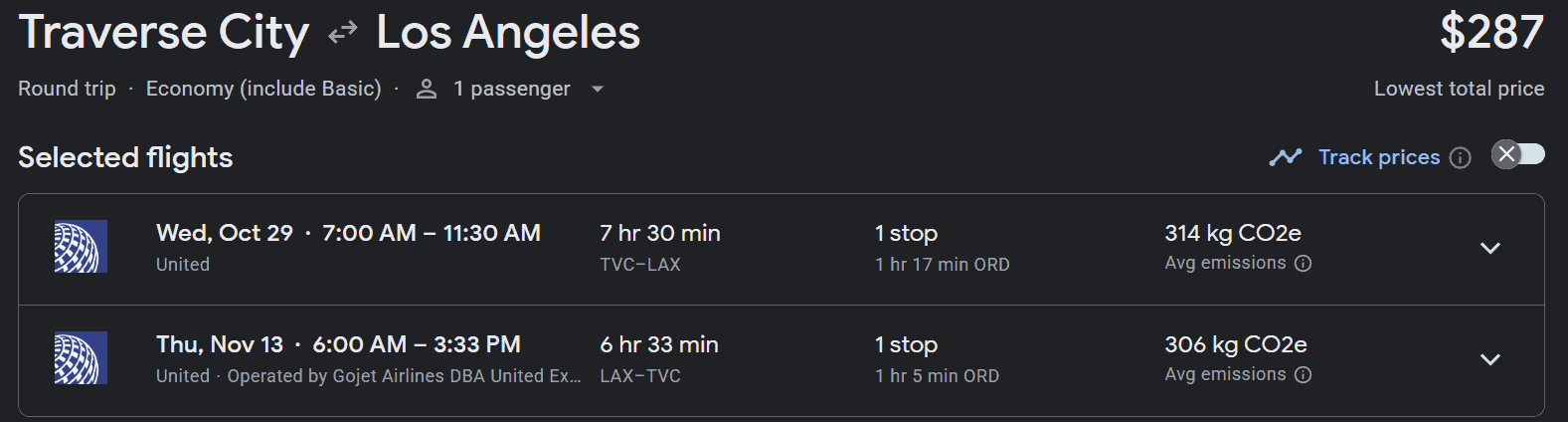
Source: Google Flights
That means that by taking a positioning flight to Los Angeles, your total trip will cost $1,236 ($949 + $287), which saves you a whopping $955 ($2,191 – $1,236) compared to flying directly from Traverse City.
However, a key factor that may affect this calculation is unforeseen additional expenses. These include the following:
- Baggage fees. You’re best off flying with carry-on baggage only when taking advantage of positioning flights. If you have to check a bag, you’ll pay fees for both the positioning flights and the primary flights.
- Overnight costs. If your primary flight leaves in the morning or around midday, you might need to take your positioning flight the day before. You need a buffer of at least three to four hours between the arrival of your positioning flight and the departure of your primary flight to deal with potential delays. If you live far away from the hub you’re positioning yourself in, or if you can’t find any early morning positioning flights, you may be better off flying the day before and staying in a hotel.
- Rebooking fees. If things go south, you may miss your primary flight and have to pay to rebook yourself on a later flight (assuming there’s availability). In this case, you’ll likely need to pay rebooking fees, eroding the value of this strategy.
Baggage fees and overnight costs are key to look out for, and need to be calculated before booking your positioning flight.
In the case of our example from Traverse City to Manado, we’re saving close to $1,000 by positioning ourselves in Los Angeles, meaning we have a greater buffer to absorb these additional costs. However, for positioning flights that save you less than $300, these fees can eat away at the value of the strategy.
If these additional fees push you out of cost-savings territory, the extra risk and effort of the positioning flight isn’t worth it.
When and Where a Positioning Flight Delivers Value
Positioning flights are most useful when airlines price fares aggressively out of certain hubs or when award availability opens up from specific airports only.
Hub airports often have better fares and award availability due to increased competition between carriers. You can also benefit from flash airfare sales between certain hub airports and international destinations, which you wouldn’t otherwise find from regional and secondary airports.
Here’s where positioning flights pay off.
Secure Award Availability
Positioning flights don’t always need to be between regional airports and major hubs. Sometimes, you might save money or secure award availability by positioning yourself from one major hub to another major hub.
For instance, let’s say you’re based near Atlanta International Airport (ATL)—the busiest airport in the world—and you’ve got a stash of Ultimate Rewards points that you want to use to get you to Dublin.
If you want to start your primary itinerary in Atlanta, one option would be to transfer your Ultimate Rewards points to Air France-KLM Flying Blue. Through the Flying Blue program, you could book award flights to Dublin with Air France, KLM Royal Dutch Airlines or Delta Air Lines.
For an economy award ticket from Atlanta to Dublin, you’d be looking at about 25,000 Flying Blue miles each way.
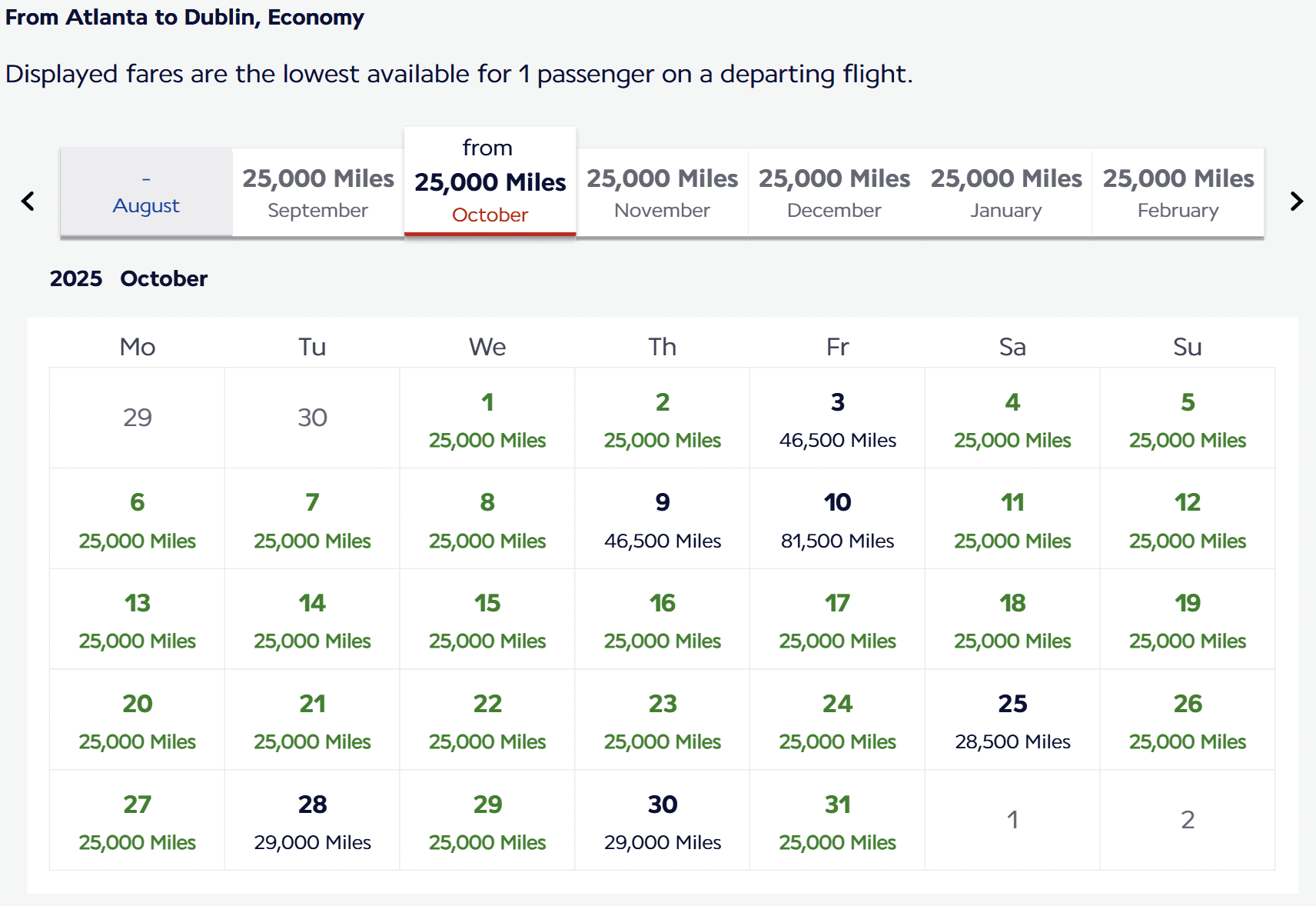
Source: Air France
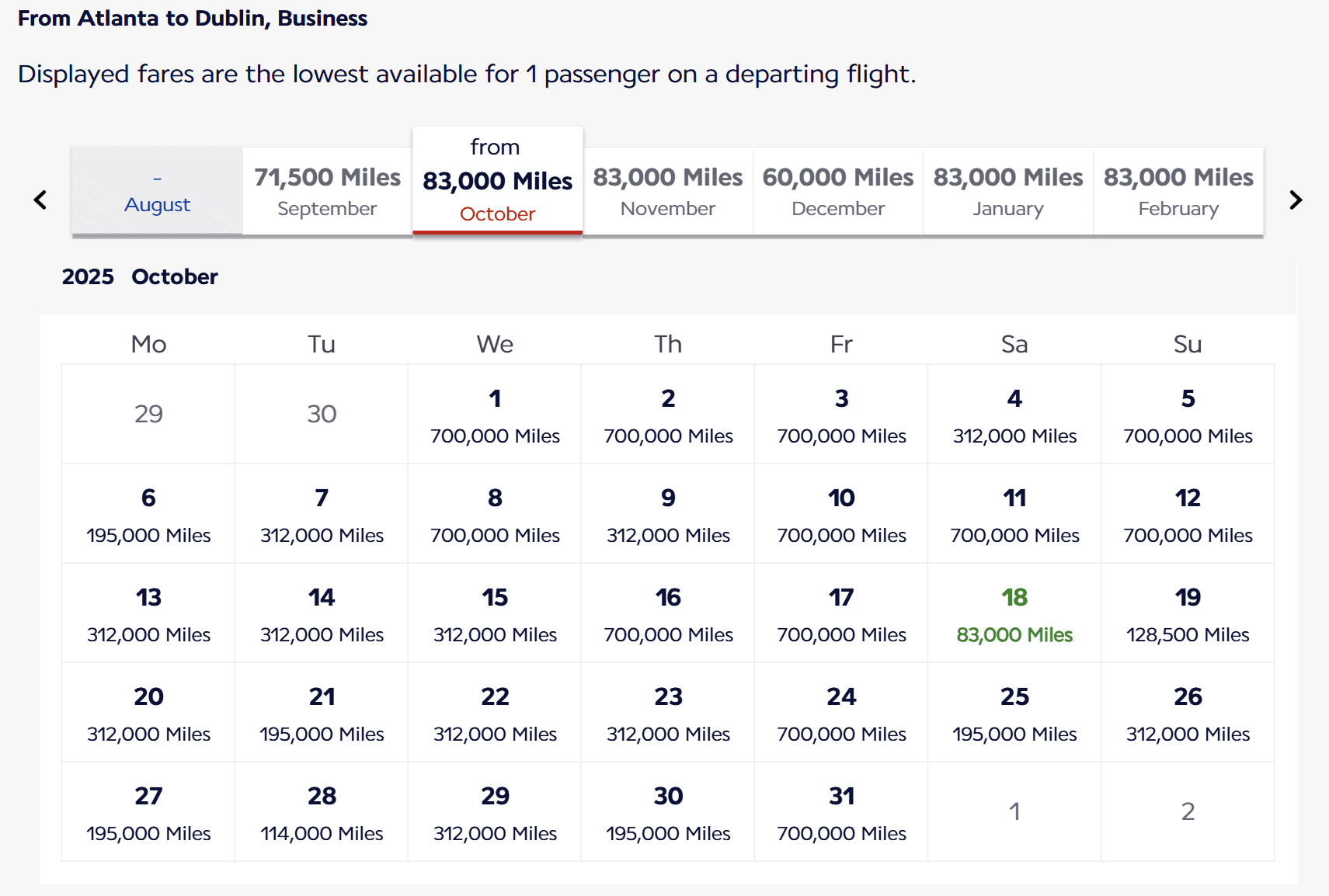
For a business award fare through Flying Blue to Dublin, you could pay anywhere between 83,000 miles and an eye-watering 700,000 miles each way, thanks to dynamic pricing.
Source: Air France
Obviously, these fares are unaffordable and offer poor value for your hard-earned points. That’s where positioning yourself at a different hub airport can provide immense value.
For instance, you could position yourself in Washington, D.C. and transfer your Ultimate Rewards points to Aer Lingus AerClub instead. An off-peak economy award fare from Washington-Dulles (IAD) to Dublin costs as few as 13,000 Avios or 50,000 Avios in business each way.

Source: Aer Lingus
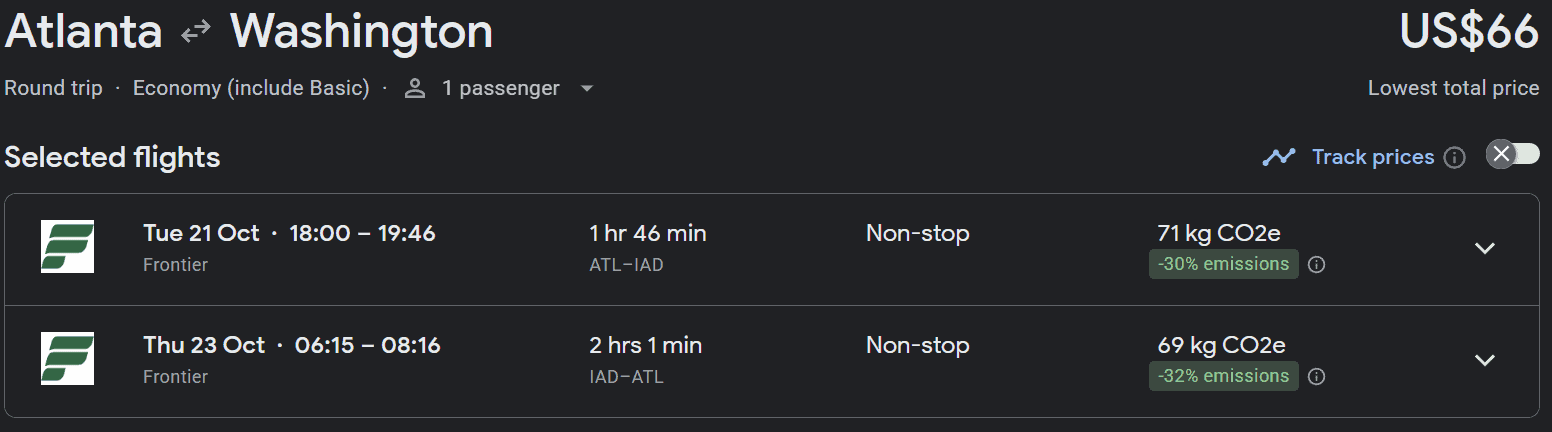
That works out to a total of 26,000 Avios in economy or 100,000 Avios in business for a round-trip fare. Considering that a round-trip cash fare from Atlanta to Washington-Dulles (IAD) costs as little as $66, that repositioning flight is worth every cent.
Source: Google Flights
This is one example of where leveraging a positioning flight between major hubs enables you to take advantage of better award rates and secure award availability.
Convenience
You might want to use a positioning flight for the sake of convenience.
If you’re based near Austin (AUS) but find significantly cheaper flights departing from Dallas (DFW) to an international destination, you might want to use a positioning flight between Austin and Dallas to save you the three-hour drive and long-term parking fees.
Convenience alone can justify positioning flights, as long as the savings work out.
Turn Your Positioning Flight into a Stopover
Another great strategy when planning positioning flights is to make the most out of the extra flight. You can do this by turning your positioning flight into an opportunity for an additional stopover.
For instance, if you’re taking a positioning flight to Seattle (SEA) to fly onward to Tokyo, you could fly to Seattle early in the morning the day before your flight to Japan and spend the day exploring the city. This way, you’d benefit from the cost savings of the positioning flight, the safety buffer of positioning the day before your long-haul flight and from the opportunity to explore a new city en route to your final destination.
This can be especially beneficial when your positioning flight is an international flight, allowing you to see an international city before reaching your end destination.
This changes positioning flights from being a source of additional travel stress to being an opportunity to enrich your entire trip.
Best Hubs and Routes to Watch
While deals can appear anywhere, certain hubs consistently deliver better pricing and award opportunities. Some of these include:
- Atlanta (ATL): A Delta stronghold that offers competitive fares on both domestic and international routes
- Boston (BOS): Known for frequent fare wars on flights to Europe, particularly in shoulder seasons
- Charlotte (CLT): Offers solid connectivity for long-haul American Airlines flights, particularly to Europe
- Chicago-O’Hare (ORD): Centrally located with a high volume of international service and plenty of fare competition
- Dallas Fort Worth (DFW): A strong hub for long-haul fares and competitive pricing
- Detroit (DTW): Another Delta hub with seasonal deals on flights to Europe and competitive business-class fares
- Houston (IAH): A key hub for Latin America and also home to competitive long-haul deals
- Los Angeles (LAX): A powerhouse for Asia-Pacific flights and discounted long-haul fares
- Miami (MIA): The primary gateway for Latin American and Caribbean travel, with frequent deals to South America
- New York (JFK) and Newark (EWR): Intense competition on transatlantic routes and strong connectivity across the globe
- Philadelphia (PHL): A valuable secondary hub for transatlantic flights with frequent promotions
- San Francisco (SFO): An excellent hub for Asia, with multiple carriers competing on routes to China, Japan and beyond
- Seattle (SEA): Strong options to Asia and Europe with competitive pricing
- Washington, D.C. (IAD): Great for transatlantic award availability and competitive demand
Seasonal factors also matter. Europe is typically cheaper during winter and shoulder seasons, while deals to Asia often pop up in spring and fall.
The good news is that these hubs cover the majority of the United States, from East to West, making it easy to find cheap positioning flights from your hometown to a hub in most cases.
Finding the Best Deals
Scoring lucrative positioning flights isn’t guesswork—you need a structured process to identify when and where to look.
Here’s a three-step workflow you can use:
- Search with flexibility: You should check fares from multiple departure points and keep your dates as flexible as possible. Flying a day later or earlier can make as big a difference in price as flying from one airport vs. another.
- Use alternate airports: When looking beyond your hometown airport, compare as many alternate departure points as possible. Flying out of Philadelphia vs. Newark might not seem like a big deal, but it could save you hundreds of dollars.
- Set fare alerts: Use tools that track price drops and award space.
By employing this workflow, you can more easily identify the best deals and the cheapest positioning flights to secure those deals.
Top Search Tools for Positioning Flights
When searching for positioning flights, there are several platforms you can use to ease your search.
Google Flights is one of your best bets for spotting fare differences across cities and for getting an overview of the airlines that operate each route.
To simplify your search, begin by looking for the cheapest positioning flights to other cities. While this may seem counterintuitive, it can provide a solid starting point for your search by eliminating hubs that are too expensive to position yourself in.
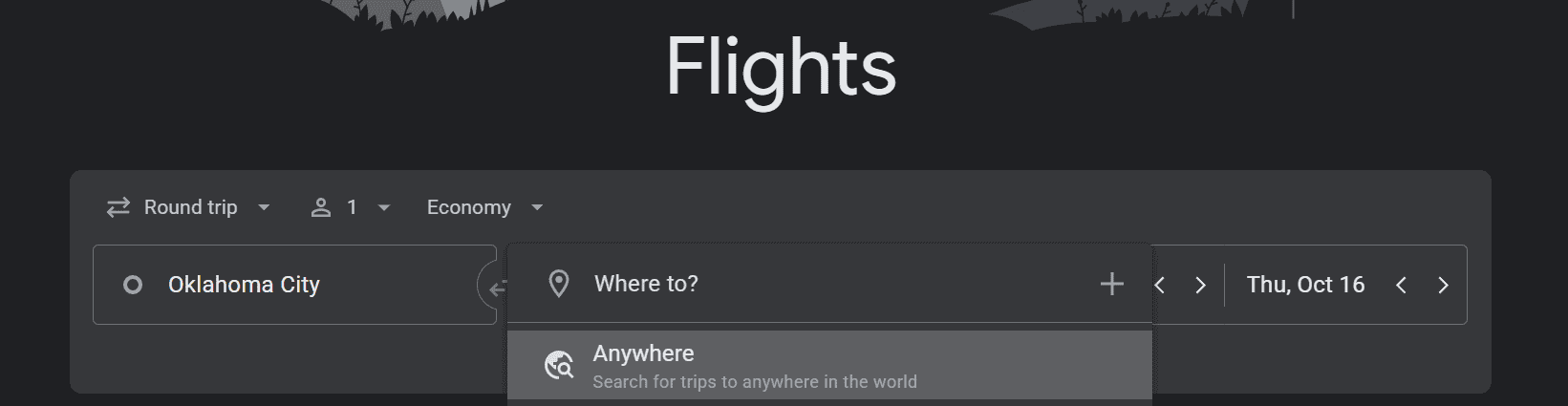
To do this, input your hometown into the departure airport section and select “Anywhere” from the destination dropdown menu.
Source: Google Flights
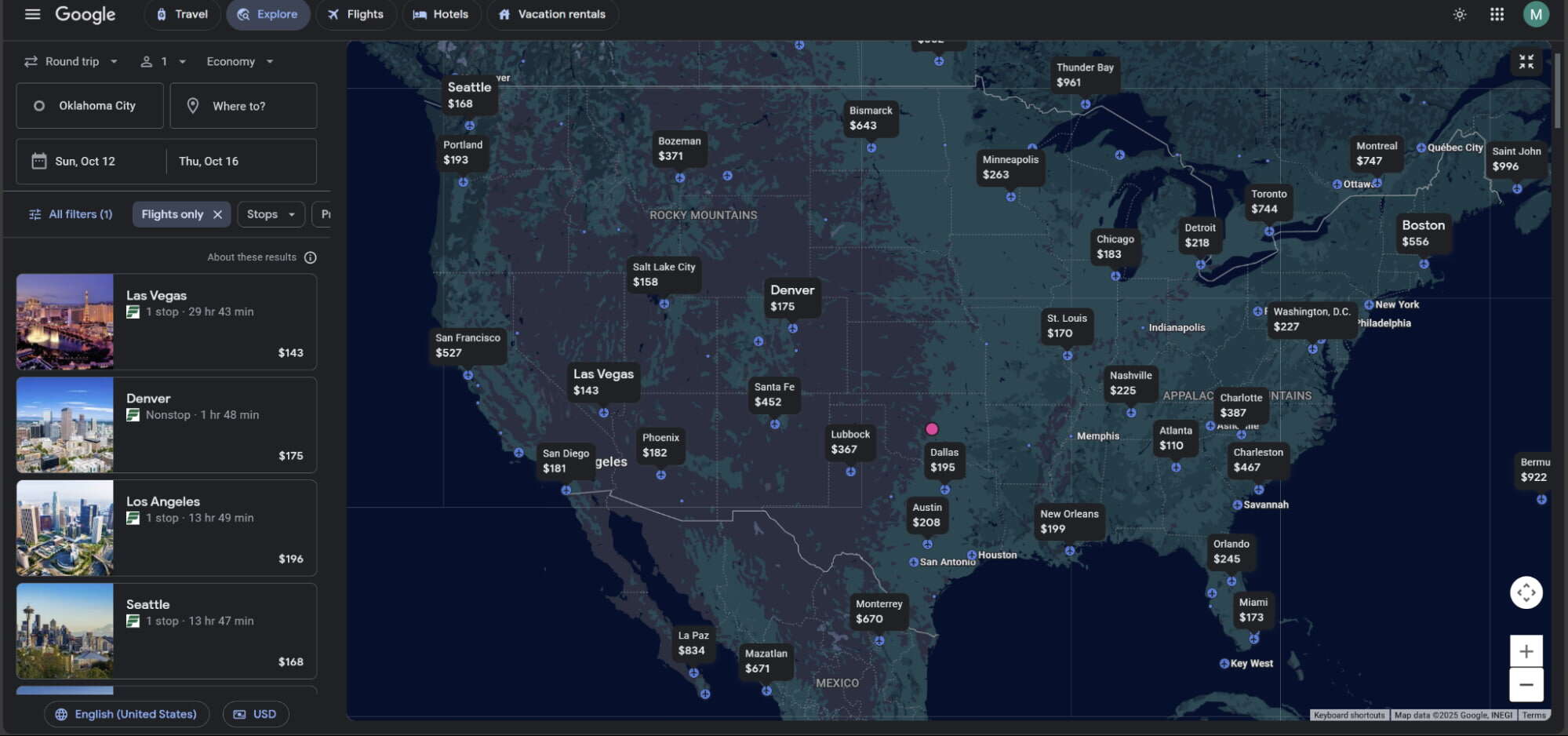
Once you’ve done that, click “Explore” and you’ll be redirected to a map overview showing the fare prices to different airports.
Source: Google Flights
For example, from Oklahoma City (OKC), the cheapest flights are currently to Atlanta (ATL), Seattle (SEA), San Diego (SAN), Phoenix (PHX), Las Vegas (LAS) and Chicago (ORD).
If my end destination is Rome, I could begin my search for cheap fares from these six airports. To put it another way, there’d be no point in looking for cheap fares to Rome first and finding a solid deal from Toronto, only to find out that the positioning flight will cost you $747.
Google Flights also lets you add on the cost of carry-on and checked baggage, making it even easier to calculate the value proposition of positioning flights.
Another great tool to add to your flight search arsenal is an award seat finder, such as seats.aero. With the help of seats.aero, you can search for flights in specific classes from and to multiple airports and geographic regions, as well as see the best rewards programs to book each flight through.
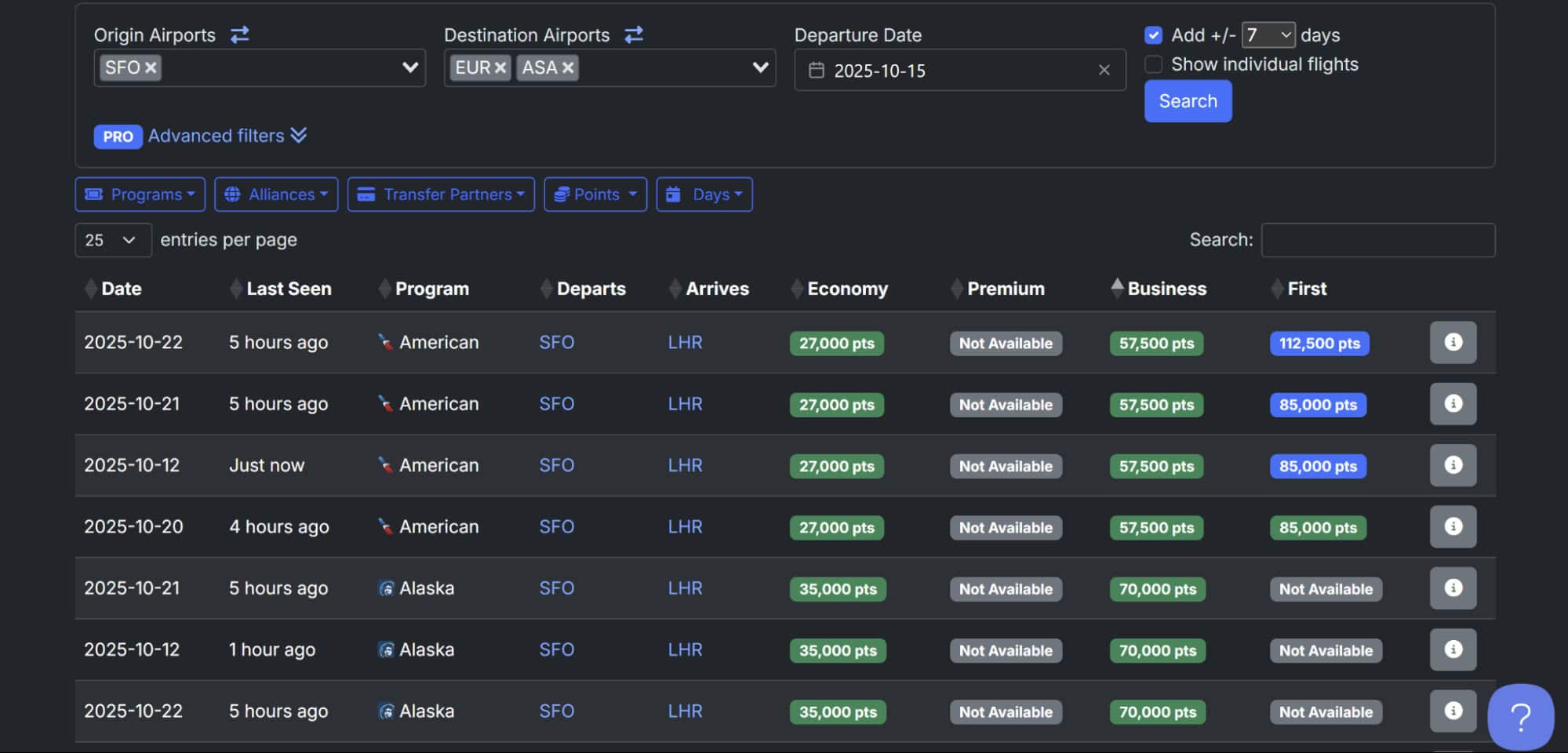
Source: seats.aero
If you’re on the hunt for international award fares, using a tool like seats.aero makes the entire process a lot less stressful.
How Do You Plan Your First Itinerary?
Planning a trip with a positioning flight requires more preparation than a single round-trip ticket, but the payoff is often worth it.
Here’s what to keep in mind:
- Buffers. Always leave at least several hours—if not an overnight stay—between your positioning flight and your long-haul departure. This protects you from delays and cancellations.
- Baggage. Unless it’s essential, avoid checking bags on your positioning flight, particularly if you’re planning to catch your primary long-haul flight on the same day. Extra time spent waiting at the baggage collection belt could cause you to miss your long-haul flight.
- Timing. When possible, it’s best to book the first flight of the day. This not only gives you a greater time buffer, but it also allows you to be put on the next flight in case the first is cancelled or delayed. It also protects you from knock-on delays due to earlier flights leaving behind schedule. Avoid booking the last flight of the day as your positioning leg.
- Free cancellation. It’s not unheard of for some travellers to book two positioning flights for the same day. This means that if one flight is delayed or cancelled, you still have a guaranteed seat on the other flight. However, if you pursue this strategy, you need to ensure that you can cancel your flight last-minute free of charge—that means you need to purchase a full-fare economy ticket and avoid basic economy fares.
With these factors in mind, begin by looking at major hubs you can reach from your hometown on the cheap. Then, see which of these hubs offers the best rates to your final destination. As long as the math works out, go ahead and book your positioning flight, and enjoy the extra cost savings.
Is it Worth the Cost?
If the total trip cost with a positioning flight is less than the cheapest direct option from your hometown—and ideally saves you at least $200 or opens up access to better cabins—it’s usually worth it.
For example, let’s say a return fare from your local airport to Tokyo is $1,400. But a Los Angeles to Tokyo return deal is $700, and your positioning flight costs $100, meaning your total spend is $800. That’s $600 in savings you can put toward other elements of your trip or simply pocket.
However, if a positioning flight would save you $100 only, and $80 of those $100 in savings would need to cover an overnight stay, you’re likely better off flying directly from your hometown.
Common Mistakes to Avoid
The most frequent pitfalls of positioning flights are easy to sidestep once you know them. These include:
- Booking tight layovers that leave no buffer for delays
- Choosing the last flight of the day as your positioning flight
- Checking bags without accounting for check-in times and potential delays
- Getting your positioning flight dates wrong
As long as you’re aware of these pitfalls and steer clear of them, you have the potential to reap a lot of value from positioning flights.

Putting Your Strategy Into Action
By now, you know that positioning flights can open up major savings, unlock premium cabins and expand your travel possibilities. The key is to combine flexibility with conservative planning.
Build Your First Itinerary
Here’s a simple framework for putting it all together:
- Choose your end destination and decide whether you’re going to use points and miles or cash to book.
- Search for the cheapest positioning flights from your hometown to major hubs using Google Flights.
- Search for cheap fares or award rates from these hubs to your end destination using seats.aero or another seats aggregator.
- Set fare and award alerts using tools like Google Flights and ExpertFlyer.
- Book your itinerary.
Remember, plan generous buffers between your positioning flight and long-haul departure.
If you want extra security, book two positioning flights and ensure that you can cancel the later flight for free. This way, you have an “insurance” policy in the event that the first flight is cancelled or delayed. And, if you can afford it, consider flying in the day before and making a stopover out of your positioning flight, for the sake of extra safety and enjoyment.
Once you’ve decided on your positioning flight, don’t wait for the award ticket or discounted fare for your main flight.
With a little practice, positioning flights can become second nature. Instead of being locked into whatever your local airport offers, you’ll have access to the best deals worldwide. That freedom can mean saving hundreds—or even thousands—of dollars or points while enjoying a better overall travel experience.
Final Thoughts
A positioning flight is one of the most practical strategies for travelers who want to maximize both cash and award bookings. While it does require extra planning and awareness of the risks, the rewards are significant. From saving money on long-haul trips to unlocking premium award availability, positioning flights are a powerful tool in any savvy traveler’s toolkit.
So, the next time you’re faced with hefty fees from your hometown airport, consider whether a positioning flight will save you money and make your trip possible. In most cases, the answer will be yes.

New to the world of points and miles? The Chase Sapphire Preferred® Card is the best card to start with.
With a bonus of Earn 75,000 bonus points after you spend $5,000 on purchases in the first 3 months from account opening. , 5x points on travel booked through the Chase TravelSM Portal and 3x points on restaurants, streaming services, and online groceries (excluding Target, Walmart, and wholesale clubs), this card truly cannot be beat for getting started!
Editors Note: Opinions expressed here are author’s alone, not those of any bank, credit card issuer, hotel, airline, or other entity. This content has not been reviewed, approved or otherwise endorsed by any of the entities included within the post.
10xTravel is part of an affiliate sales network and receives compensation for sending traffic to partner sites, such as CreditCards.com. This site may earn compensation when a customer clicks on a link, when an application is approved, or when an account is opened. This compensation may impact how and where links appear on this site. This site does not include all financial companies or all available financial offers. Terms apply to American Express benefits and offers. Enrollment may be required for select American Express benefits and offers. Visit americanexpress.com to learn more. All values of Membership Rewards are assigned based on the assumption, experience and opinions of the 10xTravel team and represent an estimate and not an actual value of points. Estimated value is not a fixed value and may not be the typical value enjoyed by card members.
Editors Note: Opinions expressed here are author’s alone, not those of any bank, credit card issuer, hotel, airline, or other entity. This content has not been reviewed, approved or otherwise endorsed by any of the entities included within the post.

bonus cash back
after you spend $6,000 on purchases in the first 3 months from account opening.

earn 75K bonus miles miles
once you spend $4,000 on purchases within 3 months from account opening.
bonus points
after you spend $5,000 on purchases in the first 3 months from account opening.
Membership Rewards® Points
after you spend $8,000 in eligible purchases on your new Card in your first 6 months of Card Membership. Welcome offers vary and you may not be eligible for an offer. Apply to know if you’re approved and find out your exact welcome offer amount – all with no credit score impact. If you’re approved and choose to accept the Card, your score may be impacted.