10xTravel is part of an affiliate sales network and receives compensation for sending traffic to partner sites, such as CreditCards.com. This site may earn compensation when a customer clicks on a link, when an application is approved, or when an account is opened. This compensation may impact how and where links appear on this site. This site does not include all financial companies or all available financial offers. Terms apply to American Express benefits and offers. Enrollment may be required for select American Express benefits and offers. Visit americanexpress.com to learn more. All values of Membership Rewards are assigned based on the assumption, experience and opinions of the 10xTravel team and represent an estimate and not an actual value of points. Estimated value is not a fixed value and may not be the typical value enjoyed by card members.
Choosing the right business structure is one of the most important decisions you can make as a business owner.
Whether you’re launching a side hustle, scaling a fast-growing online brand or co-managing a service-based business, the way you structure your company affects everything from your tax bill to your personal risk exposure and more.
In the United States, the limited liability company, or LLC, has become the go-to choice for millions of entrepreneurs because it combines the liability protection of a corporation with the simplicity and flexibility of a sole proprietorship.
This structure doesn’t only protect your personal home and savings from business debts—although this is a major benefit—but it also influences how you’re taxed, what financial products you qualify for and how easy it is to bring in partners or eventually sell your company.
Let’s explore the benefits of starting an LLC, how limited liability protection works, how LLCs compare to sole proprietorships and corporations, and how these structural differences affect taxes and the daily management of your business.

Personal Asset Protection Through Limited Liability
Forming an LLC is one of the most common ways entrepreneurs separate their personal finances from their business operations.
Here’s how liability protection works.
How Liability Protection Works in Practice
An LLC creates a legal separation between the business entity and the individuals who own it. This is one of the main benefits of having an LLC.
The company is treated as its own “person” for liability purposes, while the individual liability of its owners is limited to the amount invested by each of them in the company.
When the business incurs debts, breaks a contract or becomes the target of a lawsuit, the liability stays with the company rather than its members. That means all company assets are fair game when it comes to lawsuits while the assets of individuals remain protected.
For instance, an LLC structure can protect its owners in the following situations:
- Business creditors or lenders pursuing unpaid commercial debts. If your LLC defaults on a loan that was not personally guaranteed, the creditor may seize business assets, but it can’t seize your house, car or personal accounts.
- Customer injury claims arising on business premises. A customer slipping in your store could sue your LLC, but not you personally, unless you engaged in direct negligence independent of the business.
- Contractual disputes or unpaid vendor invoices. Vendors can pursue your LLC’s assets if invoices go unpaid. However, you and any other owners will remain protected unless you’ve signed personal guarantees.
- Employee or contractor actions taken during business operations. If an employee causes harm while working for your LLC, liability typically remains with the company rather than flowing to the members.
- Intellectual property or advertising disputes. Claims of trademark infringement or false advertising generally target the LLC itself.
These are just a handful of situations that demonstrate the advantages of starting an LLC. However, it’s important to understand that limited liability isn’t absolute. Courts can “pierce the corporate veil” if owners fail to maintain the separation between personal and business activity.
To ensure that you retain your limited liability, it’s crucial to:
- Maintain a separate business bank account
- Avoid using company funds for personal purchases
- Sign contracts on behalf of the LLC, not personally
- Keep required state filings, like annual reports, up to date
- Maintain basic company records such as an LLC operating agreement, membership interest ledger and financial records
- Properly capitalize the business for its expected level of risk
If you blur the line between your personal and business activities, courts may conclude that your entity is being used improperly and hold you and any other members personally liable.
What Assets Remain Protected Under an LLC
LLC protection shields your personal property from business creditors.
The following asset categories typically remain protected under the veil of an LLC structure:
- Primary residences
- Personal vehicles used for commuting and private use
- Personal checking and savings accounts
- Retirement accounts, such as IRAs and 401(k)s
- Personal investment accounts
- College savings plans, including 529 accounts
- Personal valuables like furniture, jewelry and collectibles
These assets remain separate because your LLC owns its own business assets, which have no relation to a member’s personal assets. For this reason, all property owned by the LLC is up for grabs when it comes to lawsuits and debt repayments.
These include but aren’t limited to:
- Company bank accounts
- Business equipment
- Inventory
- Tools and machinery
- Company-owned vehicles
- Commercial real estate owned by the LLC
- Accounts receivable
- Intellectual property held by the company
Creditors can pursue these assets because they belong to the business, not the owner.
LLC liability protection is broad and relatively uniform across the U.S., but there are some differences worth noting.
First, certain states provide stronger charging-order protection, which protects the LLC from any personal claims against or obligations of a member. Charging-order protection does this by restricting creditors to receiving distributions rather than seizing a member’s ownership interest, protecting other members’ interests in the LLC.
While all states provide charging-order protection, only a select few offer it to single-member LLCs. Some states also require more detailed compliance filings, and failure to meet them can weaken your liability protection.
Despite these variations, the core concept remains consistent: LLCs protect personal assets from business obligations when owners maintain proper separation.

Tax Flexibility and Pass-Through Benefits of Forming an LLC
Beyond liability protection, tax flexibility is one of the most powerful reasons small-business owners choose the LLC structure.
Unlike corporations, LLCs are not tied to a single tax classification. Instead, LLCs can choose the tax treatment that best aligns with their income level, the number of members and long-term goals.
The IRS treats LLCs in one of two default ways, depending on the number of members:
- A single-member LLC (SMLLC) defaults to being taxed as a sole proprietorship.
- A multi-member LLC defaults to being taxed as a partnership.
Both of these are pass-through taxation structures, meaning that profits and losses pass directly to the owners and are reported on their personal tax returns.
That also means that owners can report business losses on their personal tax return, allowing them to offset other personal income and potentially reduce their tax burden.
These pass-through taxation structures avoid the double-taxation issue faced by traditional corporations, whereby both corporate profits and dividends are taxed.
That said, there are some instances where LLCs might want to elect to be treated as a corporation for tax purposes.
Choosing Between Tax Classifications
One of the advantages of an LLC is that you can elect to be taxed as various types of entities, including:
- Sole proprietorship (default for single-member LLCs)
- Partnership (default for multi-member LLCs)
- S-corporation
- C-corporation
Being taxed as a sole proprietor is best suited for low-revenue, early-stage LLCs with a single owner and minimal administrative needs.
If you have a multi-member LLC that’s still in the early startup stages, being taxed as a partnership offers flexible profit sharing while avoiding significant administrative burdens.
Once your LLC earns enough to pay its owner(s) a reasonable salary plus additional distributions, you might want to elect to be taxed as an S-corporation. Distributions aren’t subject to self-employment tax, which can provide meaningful savings for S-corps. However, there are strict limitations on stock and ownership, so keep this extra administrative burden in mind.
If your LLC is planning to reinvest its profits, seek venture capital or scale nationally, electing to be taxed as a C-corporation can be beneficial. C-corps have no limits regarding the number and type of shareholders, unlike with S-corps, making them an ideal structure for raising capital and attracting external investors. Flat corporate tax rates can also be advantageous compared to personal tax rates, even despite double taxation issues.
The ability to switch classifications without changing the underlying entity is one of the LLC’s most valuable features.
Self-Employment Tax Considerations
Understanding self-employment tax is crucial for LLC owners because it represents one of the most significant tax obligations you’ll face.
For 2025, the self-employment tax rate remains at 15.3%, comprising 12.4% for Social Security and 2.9% for Medicare. This tax applies differently depending on how your LLC is structured and taxed.
When your LLC operates under default taxation—as a sole proprietorship for single-member LLCs or as a partnership for multi-member LLCs—all members must pay self-employment tax on their share of the business profits. This applies even if you leave the money in the business rather than taking it as a distribution.
The Social Security portion applies only to the first $176,100 of net earnings for 2025 while the Medicare portion has no cap. High earners should also be aware of an additional 0.9% Medicare tax that kicks in when income exceeds $200,000 for single filers or $250,000 for married couples filing jointly.
But here’s where the LLC’s tax flexibility becomes particularly valuable.
By electing S-corporation taxation, you can potentially reduce your self-employment tax burden significantly.
With an S-corp, only the salary you pay yourself is subject to self-employment taxes. Any additional profits you take as distributions are exempt from these taxes, even though they’re still subject to regular income tax.
For example, if your LLC generates $150,000 in profit and you elect S-corp taxation, you might pay yourself a reasonable salary of $70,000 and take the remaining $80,000 as distributions. You’d pay self-employment tax only on the $70,000 salary, potentially saving over $12,000 in self-employment taxes annually.
However, keep in mind that this strategy comes with some caveats.
The IRS requires that you pay yourself a “reasonable salary” for the work you perform, and setting your salary too low can trigger audits and penalties. Additionally, S-corp taxation adds administrative complexity, including payroll processing, quarterly payroll tax filings and additional bookkeeping requirements, all of which cost additional time and money.
Therefore, your company needs to be earning enough for the tax savings to justify the added complexity and costs.

Enhanced Business Credibility and Professional Image
One of the most underrated benefits of opening an LLC is the instant credibility boost it provides.
When your business name includes “LLC” it signals to customers and vendors that you’re serious about your enterprise. This perception matters more than many entrepreneurs realize.
In business-to-business (B2B) transactions in particular, procurement departments often require vendors to be formally registered businesses before they’ll issue purchase orders. Larger clients may refuse to work with sole proprietors due to concerns about stability and professionalism.
Likewise, suppliers often offer better payment terms to LLCs than to unregistered businesses. Net-30 or net-60 payment terms that give you breathing room on cash flow are often more readily available when you operate as an LLC rather than as a sole proprietor.
Similarly, for service-based businesses, the LLC designation can be particularly valuable. Consultants, freelancers and contractors often find that clients perceive them as more established and trustworthy when they operate through an LLC. This perception can justify higher rates and help you compete against larger, more established firms.
Opening Professional Accounts as an LLC
Having an LLC opens doors to financial products and services that sole proprietors often struggle to access.
Business bank accounts are more readily available to LLCs, with many banks offering better terms, lower fees and higher transaction limits.
Major banks like Chase, Bank of America and Wells Fargo have dedicated small-business banking divisions that cater specifically to LLCs, offering features like cash management services, merchant services integration and business lines of credit.
Similarly, merchant services providers may offer more favorable rates to LLCs than to sole proprietors. These differences in fees can add up to substantial savings over time.

Simplified Operational Requirements Compared to Corporations
While LLCs provide many of the same protections as corporations, they come with significantly fewer administrative headaches.
Corporations—both C-corps and S-corps—face substantial ongoing compliance requirements that can consume time and resources.
Corporations are required to perform tasks such as:
- Hold annual shareholder meetings
- Maintain detailed meeting minutes
- Adopt and regularly update bylaws
- Issue stock and maintain a stock ledger
- Obtain shareholder approval for major actions
- Maintain a board of directors
- Keep extensive officer documentation
Missing these formalities can jeopardize your liability protection and create legal complications.
In contrast, default LLCs have minimal operational requirements.
Most states don’t require annual meetings or board elections. While it’s wise to document major decisions and maintain certain records, the requirements are far less stringent than those imposed on corporations.
Generally, most states require the following from LLCs:
- An annual report or biennial report
- A modest filing fee
- A registered agent on file
- Basic record keeping
- Updates when ownership or management changes occur
The decision-making process in an LLC is also more flexible.
Corporations have to follow rigid governance structures with boards making decisions separate from day-to-day management. In contrast, LLCs can be managed directly by their members or can appoint managers.
This reduced complexity translates directly to cost savings for LLCs.
Corporations typically need legal counsel to ensure compliance with all the formalities, which can cost thousands of dollars annually, while many LLCs can often handle their basic compliance requirements without significant ongoing legal fees.
Annual Compliance Benefits of Forming an LLC
The annual compliance burden for LLCs is refreshingly light compared to other business structures.
Most states require LLCs to file an annual or biennial report—a simple form confirming your business address, registered agent and member information. Compare this to the compliance requirements for corporations, which involve multiple layers of required filings and documentation.
The tax filing burden varies by structure, but LLCs generally have the simplest path.
Single-member LLCs report business income on Schedule C of their personal tax return while multi-member LLCs file Form 1065 and issue K-1s to members.
S-corps also file Form 1120-S and issue K-1s, but they face additional payroll tax compliance that LLCs can avoid if they don’t have employees.
C-corporations face the most complex tax obligations, filing separate corporate returns and dealing with double taxation issues.
For businesses that operate across state lines, the compliance burden multiplies. Each state where you do business requires foreign entity registration and ongoing compliance, but default-LLCs generally have simpler foreign registration processes and lower fees compared to corporations.
Overall, forming an S- or C-corp can be well worth it, but you need to consider the extra time and money that goes into staying compliant.

Flexible Ownership and Management Structures
LLCs offer unmatched flexibility in how you structure ownership and allocate control within your business.
Unlike corporations, which are bound by rigid rules about stock classes, voting rights and ownership transfers, LLCs can customize most aspects of ownership through their operating agreement. This flexibility becomes valuable as your business grows and circumstances change.
While corporations tie voting power and profit rights to share ownership, LLCs allow customized arrangements, such as:
- Allocating profits disproportionately to ownership percentages
- Granting non-voting ownership stakes
- Using vesting schedules similar to corporate stock plans
- Creating special classes of membership units
- Customizing manager authority and decision thresholds
This flexibility can be critical for startups, partnerships or family-owned companies.
Member-Managed vs. Manager-Managed Options
LLCs offer two primary management structures, each suited to different business situations: member-managed LLCs and manager-managed LLCs.
Member-managed LLCs function like partnerships with all members participating in operations. This suits small businesses where all owners are actively involved.
Manager-managed LLCs separate ownership from operational control. Members appoint managers to handle daily operations while retaining authority over major decisions. This works well with passive investors or when one member handles operations while others remain hands-off.
The choice isn’t permanent; you can switch between structures by amending your LLC operating agreement. This flexibility allows your governance to evolve as your business grows and ownership changes.
Profit Distribution Freedom
One of the LLC’s most powerful features is the ability to allocate profits and losses in ways that don’t match ownership percentages.
Unlike corporations that must distribute dividends proportionally to ownership, LLCs can allocate profits in any way that makes sense. For example:
- Two owners with a 50/50 ownership split may choose a 70/30 profit split based on daily involvement in the business.
- An investor may receive the first portion of profits until recouping capital.
- Members may set performance-based distribution structures.
This level of customization is invaluable for businesses with non-uniform workloads or investment contributions.

Credit Card Benefits for Limited Liability Companies: Rewards and Protections
Having an LLC unlocks business credit cards with superior rewards, benefits and protections compared to consumer cards. You can earn thousands of dollars worth of cash back or travel rewards points by putting your company’s existing expenses on a business credit card.
Chase Ink Card Options for LLC Owners
Chase offers LLCs a number of business credit cards to help boost your rewards.
Excluding co-branded business cards, Chase offers the following business cards:
- Chase Ink Business Cash® Credit Card
- Chase Ink Business Unlimited® Credit Card
- Chase Ink Business Premier® Credit Card
- Chase Ink Business Preferred® Credit Card
- Sapphire Reserve for Business℠
The Ink Business Cash offers strong bonus category rates on typical business expenses while the Ink Business Unlimited offers a lucrative baseline rewards rate on all spending. Rewards are issued as Ultimate Rewards points, which can be redeemed as cash back or transferred to a premium Chase card and redeemed with Chase’s hotel and airline transfer partners.
The Chase Ink Business Premier offers a solid rate of cash back on purchases equal to or greater than $5,000 as well as a strong baseline rewards rate, making it perfect for high-spend businesses wanting simple rewards.
Meanwhile, the Chase Ink Business Preferred offers competitive earnings on key business spending categories and comprehensive travel protections. Points earned can be transferred directly to Chase’s 13 transfer partners for lucrative redemptions.
And if your LLC is a travel-heavy business, the Sapphire Reserve for Business offers luxury travel perks as well as competitive earning rates on eligible travel spending.
When selecting a card, you want to focus on cards that offer the highest rewards rate on the purchases that your business spends the most on.
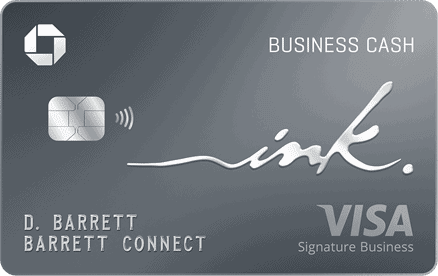
Chase Ink Business Cash® Credit Card
Earn $750
bonus cash back
when you spend $6,000 on purchases in the first three months after account opening
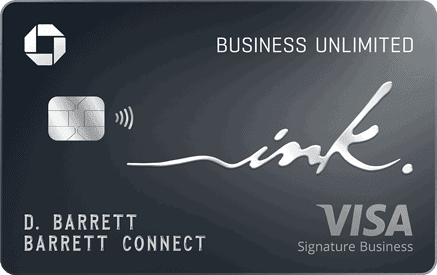
Chase Ink Business Unlimited® Credit Card
Earn $750
bonus cash back
after you spend $6,000 on purchases in the first 3 months from account opening
Ink Business Premier® Credit Card
$1,000
Bonus cash back
after you spend $10,000 on purchases in the first 3 months from account opening.
Annual Fee: $195
Chase Ink Business Preferred® Credit Card
100,000
bonus points
after you spend $8,000 on purchases in the first 3 months from account opening.
Annual Fee: $95

Sapphire Reserve for Business℠
Earn 150,000
bonus points
after you spend $20,000 on purchases in your first 3 months from account opening.
Annual Fee: $795
American Express Business Card Advantages
Just like Chase, American Express offers a number of lucrative business credit cards.
Excluding its co-branded business cards, Amex offers the following business cards:
- Amazon Business Card from American Express
- Amazon Business Prime Card from American Express
- American Express Blue Business Cash™ Card
- American Express® Business Gold Card
- The Blue Business® Plus Credit Card from American Express
- The Business Platinum Card® from American Express
These cards offer a wide range of perks for LLCs.
If you want a card that adapts to your business’s spending, the Amex Business Gold Card offers maximum flexibility with lucrative earning rates. Amex Business Gold benefits are comprehensive and can help your spending work harder for your business.
If you’re after a lucrative flat-rate rewards card, an Amex Blue Business card product will do the job for businesses with annual spends of $50,000 or less.
And if you’re after all-out luxury travel perks for both you and your employees, you won’t find a card better than the Amex Business Platinum, offering more than $3,000 worth of annual value.
American Express Blue Business Cash™ Card
$250 statement credit
after you make $3,000 in purchases on your Card in your first 3 months.

American Express® Business Gold Card
Earn 100,000
Membership Rewards® Points
after spending $15,000 in the first 3 months. Terms apply.
Annual Fee:
$375
The Blue Business® Plus Credit Card from American Express
15,000
Membership Rewards®
after you spend $3,000 in eligible purchases on the Card within your first 3 months of Card Membership
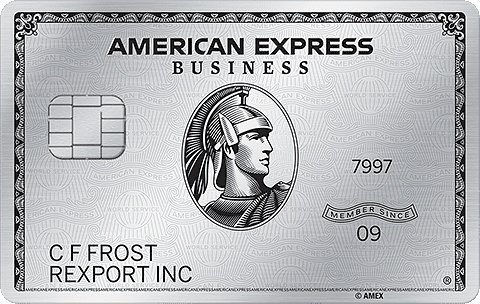
The Business Platinum Card® from American Express
Elevated Welcome Offer: Earn 200,000
Membership Rewards® Points
after you spend $20,000 in eligible purchases on the Business Platinum Card® within the first 3 months of Card Membership.
Annual Fee:
$895
Building Separate Business Credit History
Using business credit cards help you build your business’s credit history.
Building meaningful business credit typically takes six to 18 months of consistent payment history.
Strong business credit enables equipment financing, increased credit limits, better access to business loans and superior supplier terms based on business creditworthiness rather than personal credit, fully separating your business and personal financial obligations.

Easier Transfer of Ownership and Succession Planning
LLCs offer streamlined options for transferring ownership.
The process involves amending the LLC operating agreement, updating state records and documenting transfer terms, all of which is far simpler than corporate stock transfers or selling sole proprietorship assets individually.
LLC ownership interests can be:
- Bought or sold
- Assigned to heirs
- Transferred to trusts
- Distributed among members based on vote or agreement
- Redeemed by the company using buy-sell agreements
This simplicity enables gradual ownership transitions to family members, bringing in strategic partners or estate planning. LLC membership interests transfer to beneficiaries through wills or trusts while the business continues operating, protecting business value during transitions.
In contrast, a sole proprietorship has no separate legal identity from its owner. When the owner retires or passes away, the business effectively ends unless the assets are individually sold.
Making the LLC Structure Work for Your Business
The benefits of starting an LLC include liability protection, tax flexibility and operational simplicity that makes it suitable for a wide range of U.S. businesses.
An LLC may be the right choice if you:
- Have moderate liability exposure
- Expect meaningful profits
- Want to shield your personal assets
- Plan to build business credit
- Want flexibility in tax planning
- Need to demonstrate professional credibility
- Plan to bring in new partners or investors over time
Find out how to set up an LLC if you’re certain it’s the structure best suited to your business.
But before you make the decision, use our checklist below to evaluate whether an LLC would benefit you.
Checklist: Key Factors to Evaluate Before Forming an LLC
- Liability exposure in your industry
- Projected revenue and profit levels
- Number of owners or partners
- State filing fees and annual compliance costs
- Your tax planning strategy
- Whether S-corp status may reduce self-employment taxes
- Need for professional credibility and branding
- Long-term growth or exit plans
- Desire to separate business and personal credit
- Succession or inheritance planning considerations

New to the world of points and miles? The Chase Sapphire Preferred® Card is the best card to start with.
With a bonus of 75,000 bonus points after you spend $5,000 on purchases in the first 3 months from account opening. , 5x points on travel booked through the Chase TravelSM Portal and 3x points on restaurants, streaming services, and online groceries (excluding Target, Walmart, and wholesale clubs), this card truly cannot be beat for getting started!
when you spend $6,000 on purchases in the first three months after account opening
after you spend $6,000 on purchases in the first 3 months from account opening
after you spend $10,000 on purchases in the first 3 months from account opening.
Annual Fee: $195
after you spend $8,000 on purchases in the first 3 months from account opening.
Annual Fee: $95
after you spend $20,000 on purchases in your first 3 months from account opening.
Annual Fee: $795
after you make $3,000 in purchases on your Card in your first 3 months.
after spending $15,000 in the first 3 months. Terms apply.
Annual Fee:
$375
after you spend $3,000 in eligible purchases on the Card within your first 3 months of Card Membership
after you spend $20,000 in eligible purchases on the Business Platinum Card® within the first 3 months of Card Membership.
Annual Fee:
$895
Editors Note: Opinions expressed here are author’s alone, not those of any bank, credit card issuer, hotel, airline, or other entity. This content has not been reviewed, approved or otherwise endorsed by any of the entities included within the post.
10xTravel is part of an affiliate sales network and receives compensation for sending traffic to partner sites, such as CreditCards.com. This site may earn compensation when a customer clicks on a link, when an application is approved, or when an account is opened. This compensation may impact how and where links appear on this site. This site does not include all financial companies or all available financial offers. Terms apply to American Express benefits and offers. Enrollment may be required for select American Express benefits and offers. Visit americanexpress.com to learn more. All values of Membership Rewards are assigned based on the assumption, experience and opinions of the 10xTravel team and represent an estimate and not an actual value of points. Estimated value is not a fixed value and may not be the typical value enjoyed by card members.
Editors Note: Opinions expressed here are author’s alone, not those of any bank, credit card issuer, hotel, airline, or other entity. This content has not been reviewed, approved or otherwise endorsed by any of the entities included within the post.
bonus cash back
after you spend $6,000 on purchases in the first 3 months from account opening
to use on Capital One Travel
in your first cardholder year, plus earn 75,000 bonus miles once you spend $4,000 on purchases within the first 3 months from account opening - that’s equal to $1,000 in travel
bonus points
after you spend $5,000 on purchases in the first 3 months from account opening.

Membership Rewards® Points
after you spend $6,000 in eligible purchases on your new Card in your first 6 months of Card Membership. Welcome offers vary and you may not be eligible for an offer. Apply to know if you’re approved and find out your exact welcome offer amount – all with no credit score impact. If you’re approved and choose to accept the Card, your score may be impacted.