10xTravel is part of an affiliate sales network and receives compensation for sending traffic to partner sites, such as CreditCards.com. This site may earn compensation when a customer clicks on a link, when an application is approved, or when an account is opened. This compensation may impact how and where links appear on this site. This site does not include all financial companies or all available financial offers. Terms apply to American Express benefits and offers. Enrollment may be required for select American Express benefits and offers. Visit americanexpress.com to learn more. All values of Membership Rewards are assigned based on the assumption, experience and opinions of the 10xTravel team and represent an estimate and not an actual value of points. Estimated value is not a fixed value and may not be the typical value enjoyed by card members.
Note: Some of the offers mentioned below may have changed or may no longer be available. The content on this page is accurate as of the posting date; however, some of our partner offers may have expired. You can view current offers here.
Citi is and advertising partner
All information about the Citi® / AAdvantage® Executive World Elite Mastercard®, Citi® / AAdvantage Business™ World Elite Mastercard® and Citi® / AAdvantage® Platinum Select® World Elite Mastercard® has been collected by 10xtravel.com
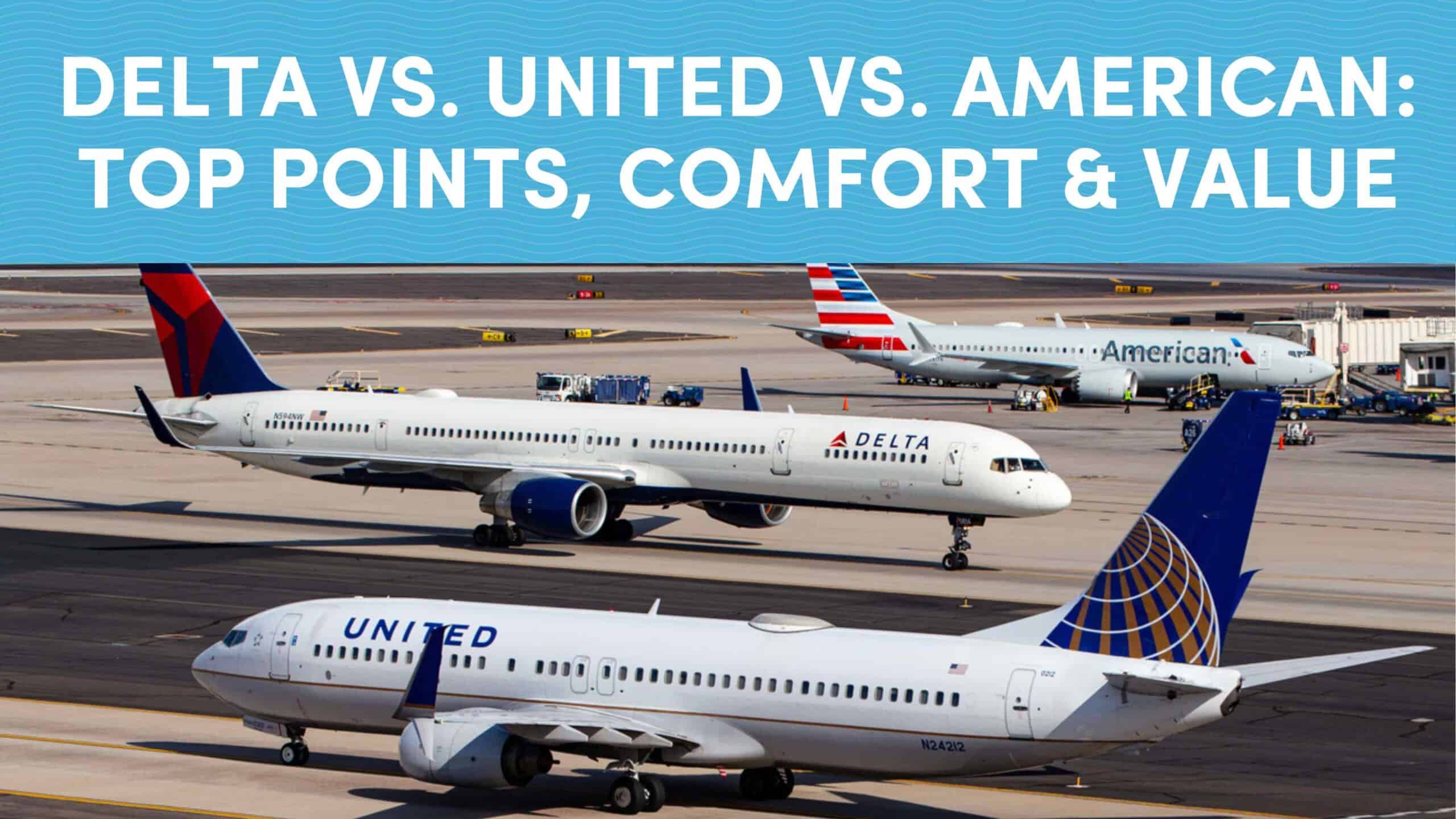
American Airlines, Delta Air Lines and United Airlines dominate commercial aviation in the United States. Collectively, these three legacy carriers operate more than 3,000 mainline aircraft and serve more than 580 million passengers annually.
Choosing from Delta vs. American vs. United isn’t just about picking the comfiest seat. Rather, it’s about selecting an entire travel ecosystem that affects everything from how quickly you earn elite status and frequent-flyer miles to whether you can snag that dream business-class seat to Tokyo or not.
Each airline offers distinct advantages that can make or break your travel strategy.
In this guide, we’ve compared Delta vs. American vs. United based on their individual route networks, loyalty programs, in-flight experience and booking policies, helping you make an informed decision that aligns with your travel priorities.
Key Differences Among Delta, United and American Airlines
Delta, United and American represent the three pillars of U.S. commercial aviation, but their approaches to business differ.
While all three airlines utilize a hub-and-spoke model, routing passengers through their respective major hubs to smaller cities, each airline specializes in different markets.
Delta operates close to 1,000 mainline aircraft and focuses heavily on operational reliability and premium product offerings. The Atlanta-based carrier has invested billions in fleet modernization, airport infrastructure and technology, positioning itself as the premium choice among U.S. carriers.
Delta serves more than 300 destinations across more than 60 countries with particularly strong domestic coverage in the Southeast U.S. and transcontinental markets. Through its membership in SkyTeam, Delta offers connections and partner-operated flights to more than 1,000 destinations globally.
United operates more than 1,000 mainline aircraft, making it the world’s largest fleet. It maintains the most extensive international route network among the three legacy carriers, and as the largest carrier across the Pacific with daily flights to Tokyo, Hong Kong, Singapore and secondary Chinese cities, United offers unmatched access to Asia.
The Chicago-based airline serves about 370 destinations worldwide, leveraging its Star Alliance membership to provide connections to more than 1,150 destinations globally.
Based in Fort Worth, Texas, American Airlines operates more than 1,000 mainline aircraft, making it one of the largest fleets in the world.
American serves roughly 350 destinations across 60 countries with strategic hubs providing comprehensive domestic coverage. American has a strong foothold in Latin America, offering more flights to Mexico, Central America, South America and the Caribbean than any other U.S. airline.
As a founding member of the Oneworld alliance, American offers strong partnerships with British Airways, Qantas, Cathay Pacific and Japan Airlines, creating valuable redemption opportunities on a global scale.
Each carriers’ market positioning reveals their strategic priorities:
- Delta has cultivated a reputation for operational excellence, consistently leading in on-time performance and low cancellation rates.
- United positions itself as the global connector, emphasizing its international reach and premium cabin products on long-haul routes.
- American leverages its sheer size as both a global and domestic carrier and offers the most domestic flights daily.
Route Networks and Hub Cities: Who Connects You Better?
While Delta, United and American all offer various route networks and access to different markets, your home airport often determines which airline is best to fly with.
For instance, Delta’s primary hubs include:
- Atlanta (ATL)
- Boston (BOS)
- Detroit (DTW)
- Los Angeles (LAX)
- Minneapolis-St. Paul (MSP)
- New York-John F. Kennedy (JFK)
- New York-LaGuardia (LGA)
- Salt Lake City (SLC)
- Seattle (SEA)
Atlanta serves as Delta’s mega-hub, connecting passengers to virtually every major market worldwide. The carrier dominates the Southeast with significant market share in cities like Nashville, Tennessee; Raleigh-Durham, North Carolina; and Charleston, South Carolina.
Similarly, Seattle positions Delta strongly for Asia-Pacific routes while Detroit offers the fastest connections to Europe from the Midwest.
In contrast, United’s hub network centers on the following airports:
- Chicago-O’Hare (ORD)
- Denver (DEN)
- Houston (IAH)
- Los Angeles (LAX)
- Newark, New Jersey (EWR)
- San Francisco (SFO)
- Washington-Dulles (IAD)
Newark serves as United’s East Coast international gateway, offering nonstop flights to more than 50 international destinations.
San Francisco provides the foundation for United’s Pacific dominance with more flights to Asia than any other U.S. carrier operates from a single hub.
Denver connects the Mountain West while Houston serves as the gateway to Latin America. However, American Airlines maintains a stronger overall presence in that region.
American’s hubs include the following airports:
- Charlotte, North Carolina (CLT)
- Chicago-O’Hare (ORD)
- Dallas-Fort Worth (DFW)
- Los Angeles (LAX)
- Miami (MIA)
- New York-John F. Kennedy (JFK)
- New York-LaGuardia (LGA)
- Philadelphia (PHL)
- Phoenix (PHX)
- Washington-National (DCA)
This extensive hub network provides the broadest domestic coverage of the three carriers. Dallas functions as American’s largest hub, connecting passengers across the country and to Latin America.
Miami serves as American’s gateway to the Caribbean and South America with Charlotte providing efficient East Coast connections.
Similarly, Phoenix covers the Southwest while Philadelphia offers transatlantic flights to European cities.
Alliance partnerships also significantly extend each carrier’s reach.
Delta’s SkyTeam alliance includes Air France, KLM, Korean Air, Virgin Atlantic and Aeroméxico, providing strong coverage in Europe, Asia and Latin America. However, SkyTeam is generally considered the weakest of the three major alliances in terms of global reach and partner quality.
In contrast, United’s Star Alliance membership connects you to Lufthansa, Swiss International Air Lines, Air Canada, All Nippon Airways, Singapore Airlines and more than 20 other carriers, creating the world’s most comprehensive airline network with access to more than 1,150 destinations.
American’s Oneworld alliance includes British Airways, Qantas, Cathay Pacific, Japan Airlines, Iberia and Finnair, offering particularly strong options for Europe, Asia-Pacific and Australia.
Overall, United comes out on top when you combine its significant roster of domestic and international destinations with its comprehensive partner network, giving you the greatest global coverage.
However, all three airlines provide impressive domestic and international coverage with strong partner networks. Therefore, which airline best serves your travel needs depends largely on where you’re based.
Fleet and Aircraft Types: Does Newer Really Mean Better?
Delta’s aircraft have an average age of about 15 years. Delta has invested heavily in fleet renewal, retiring older MD-88s and MD-90s while adding Airbus A220s, A330-900neos and A350-900s.
Its long-haul international fleet features the A330-900neo and the A350-900 aircraft for premium routes to Asia and Europe, both offering excellent fuel efficiency and passenger comfort, while the A220 has become Delta’s domestic workhorse for shorter routes.
Delta has also rolled out its award-winning Delta One business class across many of its widebody aircraft over the years, offering arguably the best premium-cabin experience of any U.S. carrier. However, Delta One isn’t available on all widebody Delta aircraft, which can lead to inconsistent experiences.
United’s fleet averages around 16 years in age with significant investments in modernization underway. The carrier operates the largest fleet of Boeing 787 Dreamliners in North America with more than 60 aircraft spanning the -8, -9 and -10 variants. These aircraft feature United’s Polaris business class on long-haul international routes, offering lie-flat seats with direct aisle access.
United also has the largest fleet of Boeing 777s, serving both high-demand international and domestic routes.
American operates the largest total fleet but also maintains the youngest average aircraft age among the three majors, at about 14 years for mainline aircraft.
The carrier flies a mix of Boeing and Airbus aircraft, including 737s, 777s, 787s, A319s, A321s and A321neos. American’s Flagship business product flies on its 777-300, A321T, 777-200ER, 777-300ER, 787-8 and 787-9, featuring updated business-class seats with direct aisle access.
American is also updating its aircraft with its new and improved Flagship Suites, paving the way for an improved premium-cabin experience.
Overall, while Delta currently offers the most premium hard product and consistent soft product, both United and American hold their own, and American’s Flagship Suites are set to compete on par with Delta One.

Loyalty Program Showdown
The airline loyalty program you choose becomes your travel currency, affecting how you earn, redeem and maximize value on every flight taken and dollar spent.
Delta SkyMiles, United MileagePlus and American Airlines AAdvantage each offer distinct earning and redemption structures as well as elite status benefits that cater to different traveler profiles.
Overall, American AAdvantage comes out on top, offering the most valuable elite status perks and the best opportunities for lucrative award travel redemptions.
However, both Delta SkyMiles and United MileagePlus offer a wider range of travel rewards credit cards that allow you to rack up thousands of miles on your everyday spending, accelerating your path to award flights and elite status.
All three loyalty programs are revenue-based, awarding miles based on the price paid for your fare rather than the distance flown.
Similarly, elite status with Delta and American is earned solely through eligible spending while United awards status points through a combination of Premier Qualifying Flights (PQFs) and Premier Qualifying Points (PQP).
When it comes to redemption, Delta SkyMiles is arguably the least lucrative currency of the three. Delta was the first major U.S. airline to introduce dynamic pricing on its award flights, and since then, its consistent devaluations have reduced travelers’ ability to squeeze outsized value out of their SkyMiles.
You’ll almost always get better value by booking Delta and SkyTeam partner flights through Virgin Atlantic Flying Club or Air France-KLM Flying Blue compared to redeeming directly with Delta. That said, you can often find cheap domestic economy award fares through Delta, and given how easy it is to earn SkyMiles, this can be a solid redemption option.
United MileagePlus miles offer slightly better value compared to Delta SkyMiles, particularly if you can find Saver award fares. However, just like Delta, United lacks a fixed award chart and all award fares are subject to dynamic pricing. While sweet spots exist, you’ll typically get greater value by booking United and Star Alliance partner flights through programs such as All Nippon Airways (ANA) Mileage Club or Air Canada Aeroplan.
American AAdvantage publishes award charts for both its own flights and partner-operated flights, giving you a helpful indication as to what the Saver rate is for a given route. While these rates are only starting values that are subject to dynamic price fluctuations, you can often find good award availability and lucrative sweet spots with partner airlines.
This makes AAdvantage miles much more lucrative than SkyMiles or United MileagePlus miles, albeit harder to earn.
Elite Status: Which One’s Actually Worth Chasing?
When choosing whether to fly Delta vs. United vs. American, the deciding factor is a combination of where you’re based and where you plan on flying.
However, it’s worth comparing the elite status programs of each airline to see where you can reap the most value. This is particularly true for frequent flyers looking to maximize their spending and time spent in the air.
All three airlines award miles and loyalty points based on the amount spent with the respective airline, but each loyalty program awards miles slightly differently.
To earn United Premier status, you need to earn a combination of both Premier Qualifying Flights (PQF) and Premier Qualifying Points (PQP) or a higher level of PQP only. Additionally, you need to take a minimum of four United or United Express-operated flights every qualification year.
United awards 1X PQPs for every dollar spent on United operated flights. You can also earn PQP through co-branded United credit cards:
- 1X PQPs per $15 on the United Club℠ Card and the United Club℠ Business Card (up to 28,000 PQP per calendar year)
- 1X PQPs per $20 spent on the United Quest℠ Card and the United℠ Explorer Card (up to 18,000 PQP per calendar year)

Earn up to 100,000
bonus miles
Earn 90,000 bonus miles after you spend $5,000 on purchases in the first 3 months from account opening.
Annual Fee: $695

Earn 500
Premier qualifying points
after your first purchase and 80,000 bonus miles after you spend $4,000 on purchases in the first 3 months your account is open.
Annual Fee: $350

Earn up to 80,000
bonus miles
Earn 70,000 bonus miles after you spend $3,000 on purchases in the first 3 months your account is open.
Annual Fee: $0 for your first year, then $150.
This can make United a solid option for those who fly regularly as you can rack up PQFs in addition to PQPs.
In contrast, Delta status is earned through Medallion Qualification Dollars (MQDs) exclusively and awards 1X MQDs per dollar spent on Delta-operated flights. Delta awards big spenders and offers a number of status benefits to its cardholders, including:
- 2,500 MQD headstart for holders of
- 1X MQDs per $20 spent on the Delta SkyMiles Platinum and the Platinum Business Card
- 1X MQDs per $10 spent on the Delta SkyMiles Reserve and the Reserve Business Card
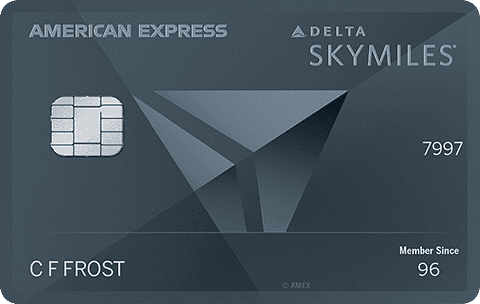
Delta SkyMiles® Reserve American Express Card
Earn two domestic Delta Comfort Flight Certificates + 50,000
Bonus Miles
after $10,000 in purchases on your new Card in your first 6 months. A 21+ day advance purchase required. Taxes and fees up to $80 per person apply. Terms and other restrictions apply. Offer ends 11/04/2026.
Annual Fee:
$650
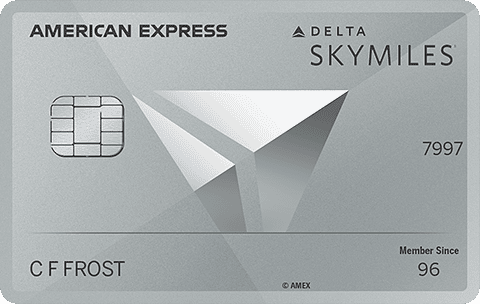
Delta SkyMiles® Platinum American Express Card
You may be eligible for as high as 90,000
Bonus Miles
and a $300 Statement Credit after you spend $4,000 in eligible purchases on your new Card in your first 6 months of Card Membership. Apply to find out your offer. Terms Apply. Offer ends 11/04/2026.
Annual Fee:
$350
With the help of these co-branded card earning rates and MQD headstarts, Delta offers the easiest path to achieving mid-range status out of the three airlines. The best Delta credit card for you will depend on your travel frequency.
American Airlines also awards status points based on spend, but it does so differently to United and Delta.
American awards 1X Loyalty Points for every AAdvantage mile earned.
The key benefit of this system is that as you climb American’s elite status ladder, the number of miles you earn on qualifying spend increases by 40% to 120%, meaning you automatically earn more Loyalty Points per dollar spent.
This makes American Airlines AAdvantage status the easiest and cheapest to maintain at the higher levels of status.
Additionally, you’ll also be able to accelerate your way to elite AAdvantage status through the following co-branded card perks:
- Earn a 5,000 Loyalty Point bonus after every four qualifying American Airlines flights (up to 15,000 additional Loyalty Points each status qualification year) as a Citi® / AAdvantage® Globe™ Mastercard® cardholder.
- Earn a 10,000 Loyalty Point bonus after reaching 50,000 Loyalty Points in a status qualification year and another 10,000 Loyalty Point bonus after reaching 90,000 Loyalty Points in the same status qualification year as a Citi® / AAdvantage® Executive World Elite Mastercard® cardholder.
- 1X Loyalty Points per $1 spent on card purchases with the Citi® / AAdvantage Business™ World Elite Mastercard®
It’s important to note, however, that Basic Economy fare tickets bought on or after Dec. 17, 2025 do not earn AAdvantage miles or Loyalty Points.
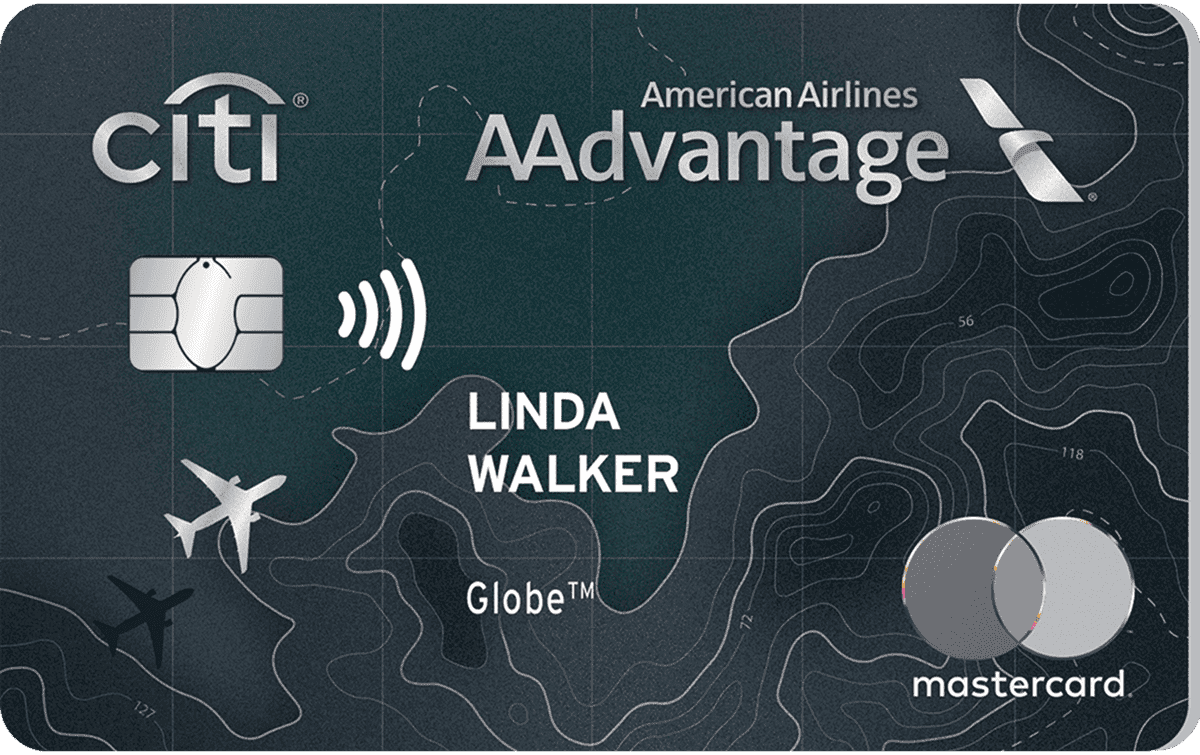
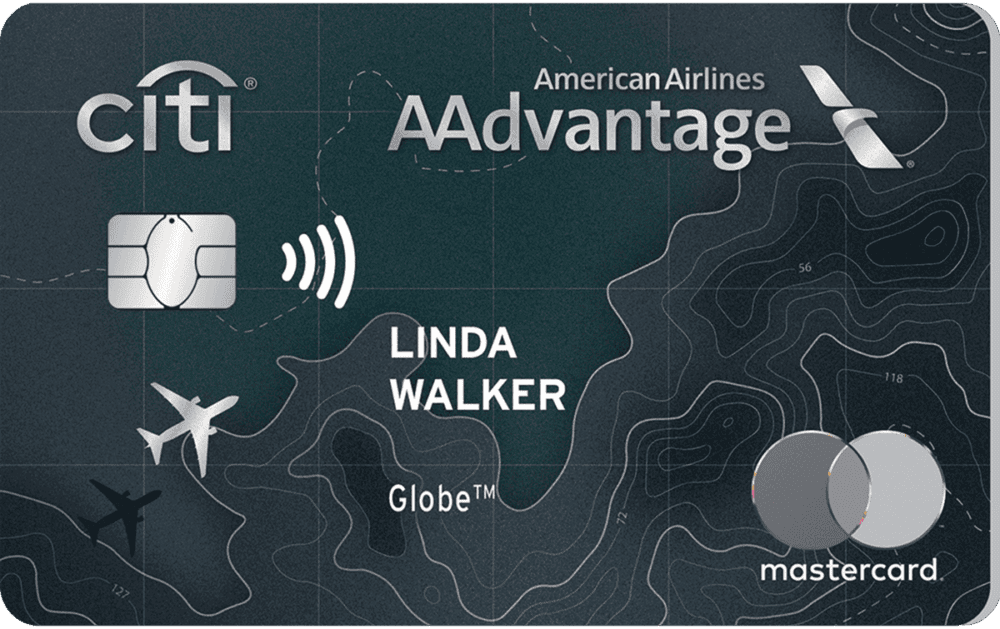
Citi® / AAdvantage® Globe™ Mastercard®
Earn 60,000
American Airlines AAdvantage® bonus miles
after $4,000 in purchases in the first 3 months of account opening.
Annual Fee: $350

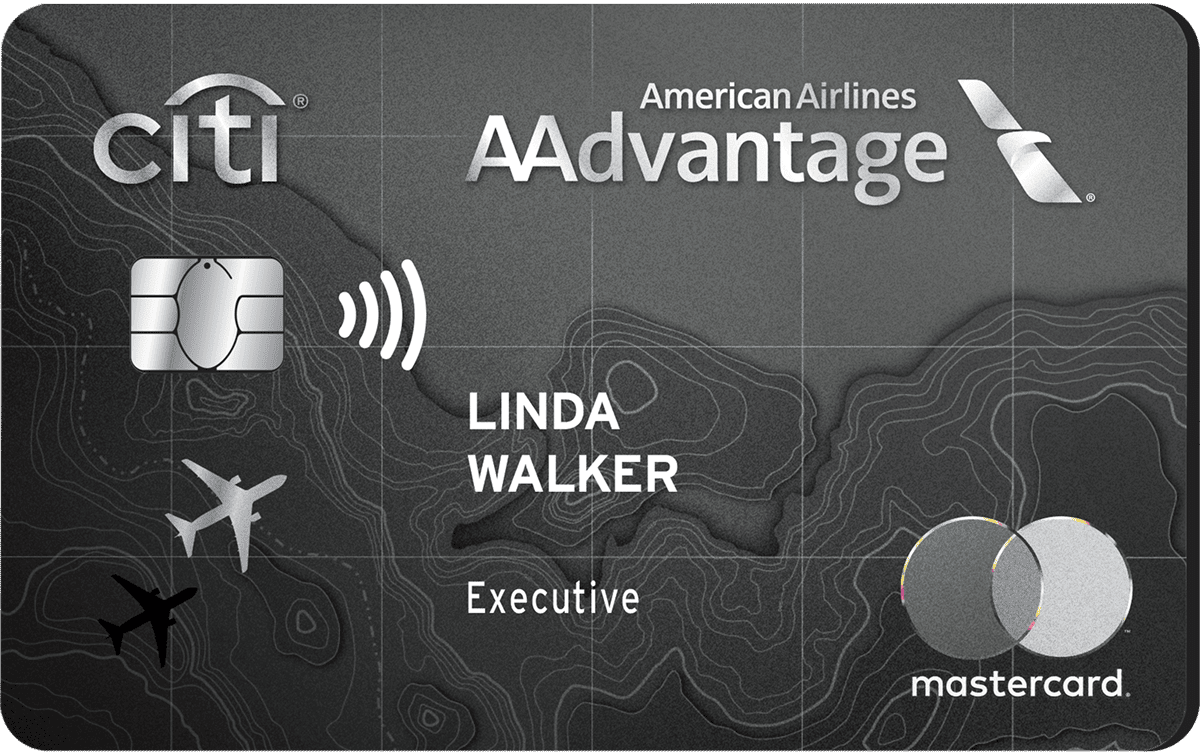
Citi® / AAdvantage® Executive World Legend Mastercard®
Limited time offer: Earn 125,000
AAdvantage® bonus miles
after $15,000 in purchases in the first 5 months
Annual Fee: $695
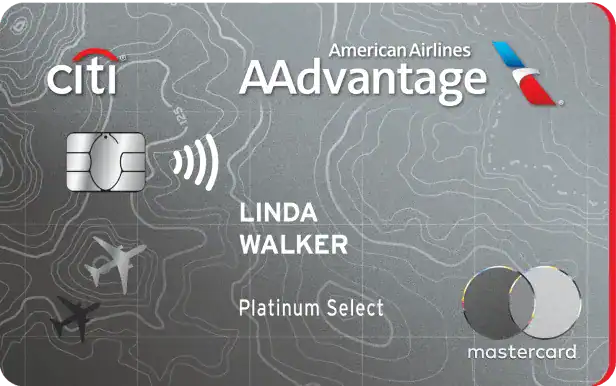
Citi® / AAdvantage® Platinum Select® World Elite Mastercard®
Earn 80,000
American Airlines AAdvantage® bonus miles
after spending $3,500 in purchases within the first 3 months of account opening
Annual Fee: $99, waived for the first 12 months
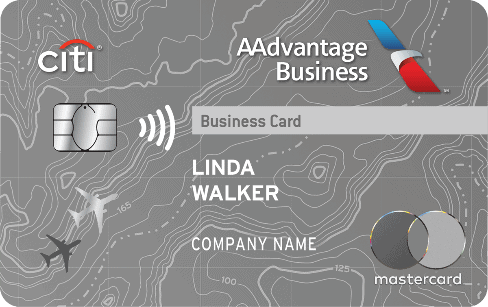
Citi® / AAdvantage Business™ World Elite Mastercard®
Earn 65,000
American Airlines AAdvantage® bonus miles
after spending $4,000 in purchases within the first 4 months of account opening.
Annual Fee: $99, waived for the first 12 months
Benefits at each status level are comparable among the three airlines, including free checked bags and same-day upgrades at the basic levels, free checked bags, early-access to upgrades and partner program benefits at the higher tiers.
That said, Delta stands out at the upper tiers of status with its unique Choice Benefits perk for Diamond Medallion members, offering customizable perks tailored to the individual traveler.
In any case, the elite status worth chasing is the one that you’ll be able to leverage the most.
If you could choose equally from any of the three airlines, United offers the best bet for those who fly frequently; Delta offers the easiest path to mid-tier status and the most unique perks at its highest level; and American offers the most efficient system for maintaining higher-tier status.

Airline Credit Cards: Which Ones Are Worth It?
All three airlines offer a range of co-branded credit cards with varying annual fees aimed at different types of travelers.
These cards help you accumulate miles and status points on your everyday spending, accelerating your path to elite status and award flight redemptions. They also come with a range of perks that can make travel both cheaper and more comfortable.
For Delta flyers, the following cards are available:
- Delta SkyMiles® Blue American Express Card: $0 annual fee (see rates and fees)
- Delta SkyMiles® Gold American Express Card: $0 in the first year, then $150 thereafter (see rates and fees)
- Delta SkyMiles® Platinum American Express Card: $350 annual fee (see rates and fees)
- Delta SkyMiles® Reserve American Express Card: $650 annual fee (see rates and fees)
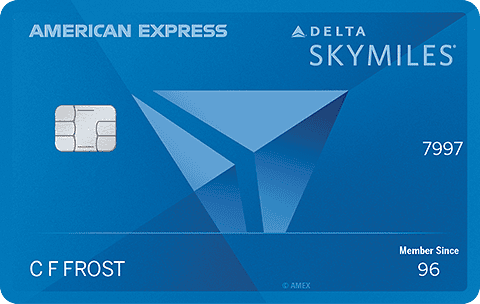
Delta SkyMiles® Blue American Express Card
Earn 10,000
Bonus Miles
after you spend $1,000 in purchases on your new card in your first 6 months.
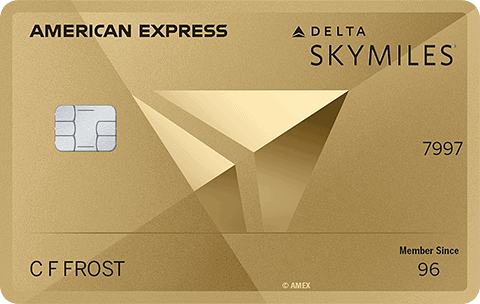
Delta SkyMiles® Gold American Express Card
You may be eligible for as high as 80,000
Bonus Miles
and a $250 Statement Credit after you spend $3,000 in eligible purchases on your new Card in your first 6 months of Card Membership. Apply to find out your offer. Terms Apply. Offer ends 11/04/2026.
Annual Fee:
$0 introductory annual fee for your first year, then $150.
For business owners, the following Delta cards are up for grabs:
- Delta SkyMiles® Gold Business American Express Card: $0 annual fee in the first year, then $150 thereafter (see rates and fees)
- Delta SkyMiles® Platinum Business American Express Card: $350 annual fee (see rates and fees)
- Delta SkyMiles® Reserve Business American Express Card: $650 annual fee (see rates and fees)
For United flyers, you have the following cards to choose from:
- United Gateway℠ Card: $0
- United℠ Explorer Card: $0 annual fee in the first year, $150 thereafter
- United Quest℠ Card: $350 annual fee
- United Club℠ Card: $695 annual fee
Earn up to 80,000
bonus miles
Earn 70,000 bonus miles after you spend $3,000 on purchases in the first 3 months your account is open.
Annual Fee: $0 for your first year, then $150.
Earn 500
Premier qualifying points
after your first purchase and 80,000 bonus miles after you spend $4,000 on purchases in the first 3 months your account is open.
Annual Fee: $350
Earn up to 100,000
bonus miles
Earn 90,000 bonus miles after you spend $5,000 on purchases in the first 3 months from account opening.
Annual Fee: $695
Business owners can open the following United business cards:
- United℠ Business Card: $150 annual fee
- United Club℠ Business Card: $695 annual fee
And for American Airlines, you can choose from the following cards:
- American Airlines AAdvantage® MileUp® Card: $0 annual fee
- Citi® / AAdvantage® Platinum Select® World Elite Mastercard®: $0 annual fee in the first year, $99 thereafter
- Citi® / AAdvantage® Globe™ Mastercard®: $350 annual fee
- Citi® / AAdvantage® Executive World Elite Mastercard®: $695 annual fee
And if you run a business, you can apply for the following card:
- Citi® / AAdvantage Business™ World Elite Mastercard®: $0 annual fee in the first year, $99 thereafter
As you can see, there’s a card to fit every type of traveler’s budget.
Premium Cards: Do the Perks Pay Off?
At the top end of the co-branded card portfolio, Delta, United and American each offer a premium product with high annual fees and rich travel benefits. These cards are designed for frequent flyers who value airport comfort, accelerated loyalty rewards and credits toward travel-related spending.
Whether the perks outweigh the annual fee depends on how often you travel and which benefits you actually use.
For instance, each airline offers a premium card that includes complimentary access to its respective lounge network: Delta Sky Clubs (terms apply), United Clubs or Admirals Clubs. These lounge membership perks have an equivalent monetary value of more than $800—with the exception of Delta cards, which cap the number of annual lounge visits—offsetting each card’s annual fee from the get-go.
When it comes to lifestyle and travel-related statement credit perks, the United Club Card and the Delta SkyMiles Reserve Card offer the most credits to cardholders, totalling more than $500 in each case.
Delta, American and United also offer a free first checked bag (two free checked bags per person for United flyers) on their premium cards, which extends to your companions (terms apply), enabling you to save hundreds of dollars per round-trip flight.
If you’re able to use even a handful of these perks, such as lounge access, free checked bags and a couple of statement credits, you can easily offset the annual fees on these premium cards. However, if you rarely travel with the specific airline and don’t utilize these perks, you’ll struggle to put enough spend on the card to offset its annual fee.
Service Quality and Customer Experience
Delta consistently ranks highest in operational reliability, on-time performance and customer satisfaction surveys. Its investment in technology, crew training and airport operations gives it a noticeable edge during disruptions.
United has improved dramatically in recent years, particularly in premium service and onboard experience. While still prone to operational hiccups at congested hubs like Newark, United’s service is generally positive, albeit not always consistent.
With frequent complaints related to delays, customer service and aircraft condition, American lags the furthest behind when it comes to quality control. That’s not to say it’s all bad, but rather that you’re more likely to experience inadequate service with American compared to when flying with Delta or United.
Cabins, Lounges and Ground Experience
Delta markets itself as a premium airline and historically leads the way with its award-winning Delta One business-class product. However, Delta One isn’t available on all widebody Delta aircraft, which can lead to inconsistent premium-cabin experiences.
In contrast, the rollout of American’s Flagship Suites promises greater consistency across its long-haul fleet while United’s Polaris product already delivers one of the most standardized and competitive business-class offerings among U.S. carriers.
On the ground, Delta Sky Clubs remain the best domestic lounge product overall, but overcrowding has become a well-known issue. In response, Delta has made concerted efforts to tighten its lounge entrance policies, but overcrowding still remains significant.
Similarly, United Clubs are expanding and improving rapidly at major hub airports. While they may offer a slightly less premium experience compared to Delta Sky Clubs—with the exception of United Polaris lounges—United Clubs tend to offer greater peace and quiet, making them a strong contender for business travelers seeking refuge from the main terminal.
American’s Admirals Clubs are similar to United Clubs and also provide their own premium lounge offering—American Flagship lounges. Generally, quality varies depending on the specific airport with some Admirals Clubs offering private showers and others offering basic amenities.
Booking and Change Policies: What’s Flexible (and What Isn’t)
United, Delta and American have similar booking policies and fees with a few notable differences.
American Airlines
- Change fees: Flights originating in the U.S. can be changed without paying a fee (only the fare difference will apply). Basic-economy tickets are non-changeable unless they originate from Europe, in which case they can generally be changed for a fee.
- Checked baggage fees: American charges $45 for the first checked bag on domestic routes if you prepay and $50 at the airport. The fee is waived for those with an eligible credit card or elite status.
- Same-day change fees: American charges $75 for same-day changes, waived for AAdvantage elite members, business and first-class passengers, and select credit card holders. Same-day standby is complimentary for most tickets, excluding basic economy.
- Seat assignment fees: Free standard seat selection for all fares, excluding basic-economy tickets.
Delta Air Lines
- Change fees: Flights originating in the U.S. and Canada can be changed without paying a fee (only the fare difference will apply). Basic-economy tickets are the exception and will be charged a change fee.
- Checked baggage fees: Delta charges $45 for the first checked bag on domestic routes. Those with an eligible credit card or elite status can check a bag for free.
- Same-day change fees: Delta charges $75 for same-day confirmed changes, waived for Diamond, Platinum and Gold Medallion elite members; for Extra and refundable tickets; and for Delta One and first-class passengers. Same-day standby is free for all fare classes except basic economy and international flights.
- Seat assignment fees: Free standard seat selection for all fares, excluding basic-economy tickets.
United Airlines
- Change fees: Flights originating in the U.S. can be changed without paying a fee (only the fare difference will apply). Basic-economy tickets are the exception and will be charged a change fee.
- Checked baggage fees: United charges $45 for the first checked bag on domestic routes if you prepay and $50 at the airport. The first bag is free for passengers with an eligible credit card or elite status.
- Same-day change fees: United offers same-day flight changes for a $75 fee for most fare classes. It’s free for Premier members, those ticketed in Premium Plus or higher, and passengers holding certain credit cards.
- Seat assignment fees: Free standard seat selection for all fares, excluding basic-economy tickets.
One of the main tangible differences for frequent domestic flyers is that both American and Delta basic-economy tickets include a carry-on bag and a personal item while United basic-economy tickets include a personal item only except when flying to South America or across the Atlantic or Pacific, in which case a carry-on is allowed.

Points Strategy: Making the Most of Your Miles
When it comes to using your hard-earned miles, American Airlines AAdvantage comes out on top.
American Airlines is the only program of the three to still publish Saver award levels for its own flights and partner-operated award flights. While its fares are still affected by dynamic price fluctuations—particularly during periods of peak travel demand—you can often find lucrative award fares on off-peak dates.
Some of American’s best sweet spot redemptions include:
- Etihad’s first-class Apartment for 62,500 miles each way between Europe and the Middle East
- Etihad business class for 40,000 miles each way between the Middle East and Asia Region 1
- Japan Airlines business class for 60,000 miles each way between the U.S. and Asia Region 1
- Qatar Airways Qsuites for 70,000 miles each way between the U.S. and Doha, Qatar
These redemptions are unparalleled compared to United’s and Delta’s award rates.
Both United and Delta offer cheap domestic fares for fewer than 10,000 miles each way as well as some long-haul intercontinental premium cabin redemptions for around 80,000 to 120,000 miles each way.
For instance, you can sometimes book United Star Alliance partner fares between the U.S. and Europe for 88,000 miles each way. Likewise, you can book Virgin Atlantic Upper Class fares from the U.S. to Europe through Delta for around 120,000 miles each way.
However, compared to American, you’ll struggle to find as many competitively priced award fares through Delta and United.
Other Airlines Worth a Mention
While Delta, United and American dominate the U.S. market, several other airlines offer compelling value that travelers shouldn’t overlook.
Alaska Airlines remains a favorite among aviation enthusiasts and mileage hackers due to its lucrative Atmos Rewards program and partner award charts. Its membership in the Oneworld alliance unlocks redemptions on carriers like Cathay Pacific, Qantas and Japan Airlines and offers some of the most lucrative premium-cabin sweet spots available from a U.S.-based program.
JetBlue delivers a solid onboard experience in economy class and operates its Mint business-class product on select transcontinental and transatlantic routes. While the airline is competitive on the comfort and price front, its elite benefits are generally less robust for international travelers compared to United, Delta and American due to limited global partnerships and smaller alliance reach.
Ultimately, finding the best value for your points is often a case of who you book through rather than who you fly with. That’s why learning how partner award bookings work is crucial for making your points go further.
Choosing the Right Airline for You
Deciding among Delta vs. United vs. American isn’t about which airline is “best” in an absolute sense, but rather about which program aligns best with how, where and why you travel.
If you value operational reliability, strong customer experience and polished premium cabins, Delta is the most consistently reliable choice.
If your travel is international-heavy or routed through global gateway hubs, United stands out for its expansive Star Alliance network, wide global coverage and competitive Polaris product.
If your goal is to maximize loyalty value and premium award redemptions, American Airlines AAdvantage provides the most generous program structure with exceptional partner sweet spots and a status system that becomes easier to maintain at the top tiers.
In the end, the right airline is the one that helps you travel more efficiently, more comfortably and with greater access to the experiences you value, whether that’s lie-flat seats to Asia, convenient domestic coverage or just a smooth trip to your next business meeting.
Related: Listen to Episode 69 of Takeoff, the podcast episode where we compare the loyalty programs for Alaska Airlines, United Airlines and American Airlines.

New to the world of points and miles? The Capital One Venture Rewards Credit Card is the best card to start with.
Current offer: Limited Time Offer: Enjoy a $300 stays credit, plus earn 75K bonus miles once you spend $4,000 on purchases within 3 months from account opening.
Earn 5X miles on hotels, vacation rentals and rental cars booked through Capital One Travel; 2X miles on all purchases.
after $10,000 in purchases on your new Card in your first 6 months. A 21+ day advance purchase required. Taxes and fees up to $80 per person apply. Terms and other restrictions apply. Offer ends 11/04/2026.
Annual Fee:
$650
and a $300 Statement Credit after you spend $4,000 in eligible purchases on your new Card in your first 6 months of Card Membership. Apply to find out your offer. Terms Apply. Offer ends 11/04/2026.
Annual Fee:
$350
after you spend $1,000 in purchases on your new card in your first 6 months.
and a $250 Statement Credit after you spend $3,000 in eligible purchases on your new Card in your first 6 months of Card Membership. Apply to find out your offer. Terms Apply. Offer ends 11/04/2026.
Annual Fee:
$0 introductory annual fee for your first year, then $150.
after $4,000 in purchases in the first 3 months of account opening.
Annual Fee: $350
Earn 90,000 bonus miles after you spend $5,000 on purchases in the first 3 months from account opening.
Annual Fee: $695
after your first purchase and 80,000 bonus miles after you spend $4,000 on purchases in the first 3 months your account is open.
Annual Fee: $350
Earn 70,000 bonus miles after you spend $3,000 on purchases in the first 3 months your account is open.
Annual Fee: $0 for your first year, then $150.
Editors Note: Opinions expressed here are author’s alone, not those of any bank, credit card issuer, hotel, airline, or other entity. This content has not been reviewed, approved or otherwise endorsed by any of the entities included within the post.
10xTravel is part of an affiliate sales network and receives compensation for sending traffic to partner sites, such as CreditCards.com. This site may earn compensation when a customer clicks on a link, when an application is approved, or when an account is opened. This compensation may impact how and where links appear on this site. This site does not include all financial companies or all available financial offers. Terms apply to American Express benefits and offers. Enrollment may be required for select American Express benefits and offers. Visit americanexpress.com to learn more. All values of Membership Rewards are assigned based on the assumption, experience and opinions of the 10xTravel team and represent an estimate and not an actual value of points. Estimated value is not a fixed value and may not be the typical value enjoyed by card members.
Editors Note: Opinions expressed here are author’s alone, not those of any bank, credit card issuer, hotel, airline, or other entity. This content has not been reviewed, approved or otherwise endorsed by any of the entities included within the post.
bonus cash back
after you spend $6,000 on purchases in the first 3 months from account opening.
earn 75K bonus miles
once you spend $4,000 on purchases within 3 months from account opening.

bonus points
after you spend $5,000 on purchases in the first 3 months from account opening.
Membership Rewards® Points
after you spend $8,000 in eligible purchases on your new Card in your first 6 months of Card Membership. Welcome offers vary and you may not be eligible for an offer. Apply to know if you’re approved and find out your exact welcome offer amount – all with no credit score impact. If you’re approved and choose to accept the Card, your score may be impacted.