

10xTravel is part of an affiliate sales network and receives compensation for sending traffic to partner sites, such as CreditCards.com. This site may earn compensation when a customer clicks on a link, when an application is approved, or when an account is opened. This compensation may impact how and where links appear on this site. This site does not include all financial companies or all available financial offers. Terms apply to American Express benefits and offers. Enrollment may be required for select American Express benefits and offers. Visit americanexpress.com to learn more. All values of Membership Rewards are assigned based on the assumption, experience and opinions of the 10xTravel team and represent an estimate and not an actual value of points. Estimated value is not a fixed value and may not be the typical value enjoyed by card members.
Note: Some of the offers mentioned below may have changed or may no longer be available. The content on this page is accurate as of the posting date; however, some of our partner offers may have expired. You can view current offers here.
All information about the Hilton Honors American Express Aspire Card has been collected independently by 10xTravel. The information related to Citi Double Cash Card® has been collected by 10xTravel and has not been reviewed or provided by the issuer or provider of this product or service.
As a points and miles enthusiast, you probably have dedicated cards for common spending categories like dining, travel and groceries. But not every dollar you spend fits neatly into one of those buckets. Take purchases like clothes, toys, furniture, utilities and insurance—these usually fall into the “other” spending category.
That’s where the “catch-all” card (the card you reach for when nothing else in your wallet makes sense) comes in. Some shine with elevated flat-rate multipliers; others reward big annual spending; a few are even good enough to stand alone if you’re loyal to a specific airline or hotel program.
A good catch-all card forms the backbone of a simple and efficient points and miles strategy. Let’s break down what makes a good catch-all card, highlight a few that you can’t go wrong with and explore some unique catch-all setups worth considering.

What Is a Catch-All Credit Card?
A catch-all card is exactly what it sounds like—a card designed to handle spending that doesn’t earn a bonus elsewhere. Instead of offering high multipliers for specific categories like dining or travel, catch-all cards focus on earning a strong and consistent return on everything else.
Most catch-all cards earn rewards at a flat rate. This could be 1.5X points, 2X points or even higher on all purchases regardless of category. Others take a slightly different approach by offering unique rewards after hitting certain annual spending thresholds.
A straightforward example of a catch-all card is the Chase Freedom Unlimited® card, which earns at least 1.5% cash back on purchases, including 1.5% back on purchases that don’t fall into one of its higher-earning bonus categories. This makes it a useful option for non-bonus spending in a Chase-centric setup.
For example, the popular Chase Sapphire Preferred® Card earns 5X points on travel purchased through Chase Travel, 3X on dining and several other bonus categories, 2X on other travel and 1X on all other purchases. Adding the no-annual-fee Chase Freedom Unlimited® to your wallet can boost the earning rate on purchases that would otherwise earn just 1X with the Sapphire Preferred to 1.5X rewards.

Chase Sapphire Preferred® Card
Earn 75,000
bonus points
after you spend $5,000 on purchases in the first 3 months from account opening.
Annual Fee: $95
Why Are Catch-All Credit Cards Important?
Catch-all cards serve a couple important roles. We already touched on a big one in the last section: maximizing earnings on miscellaneous purchases. Without a catch-all card, many everyday purchases earn just 1X, leaving a lot of points on the table.
Catch-all cards also help simplify your setup. Instead of constantly asking yourself what’s the best card to use in every situation, you can default to a single card for non-category spend and know you’re still earning rewards efficiently. This is especially valuable for minimalists or anyone who doesn’t want to juggle 10 credit cards at checkout.
Finally, catch-all cards are key in the long-term health of your credit card strategy. Maybe you want to take a break from applying for new cards so you can lower your Chase 5/24 count. In that case, spending some time “gardening” with your catch-all card helps you continue to earn efficiently even when you’re in between new applications.
Common Catch-All Card Considerations
Your catch-all card has one main job: maximize rewards on non-category spend. However, different catch-all cards go about this in different ways. Some prioritize simplicity, whereas others reward loyalty and high annual spend. Understanding these common considerations will help you choose a catch-all card that actually fits how you spend.
Cash Back vs. Points
The first decision to make is whether you want your catch-all card to earn cash back or points.
As travel enthusiasts, we love to rack up points, but their value ultimately depends on how well you can redeem them. Flexible currencies tend to be a better choice because they can be transferred to multiple airline and hotel partners. On the other hand, points and miles earned directly with a hotel brand or an airline are less flexible but can still be extremely valuable if that brand aligns closely with your travel habits.
The benefit to earning cash back is that it’s straightforward: Earn 2% back, get 2% back, no travel required. Cash back isn’t tied to award charts, transfer partners or redemption strategies, and it can be used however you want. Even for frequent travelers, there’s a strong argument to go for cash back because you won’t have to spend time worrying about point values or devaluations.
Elevated Multipliers
The next consideration is the card’s elevated flat-rate multiplier. Instead of the standard 1X on non-category purchases, catch-all cards earn 1.5X, 2X or even more on every dollar spent regardless of category.
Obviously, the higher the multiplier, the better, right? That’s true in general, but it can also depend on what types of points you want to earn.
Different card ecosystems, such as Chase, Capital One and Citi, all offer their own versions of catch-all cards that we’ll look at later. Just because one has a higher multiplier than the other doesn’t automatically mean it’s better. It also depends on factors like the available transfer partners and their transfer rates.
Annual Spending Thresholds
Another consideration is whether the card rewards you for hitting annual spending thresholds.
For example, a co-branded hotel card may reward you with a free night certificate after spending $15,000 in a calendar year. With co-branded airline cards, meaningful perks may include companion tickets or elite status with a specific carrier.
Cards with annual spending thresholds usually come from specific loyalty brands rather than banks that offer flexible reward currencies. You’re more likely to see these thresholds on branded cards from programs like Hyatt or American Airlines as opposed to cards from major banks like Chase or American Express.
Is going for an annual spending threshold worth it? That usually depends on two things. First, does the spending requirement fall within your budget? And second, does the reward align with your travel goals? If the answer to both is yes, these cards can turn your routine purchases into outsized value.
One-Card Setups
Finally, consider whether you want to use your catch-all card as a one-card setup, especially if it has an annual spending threshold that you want to hit.
One-card setups work particularly well for beginners or anyone loyal to a single rewards ecosystem. Instead of juggling multiple cards, you earn consistently on every purchase and work toward a single goal, which is much easier to track. This approach also appeals to more advanced travelers who want a break from opening new cards.
The obvious tradeoff here is optimization. A one-card setup will almost always earn fewer points than a carefully planned multi-card strategy. However, for individuals who value simplicity, predictability and fewer decisions at checkout, a strong catch-all card is good enough to be your main strategy.

3 of the Best Catch-All Credit Cards
Across the credit card landscape, a few cards stand out as being great catch-all options for offering consistently strong value across a wide range of spending styles. These are the catch-all cards that you can’t really go wrong with.
1. Capital One Venture X
If you want to travel at least once per year, the Capital One Venture X Rewards Credit Card is one of the strongest catch-all cards on the market. While it does carry a relatively high annual fee, its straightforward rewards structure and built-in travel benefits can make the fee easier to justify.
The Venture X earns 2X miles on all other purchases, making it an excellent catch-all card for non-category spending. It also earns 10X miles on hotels and rental cars and 5X miles on flights and vacation rentals booked through Capital One Travel. Capital One Miles are flexible and can be transferred to more than 15 travel loyalty programs, giving you a variety of redemption options.
Each year, eligible primary cardholders receive a $300 annual Capital One Travel credit to use toward purchases made through Capital One Travel. Cardholders also earn 10,000 bonus miles after each account anniversary, starting with the first anniversary. When fully utilized, these benefits can provide significant value toward offsetting the card’s $395 annual fee, before factoring in the value of the miles earned from spending.

Capital One Venture X Rewards Credit Card
Earn 75,000
Bonus Miles
when you spend $4,000 on purchases in the first 3 months from account opening, equal to $750 in travel
Annual Fee: $395
2. Chase Freedom Unlimited®
The Chase Freedom Unlimited® is perhaps the easiest catch-all card to recommend. With a $0 annual fee and a super simple earning structure, it’s a low-risk way to meaningfully improve your rewards on everyday spending.
The Freedom Unlimited credit card earns 1.5X Ultimate Rewards points on all purchases. On its own, those points can be redeemed for cash back. However, you can get even more value when you pair the card with a premium Chase card, such as the Chase Sapphire Preferred® Card or the Chase Sapphire Reserve®. With this setup, your 1.5X points become fully transferable to all of Chase’s airline and hotel partners.
In summary, the Freedom Unlimited shines as a supporting card rather than a one-card setup. It complements Chase’s category-focused cards perfectly, boosting your earning rate to 1.5X on all spending that doesn’t fit elsewhere.

Earn a $200
Bonus
after you spend $500 on purchases in your first 3 months from account opening
3. Citi Double Cash® Card
The Citi Double Cash® Card rounds out this list of top-tier catch-all cards. If you value straightforward rewards and don’t want to think about rotating categories or spending caps, this card offers a simple rewards structure.
The Citi Double Cash earns unlimited 2% cash back on purchases: 1% when you buy and another 1% as you pay. It also earns a total of 5% cash back on hotels, car rentals and attractions booked through the Citi Travel® portal. With no annual fee, it can be a strong option for everyday spending.
Cash back earned with the Citi Double Cash is provided in the form of Citi ThankYou® Points, which can be redeemed for cash back and other available redemption options. Pairing the card with an eligible Citi card that offers broader points-transfer capabilities can also provide access to additional airline and hotel transfer partners.
Even without pairing it with another Citi card, the Citi Double Cash remains a strong standalone option for earning 2% cash back on everyday purchases.
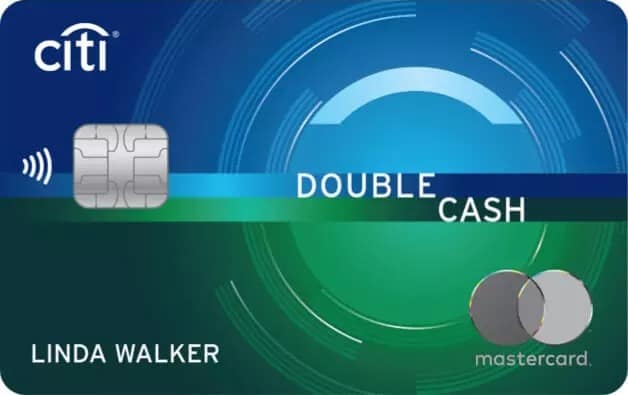
Citi Double Cash® Card
$200
cash back
after you spend $1,500 on purchases in the first 6 months of account opening. This bonus offer will be fulfilled as 20,000 ThankYou® Points, which can be redeemed for $200 cash back.

Hotel Card Catch-All Options
Unlike the catch-all cards in the previous section, hotel-branded cards are less flexible when it comes to redeeming your rewards. Points earned on these cards are tied to a single hotel program, so you won’t have the same freedom to transfer to airlines or other partners. That said, they can still be valuable if you’re loyal to the brand, regularly stay at their properties or are chasing elite status and perks.
World of Hyatt Credit Card
For Hyatt loyalists, the World of Hyatt Credit Card is a great catch-all option.
At first glance, the catch-all earning rate seems mediocre—just 1X on non-category spend, and there’s even a $95 annual fee. However, it does come with a Category 1-4 free night certificate every year that you can use to offset the annual fee. Moreover, if you spend $15,000 on the card in a calendar year, you get a second Category 1-4 free night. Assuming you hit this threshold, what does your total return look like?
For $15,000 in spending, you’re earning 15,000 World of Hyatt points. Valued conservatively at 1 cent per point, that’s $150 in value.
The extra Category 1-4 free night certificate can usually be redeemed for anywhere between $100 to $300, depending on the property and timing. Let’s use $150 for simplicity.
Taken together, that’s $300 in estimated value from $15,000 in spending—equivalent to a 2% effective return based on these assumptions. However, it’s also possible to redeem the free night certificate for more than $150, making it possible for your return rate to exceed 2%. This can outperform some traditional catch-all setups depending on how you value and redeem the rewards.
This card becomes even more compelling if you’re chasing Hyatt elite status. You get five elite qualifying nights every year just for holding the card. In addition, every $5,000 spent on the card translates into two more elite qualifying nights.
After $15,000 in spending, you’ll have accumulated 11 elite qualifying nights with Hyatt without a single hotel stay, leaving you just 19 nights short of Explorist status and 49 nights short of Globalist.
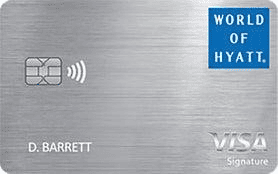
The World of Hyatt Credit Card
Earn 4 free nights
at any Category 1-4 Hyatt hotel or resort
after you spend $5,000 on purchases in your first 3 months from account opening.
Annual Fee: $95
Hilton Honors American Express Aspire Card
The Hilton Honors American Express Aspire Card is one of the most powerful hotel cards on the market in general, but it can also function as a legitimate catch-all for Hilton loyalists.
The Hilton Aspire has a similar rewards structure to the World of Hyatt card. The card earns 3X Hilton Honors Bonus Points on all other eligible purchases. That may not seem particularly impressive on its own, especially given the card’s $550 annual fee. However, cardmembers receive an Annual Free Night Reward in their first year and every year upon renewal. You can also earn another Free Night Reward after spending $30,000 in eligible purchases in a calendar year and an additional Free Night Reward after reaching $60,000 in eligible purchases that same calendar year. Let’s run the numbers at the $30,000 spending threshold.
For $30,000 in non-category spending, you’d earn 90,000 Hilton Honors Bonus Points. If you value Hilton Honors points at 0.5 cent each, that represents an estimated $450 in value.
Unlike Hyatt’s Category 1-4 Free Night Award, Hilton’s Free Night Reward isn’t restricted to specific hotel categories or a set number of points. It can be redeemed for a standard accommodation at participating properties in the Hilton portfolio, subject to availability and Hilton’s Free Night Reward property exclusions. This can potentially make the reward especially valuable when redeemed at high-end Hilton properties.
For simplicity, let’s assume you can get $450 in value from the additional Free Night Reward earned after $30,000 in spending. Combined with the estimated $450 value of the 90,000 points earned, that would provide an estimated $900 in value from $30,000 in spending—an effective return of about 3% based on these assumptions. If you’re able to get more value from the Free Night Reward, your effective return could be even higher.
The Hilton Aspire also comes with several other benefits that can help offset its annual fee, including up to $200 in annual flight statement credits, up to $400 in annual Hilton Resort statement credits and complimentary Hilton Honors Diamond status. These benefits can provide significant value for travelers who can make full use of them.
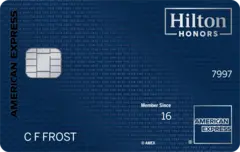
Hilton Honors American Express Aspire Card
Best Points Offer Yet! Earn 200,000
Hilton Honors Bonus Points
with the Hilton Honors American Express Aspire Card after you spend $6,000 in purchases on the Card within your first 6 months of Card Membership. Offer ends 01/13/2027.
Annual Fee:
$550
Other Setups
The World of Hyatt and the Hilton Aspire cards are the two best catch-all picks among hotel cards. Beyond these, other cards may work depending on the situation but usually have a lot more tradeoffs.
For example, the Marriott Bonvoy Bevy® American Express® Card is probably the best option for Marriott loyalists. It offers a free night certificate after $15,000 in annual spend, but its value is capped at 50,000 Bonvoy points, severely limiting its upside.
While it’s certainly possible to get solid value from a free night worth up to 50,000 points, it just doesn’t have the same redemption potential as the Hyatt or Hilton versions. However, cardmembers can also add up to 25,000 points to redeem the certificate for nights costing up to 75,000 points, increasing the redemption value of the certificate. Still, for most people, it’s often better to choose one of the three best catch-all cards we introduced earlier.
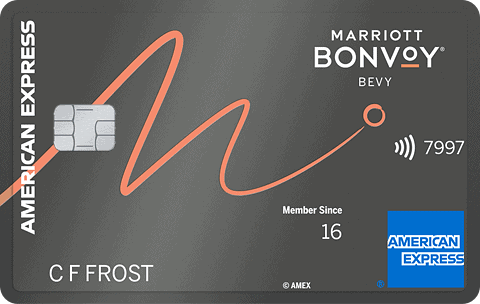
Marriott Bonvoy Bevy® American Express® Card
Earn 85,000
Marriott Bonvoy® bonus points
after you use your new Card to make $5,000 in purchases within the first 6 months of Card Membership.
Annual Fee:
$250

Airline Card Catch-All Options
Unlike flexible rewards cards (and a few hotel cards), airline cards are generally difficult to recommend as catch-all options. The biggest issue is that they can fall short on the fundamentals: Non-bonus earning rates may be low, while earning meaningful benefits or elite status through credit card spending alone can require substantial spending.
American Airlines cards are a good example. Consider the Citi® / AAdvantage® Executive World Legend Mastercard®. It earns just 1X AAdvantage® mile on all other purchases. Cardmembers also earn 1 Loyalty Point for every eligible AAdvantage® mile earned from purchases, helping them progress toward AAdvantage elite status.
For the 2026 qualification year, AAdvantage elite status requires 60,000 Loyalty Points for AAdvantage Gold®, 100,000 for AAdvantage Platinum®, 175,000 for AAdvantage Platinum Pro® and 250,000 for AAdvantage Executive Platinum®.
For example, $75,000 in eligible non-bonus spending on the card would generally earn 75,000 AAdvantage miles and 75,000 Loyalty Points, before accounting for any applicable Loyalty Point bonuses. That would be enough to reach AAdvantage Gold status, but not Platinum status.
By comparison, $75,000 in ordinary purchases earning 2X miles with the Capital One Venture X Rewards Credit Card would earn 150,000 Capital One miles. For travelers who value transferable rewards and aren’t specifically pursuing AAdvantage elite status or other American Airlines benefits, that could provide greater flexibility.
If there’s one airline setup that’s marginally defensible, you might consider the Atmos™ Rewards Summit Visa Infinite® credit card from Alaska Airlines and Hawaiian Airlines’ Atmos Rewards program. The card earns at least 1 Atmos Rewards point per dollar spent, with higher earning rates in select categories. Its biggest catch-all incentive is the 100,000-point Global Companion Award you can earn after spending $60,000 or more on purchases in a card anniversary year.
The card also earns 3X points on eligible foreign purchases, eligible dining purchases and eligible Alaska Airlines and Hawaiian Airlines purchases, making it particularly compelling for cardholders who spend extensively outside the United States. Cardholders also receive a 25,000-point Global Companion Award annually after each card anniversary.
Even then, this is a niche scenario rather than a broadly applicable recommendation. The value of putting substantial spending on the card depends heavily on whether you can make good use of the Global Companion Awards and other Atmos Rewards benefits.
For most people, airline cards may work better as supplemental tools for earning airline-specific travel benefits rather than as the backbone of a catch-all strategy.
Unique Catch-All Credit Cards
The cards in this section don’t fit neatly into the traditional points and miles framework, but they’re still worth calling out. These are primarily cash back-focused cards that can outperform mainstream options if you’re willing to meet their specific requirements.
Bank of America Unlimited Cash Rewards Credit Card
On its own, the Bank of America® Unlimited Cash Rewards credit card earns 1.5% cash back on purchases. However, eligible cardholders enrolled in BofA Rewards™ can earn an additional credit card rewards bonus based on their membership tier.
BofA Rewards Premier members can receive a 75% rewards bonus on eligible credit card purchases, which can increase the effective cash-back rate on 1.5% purchases to 2.625%. However, reaching Premier status requires $1 million or more in qualifying combined Bank of America deposit and Merrill investment balances, making this strategy most relevant to customers who already maintain substantial assets with Bank of America or Merrill.
Robinhood Gold Card
The Robinhood Gold Card offers a simple but compelling proposition of 3% cash back on all purchases. This makes it one of the highest flat-rate cards on the market. However, access to the card requires a paid Robinhood Gold subscription. Rewards are earned as points, which can be redeemed for cash at 1 cent per point into an eligible Robinhood brokerage account or used for other available redemption options.
In Conclusion
We’ve covered a lot of catch-all card setups in this article. At the end of the day, most people should start with one of our top three recommendations: the Capital One Venture X, the Chase Freedom Unlimited or the Citi Double Cash. These cards get the fundamentals right: strong earning rates, simple structures and flexible rewards that don’t lock you into a single program.
After that, hotel catch-all cards can make sense in more specific situations, particularly if you’re loyal to a brand like Hyatt or Hilton. Here, hitting spending thresholds in exchange for free night certificates can meaningfully boost your effective return.
Airline cards, on the other hand, are rarely worth using as catch-all options outside of a few niche scenarios, and the same goes for other “unique” high cashback cards. For most, a strong and flexible catch-all card remains the simplest and smartest way to boost your rewards.

New to the world of points and miles? The Capital One Venture Rewards Credit Card is the best card to start with.
Current offer: Limited Time Offer: Enjoy a $300 stays credit, plus earn 75K bonus miles once you spend $4,000 on purchases within 3 months from account opening.
Earn 5X miles on hotels, vacation rentals and rental cars booked through Capital One Travel; 2X miles on all purchases.

after you spend $5,000 on purchases in the first 3 months from account opening.
Annual Fee: $95
when you spend $4,000 on purchases in the first 3 months from account opening, equal to $750 in travel
Annual Fee: $395
after you spend $500 on purchases in your first 3 months from account opening
after you spend $5,000 on purchases in your first 3 months from account opening.
Annual Fee: $95
with the Hilton Honors American Express Aspire Card after you spend $6,000 in purchases on the Card within your first 6 months of Card Membership. Offer ends 01/13/2027.
Annual Fee:
$550
after you use your new Card to make $5,000 in purchases within the first 6 months of Card Membership.
Annual Fee:
$250
after you spend $1,500 on purchases in the first 6 months of account opening. This bonus offer will be fulfilled as 20,000 ThankYou® Points, which can be redeemed for $200 cash back.
after $8,000 in purchases in the first 3 months.
Annual Fee: $695
Editors Note: Opinions expressed here are author’s alone, not those of any bank, credit card issuer, hotel, airline, or other entity. This content has not been reviewed, approved or otherwise endorsed by any of the entities included within the post.
10xTravel is part of an affiliate sales network and receives compensation for sending traffic to partner sites, such as CreditCards.com. This site may earn compensation when a customer clicks on a link, when an application is approved, or when an account is opened. This compensation may impact how and where links appear on this site. This site does not include all financial companies or all available financial offers. Terms apply to American Express benefits and offers. Enrollment may be required for select American Express benefits and offers. Visit americanexpress.com to learn more. All values of Membership Rewards are assigned based on the assumption, experience and opinions of the 10xTravel team and represent an estimate and not an actual value of points. Estimated value is not a fixed value and may not be the typical value enjoyed by card members.
Editors Note: Opinions expressed here are author’s alone, not those of any bank, credit card issuer, hotel, airline, or other entity. This content has not been reviewed, approved or otherwise endorsed by any of the entities included within the post.
bonus cash back
after you spend $6,000 on purchases in the first 3 months from account opening.
earn 75K bonus miles
once you spend $4,000 on purchases within 3 months from account opening.
bonus points
after you spend $5,000 on purchases in the first 3 months from account opening.
Membership Rewards® Points
after you spend $8,000 in eligible purchases on your new Card in your first 6 months of Card Membership. Welcome offers vary and you may not be eligible for an offer. Apply to know if you’re approved and find out your exact welcome offer amount – all with no credit score impact. If you’re approved and choose to accept the Card, your score may be impacted.