10xTravel is part of an affiliate sales network and receives compensation for sending traffic to partner sites, such as CreditCards.com. This site may earn compensation when a customer clicks on a link, when an application is approved, or when an account is opened. This compensation may impact how and where links appear on this site. This site does not include all financial companies or all available financial offers. Terms apply to American Express benefits and offers. Enrollment may be required for select American Express benefits and offers. Visit americanexpress.com to learn more. All values of Membership Rewards are assigned based on the assumption, experience and opinions of the 10xTravel team and represent an estimate and not an actual value of points. Estimated value is not a fixed value and may not be the typical value enjoyed by card members.
Note: Some of the offers mentioned below may have changed or may no longer be available. The content on this page is accurate as of the posting date; however, some of our partner offers may have expired. You can view current offers here.
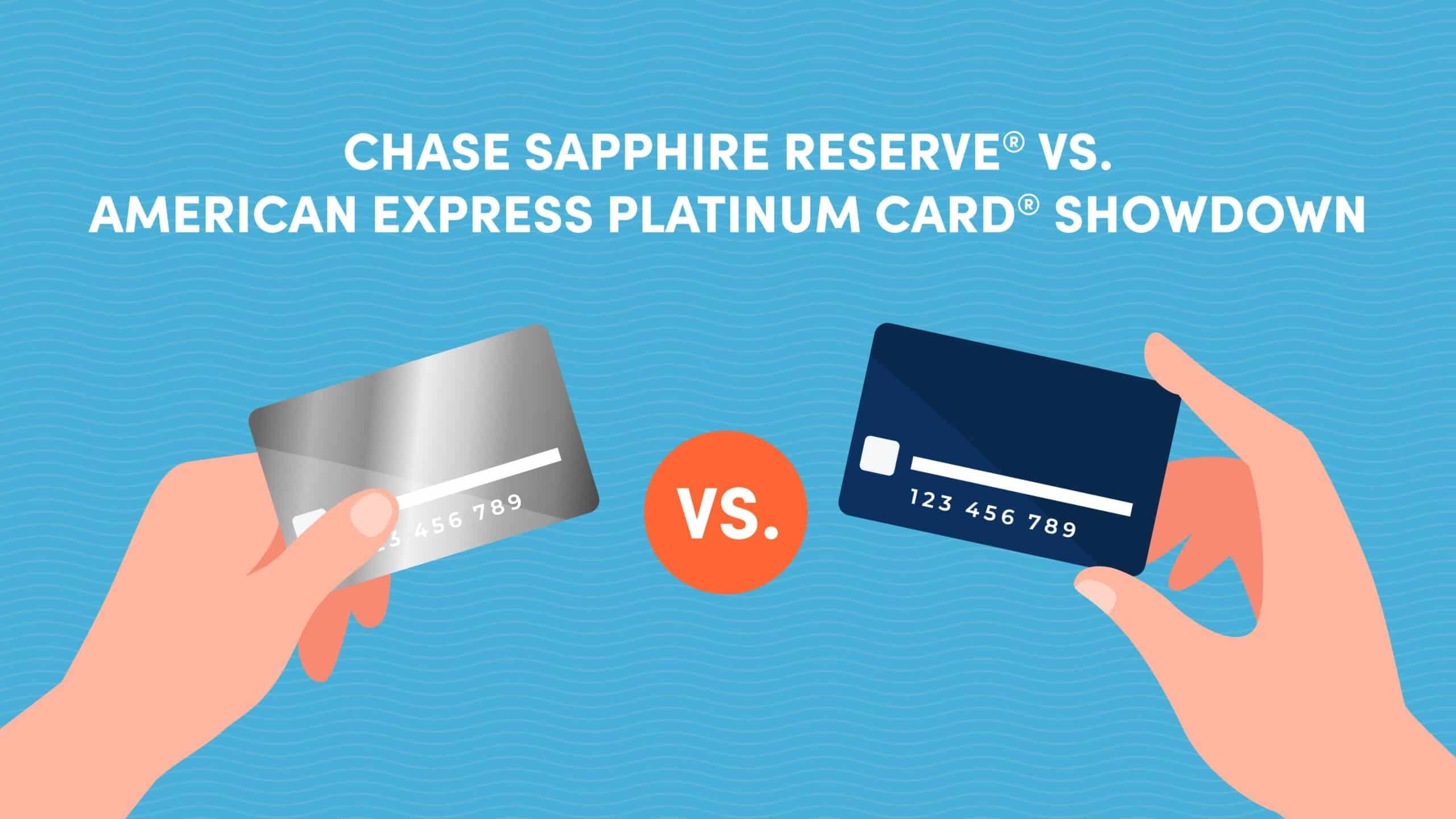
When you stack the American Express Platinum Card® (see rates and fees) against the Chase Sapphire Reserve®, you’re looking at two of the most premium travel cards available today—each packed with statement credits, elevated earning structures and travel perks that can easily offset their high annual fees.
However, these travel credit cards aren’t made for every traveler. You need to be a high spender and frequent traveler to be able to maximize these cards’ perks and offset their annual fees.
While they have a lot of overlap, there are some key differences between the Chase Sapphire Reserve and the Amex Platinum beyond their price tag, which determine which card is best suited to you.
Let’s check out the Chase Sapphire Reserve vs. the Amex Platinum.

Earn 100,000
bonus points
after you spend $6,000 on purchases in the first 3 months from account opening.
Annual Fee: $795
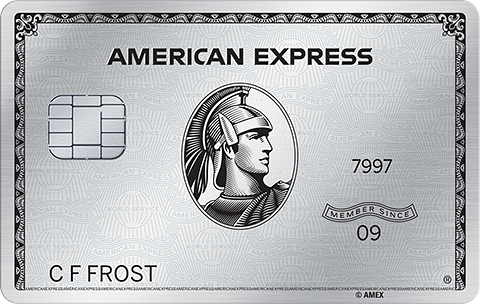
American Express Platinum Card®
You may be eligible for as high as 175,000
Membership Rewards® Points
after spending $12,000 in eligible purchases on your new Card in your first 6 months of Membership. Welcome offers vary and you may not be eligible for an offer.
Annual Fee:
$895

Key Differences Between These Premium Travel Cards
Before diving in, let’s compare the key features of the Amex Platinum vs. Chase Sapphire Reserve.
| American Express Platinum Card® | Chase Sapphire Reserve® | |
|---|---|---|
| Annual fee | $895 (see rates and fees) | $795 |
| Authorized user annual fee | $195 | $195 |
| Earning rates | • 5X points on flights booked directly with airlines or through American Express Travel®, on up to $500,000 per calendar year, then 1X points thereafter • 5X Membership Rewards® Points on prepaid hotels booked on amextravel.com. • 1X points on all other purchases | • 8X points on all purchases made through Chase Travel℠ • 4X points on flights and hotels booked directly with the respective airline or hotel • 3X points on dining worldwide • 1X points on all other purchases |
| Airport Lounge access | With over 1,550 airport lounges - more than any other credit card company on the market* - enjoy the benefits of the Global Lounge Collection, over $850 of annual value, with access to Centurion Lounges, 10 Delta Sky Club visits (subject to visit limitations) when flying on an eligible Delta flight, Priority Pass™ membership (enrollment required), and other select partner lounges. *As of 01/2026 | Complimentary Priority Pass Select membership and access to The Chase Sapphire Lounge by The Club |
| Elite hotel status | • Complimentary Hilton Honors Gold status • Complimentary Marriott Bonvoy Gold Elite status • Complimentary Leaders Club Sterling status | • Complimentary IHG® One Rewards Platinum Elite Status (through Dec. 31, 2027) |
| Value of statement credits and additional perks | About $3,500 worth of additional perks | About $3,000 worth of additional perks |
| Travel insurance coverage | • Trip cancellation and interruption insurance* • Trip delay insurance • Car rental loss and damage insurance • Baggage insurance plan | • Trip cancellation and interruption insurance • Trip delay insurance • Auto rental coverage • Baggage loss and delay insurance • Travel accident insurance • Emergency medical and dental benefit • Emergency evacuation and transportation |
* Eligibility and benefit level varies by card. Terms, conditions and limitations apply. Please visit americanexpress.com/benefitsguide for more details. Underwritten by Amex Assurance Company.
Annual Fee Structure and First-Year Value
The Amex Platinum costs $895 per year (see rates and fees) to hold while the Chase Sapphire Reserve costs $795 per year. While there may be a $100 difference between the cost of the two cards, they’re both premium products with some of the highest annual fees on the market.
If you’re the type of traveler who can use all of the perks, then you have the ability to offset their annual fees significantly.
For instance, the Amex Platinum offers more than $3,500 worth of perks while the Chase Sapphire Reserve offers more than $3,000 in value. If you were to fully use each of the card’s perks, you’d offset their respective annual fees by approximately $2,000.
If you factor in the welcome offer as well—and redeem it strategically with Amex or Chase’s transfer partners—you’ll offset the annual fee even further.
The real question isn’t whether or not the card’s annual fee can be offset, but rather whether you can offset it.
If your lifestyle, spending and travel habits don’t align with either of the cards, you’ll struggle to offset the annual fee. However, if they do align, you’ll be able to reap massive value out of the cards.
Bonus Spending Categories
The Amex Platinum and the Chase Sapphire Reserve reward spending differently.
The Chase Sapphire Reserve offers the following earning rates:
- 8X points on all purchases made through Chase Travel℠
- 4X points on flights and hotels booked directly with the respective airline or hotel
- 3X points on dining worldwide
- 1X points on all other purchases
In contrast, the Amex Platinum offers the following bonus spending categories:
- 5X points on flights booked directly with airlines or through American Express Travel®, on up to $500,000 per calendar year, then 1X points thereafter
- 5X Membership Rewards® Points on prepaid hotels booked on amextravel.com
- 1X points on all other purchases
The Sapphire Reserve offers a higher rate of 8X points per dollar spent on all purchases made through Chase Travel℠ with no earning caps. In contrast, the Amex Platinum limits its 5X earning rate on flights booked through American Express Travel® at $500,000 per calendar year (1X points thereafter).
If you book flights frequently through your card issuer’s travel portal, you’d earn an additional 3X points for every dollar spent on the Sapphire Reserve (for a total of 8X points) compared to the Amex Platinum.
When booking flights directly with the airline, the Amex Platinum comes out on top, earning 5X points per dollar spent compared to 4X points per dollar spent with the Chase Sapphire Reserve.
However, the Chase Sapphire Reserve earns 4X points on both direct airline and hotel bookings, while the Amex Platinum doesn’t offer elevated earnings on direct hotel bookings—only on prepaid hotel bookings made through American Express Travel.
This makes the Chase Sapphire Reserve more well-rounded for travel spend, offering lucrative returns on both direct spending with hotels and airlines in addition to uncapped earnings on spending made through Chase Travel℠.
Similarly, while the Chase Sapphire Reserve also offers 3X points on dining worldwide, the Amex Platinum offers no other bonus spending categories—all other purchases earn a measly 1X points per dollar spent.
So when it comes to earning rates, the Chase Sapphire Reserve comes out ahead, giving you greater ability to rack up points and offset the card’s annual fee through spending.

Travel Benefits and Lounge Access
Both the Amex Platinum and the Chase Sapphire Reserve are some of the best credit cards for lounge access perks and travel benefits. Let’s compare them head to head.
Airport Lounge Networks and Guest Policies
Both the Amex Platinum and the Chase Sapphire Reserve offer comprehensive airport lounge access perks. Not only are they both credit cards with Priority Pass, but they also offer access to a number of other lounge networks.
Having said that, the Amex Platinum is the clear winner when it comes to getting into airport lounges, offering a much wider domestic and international network.
The Amex Platinum comes with complimentary access to The American Express Global Lounge Collection®, which includes the following lounge networks:
- The Centurion® Lounge
- Delta Sky Club®
- Escape Lounges – The Centurion Studio Partner
- Lufthansa Lounges (ends Sept. 30, 2026)
- Plaza Premium
- Priority Pass™ Select
- Additional Global Lounge Collection partner lounges
In contrast, the Chase Sapphire Reserve offers complimentary access to the following lounge networks:
- Air Canada Maple Leaf Lounges
- Plaza Premium
- Priority Pass™ Select
- The Chase Sapphire Lounge by The Club
Both cards offer complimentary access to their respective lounge networks—American Express Centurion Lounges and Chase Sapphire Lounges—for the primary cardmember and authorized users.
Amex Centurion Lounges and Chase Sapphire Lounges both offer luxurious experiences, typically outpacing airline-affiliated lounge networks. Both networks have a small footprint, although Amex has both domestic and international Centurion Lounges while Chase’s lounges are all U.S.-based (since the closure of its lounge in Hong Kong).
However, Chase Sapphire lounges are generally better rated than Centurion Lounges because of their modern designs, consistent quality of dining and service, and less overcrowding issues.
Additionally, while Chase Sapphire Reserve cardholders (including authorized users) can bring up to two guests into Sapphire Lounges free of charge, Amex Platinum cardholders have to pay a per-visit rate of $50 (or $30 for children aged 2 through 17) for additional guests. That’s unless you charge $75,000 to your card within a calendar year, which will unlock complimentary guest access privileges.
The Chase Sapphire Reserve also includes access to the Priority Pass network (which includes Plaza Premium lounges) and to Air Canada Maple Leaf Lounges for yourself and up to one guest when flying with any Star Alliance carrier.
These perks make the Chase Sapphire Reserve a strong choice for airport lounge access, particularly regarding access to its own network of boutique lounges. However, in terms of global reach, the Amex Platinum comes out on top for airport lounge access perks.
On top of Priority Pass Select and Centurion Lounge access, Amex Platinum cardholders can enjoy the benefits of the Global Lounge Collection, over $850 of annual value, with access to Centurion Lounges, 10 Delta Sky Club visits (subject to visit limitations) when flying on an eligible Delta flight, Priority Pass™ membership (enrollment required), and other select partner lounges. *As of 01/2026.
Access to Delta Sky Clubs is limited to 10 visits per year, and you need to be traveling on a same-day Delta-operated flight or Delta-marketed WestJet flights. You can bring up to two guests with you at a rate of $50 per person. If you charge $75,000 to your card, you’ll receive unlimited access to Delta Sky Clubs for the remainder of the Medallion year you earn it, plus the following Medallion year.
You can also access Lufthansa Lounges as an Amex Platinum cardholder when flying on a same-day Lufthansa Group (Lufthansa, Swiss International Air Lines and Austrian Airlines) flight. You can enter Lufthansa Business Lounges when flying with any class of ticket and Lufthansa Senator Lounges when flying business class. However, guests aren’t officially allowed. (Note that this benefit ends Sept. 30, 2026.)
Lastly, Amex Platinum cardholders can enter Escape Lounges, which offer a valuable network of independent lounges at secondary airports across the U.S. and U.K. You can bring up to two guests with you free of charge into Escape Lounges.
Overall, the Amex Platinum offers global access to a wide variety of lounge networks while the Chase Sapphire Reserve has a smaller footprint with more boutique lounges on offer.
TSA PreCheck and Global Entry Credits
The Chase Sapphire Reserve and the Amex Platinum both offer statement credits toward TSA PreCheck® or Global Entry application fees.
You’ll need to apply through an official enrollment provider and charge the application fee to your card. The Global Entry credit is issued every four years while the TSA PreCheck® credit is issued every four and a half years.
However, one standout benefit of the Amex Platinum is that each cardholder gets their own credit. That means all of your authorized users can apply for TSA PreCheck or Global Entry membership and have the application fee covered by the credit.
In contrast, the Chase Sapphire Reserve offers only one credit, regardless of how many authorized users you add.
Trip Protections and Travel Insurance Coverage
Credit card travel protections are often an afterthought, but they can save you hundreds of dollars on separate insurance plans.
Both the Amex Platinum and the Chase Sapphire Reserve offer comprehensive insurance plans, but the Sapphire Reserve is the clear winner, offering more protection perks and generous policies.
Here’s a head-to-head comparison of the Amex Platinum vs. Chase Sapphire Reserve travel protection perks.
| American Express Platinum Card | Chase Sapphire Reserve | |
|---|---|---|
| Trip cancellation and interruption insurance | Coverage up to $10,000 per trip and up to $20,000 per 12 month period | Coverage up to $10,000 per covered person and up to $20,000 per trip. Maximum of $40,000 in reimbursements per 12 month period (per policy). |
| Trip delay insurance | Coverage up to $500 per covered trip when delayed for more than six hours with a maximum of two claims per 12-month period | Coverage up to $500 per covered ticket when delayed for more than six hours |
| Auto rental coverage | Secondary coverage up to $75,000; includes medical expense coverage of up to $5,000 and accidental death and dismemberment benefits of up to $200,000 for the card member and $20,000 for each eligible passenger | Primary coverage up to $75,000 |
| Baggage loss insurance | Coverage up to $2,000 for checked baggage and up to a combined maximum of $3,000 for checked and carry-on baggage, in excess of coverage provided by the Common Carrier. Coverage is subject to a $3,000 aggregate limit per covered trip.* | Coverage of up to $3,000 each for checked and carry-on baggage per covered person per trip. Both include a sub-limit up to $500 for jewelry and watches and a sub-limit up to $500 for cameras and other electronic equipment per covered person per trip. |
| Baggage delay insurance | N/A | Reimbursement up to $100 per day for a maximum of five days when your baggage is delayed for more than six hours. |
| Emergency medical and dental benefit | N/A | Coverage up to $2,500 with a $50 deductible |
| Travel accident insurance | N/A | Common carrier travel accident insurance up to $1,000,000 and 24-hour travel accident insurance up to $100,000 |
| Emergency evacuation and transportation insurance | N/A | Coverage up to $100,000 |
* For New York state residents, there is a $2,000 per bag/suitcase limit for each covered person with a $10,000 aggregate maximum for all covered persons per covered trip.
American Express Platinum Card®
You may be eligible for as high as 175,000
Membership Rewards® Points
after spending $12,000 in eligible purchases on your new Card in your first 6 months of Membership. Welcome offers vary and you may not be eligible for an offer.
Annual Fee:
$895
Earn 100,000
bonus points
after you spend $6,000 on purchases in the first 3 months from account opening.
Annual Fee: $795

Statement Credits and Lifestyle Perks
If you want a card that reduces the cost of your lifestyle—be it dining, shopping or travel costs—both the Chase Sapphire Reserve and the Amex Platinum are a solid choice. However, each card offers different benefits tailored to various types of consumers and travelers.
Let’s break each of the credits and cardholder perks down by category to see which card comes out on top.
Lifestyle and Entertainment Credits Winner: Amex Platinum
When it comes to lifestyle and entertainment credits, the Amex Platinum comes out on top, offering approximately $1,200 worth of lifestyle and entertainment credits.
In contrast, the Chase Sapphire Reserve offers about $708 worth of lifestyle and entertainment credits, which can be increased to $958 if you charge $75,000 to your card within a calendar year.
However, which card is more valuable comes down to your lifestyle habits.
For instance, if you have no interest in Lululemon, Equinox or an Oura Ring, but could definitely use the Peloton, Stubhub and Apple TV/Music credits, the Chase Sapphire Reserve may be a better choice.
Here’s a side-by-side comparison of the Chase Sapphire Reserve’s vs. the Amex Platinum’s lifestyle and entertainment credits.
| Lifestyle and entertainment credits - Amex Platinum Card | Lifestyle and entertainment credits - Chase Sapphire Reserve |
|---|---|
|
|
Dining Credits Winner: Chase Sapphire Reserve
If dining and food-related purchases are one of your top spending categories, the Chase Sapphire Reserve will be a better choice than the Amex Platinum.
Aside from the Chase Sapphire Reserve’s 3X point multiplier on dining expenditure, it also offers up to $720 worth of dining credits, including for DoorDash, a DashPass membership and the Sapphire Exclusive Tables program.
In contrast, the Amex Platinum offers up to $555 worth of annual food and dining credits, including a Walmart+ membership credit after you pay for a monthly Walmart+ membership (subject to auto renewal) and a Resy credit.
Here’s a side-by-side comparison of the Amex Platinum Card’s vs. the Chase Sapphire Reserve’s dining and food-related credits.
| Dining credits - Amex Platinum Card | Dining credits - Chase Sapphire Reserve |
|---|---|
|
|
Ride-Hailing, Car Rental and Transit Benefits Winner: Amex Platinum
The Amex Platinum beats the Chase Sapphire Reserve when it comes to ride-hailing, car rental and transit benefits.
The Amex Platinum offers complimentary privileges with a number of rental car companies as well as up to $320 in various benefits with Uber.
The Chase Sapphire Reserve offers few elite privileges with rental car companies, namely through its Visa Infinite benefits which includes Avis Preferred Plus access. It also offers up to $120 in Lyft credits.
That said, if you prefer Lyft to Uber, you’d be better off going for the Chase Sapphire Reserve card.
Here’s a head-to-head comparison of the Amex Platinum’s vs. the Chase Sapphire Reserve’s ride-hailing, car rental and transit benefits.
| Ride-hailing, car rental and transit benefits - Amex Platinum Card | Ride-hailing, car rental and transit benefits - Chase Sapphire Reserve |
|---|---|
|
|
* To receive this benefit you must have downloaded the latest version of the Uber App and your eligible Amex Platinum Card must be a method of payment on your Uber account. The Amex Benefit may only be used in the United States.
Travel Credits and Elite Hotel Status Winner: Amex Platinum
Both the Amex Platinum and the Chase Sapphire Reserve offer a long-list of travel-related credits and perks. However, the Amex Platinum beats the Sapphire Reserve on both the quality and sheer quantity of travel perks and credits.
Not only do you receive mid-tier elite status in three hotel rewards programs, but you also receive credits toward both hotel and airline spending totaling more than $1,000 in value.
The Chase Sapphire Reserve also offers more than $1,000 worth of travel credits and perks, but you only receive complimentary elite status with two hotel programs, and some benefits require you to reach the $75,000 spending threshold.
That said, the Chase Sapphire Reserve’s $300 annual travel credit is particularly valuable as it can be used to cover any purchase that codes as travel—not just spending through Chase Travel℠.
Here’s a side-by-side comparison of the Amex Platinum’s vs. the Chase Sapphire Reserve’s travel credits and elite hotel status perks.
| Travel credits and elite hotel status - Amex Platinum Card | Travel credits and elite hotel status - Chase Sapphire Reserve |
|---|---|
|
|

Points Value and Redemption Flexibility
Both American Express Membership Rewards and Chase Ultimate Rewards can be redeemed as cash back, a statement credit or toward travel purchases.
Redeemed in this way, Amex points are worth between 0.6 and 1 cent apiece, depending on the method.
Chase points offer slightly higher fixed redemption values, between 1 and 2 cents apiece, depending on the method. If you can redeem your points using a Points Boost offer through Chase Travel, you can get up to 2 cents per point in value.
However, in either case, you’re leaving value on the table by redeeming your points this way. If you want to squeeze every last drop of value out of your points, you should transfer them to Amex’s or Chase’s transfer partners.
Transfer Partners and Airline Options Winner: Tie
Transferring your points to airline and hotel partners is the best way to maximize their value. By leveraging partner award bookings, you can get anywhere from 5 to 10 cents per point redeemed.
Here’s a side-by-side comparison of American Express’s vs. Chase’s airline and hotel transfer partners.
| American Express | Chase | |
|---|---|---|
| Shared transfer partners |
|
|
| Individual transfers partners |
|
|
In terms of sheer volume, Amex beats Chase when it comes to transfer partners. However, both issuers offer numerous opportunities for lucrative redemptions that can be made even better with the help of transfer bonuses.
Both Chase and Amex offer access to some key airline loyalty programs, including Air France-KLM Flying Blue, Air Canada Aeroplan and Virgin Atlantic Flying Club.
By transferring your points to these partners, you can score yourself premium-cabin award fares across the world with SkyTeam (Flying Blue and Virgin) and Star Alliance (Aeroplan) carriers.
Amex takes this further, offering point transfers to lucrative partners such as All Nippon Airways (ANA) Mileage Club, Avianca LifeMiles and Cathay Pacific Asia Miles. These partners can come in handy for numerous flight itineraries and all offer affordable award fares.
On the other hand, Chase points transfer to United Airlines, which can be a solid way for frequent United flyers to top up their MileagePlus balance. Chase also partners with World of Hyatt, one of the best hotel loyalty programs for affordable redemptions at luxury properties.
Additionally, Chase offers a more favorable transfer ratio of 1:1 to JetBlue TrueBlue. And although Amex points transfer to both JetBlue TrueBlue and Delta SkyMiles, all Amex transfers to domestic airlines incur an excise tax offset fee of $0.0006 per point (up to $99 per transfer). In contrast, Chase doesn’t charge any fees to transfer points to its partners.
Therefore, both card issuers can be ranked equally when it comes to transfer partners and redemption options.
Which Card Offers Better Value for Frequent Travelers?
If you want a card that rewards your spending—both everyday and travel-related—the Chase Sapphire Reserve takes the lead. You’ll earn on direct purchases with hotels and airlines as well as dining worldwide.
Likewise, if the type of travel and lifestyle credits offered by the Sapphire Reserve—such as Lyft credits, a $300 travel credit and IHG® One Rewards Platinum Elite status—match your spending and travel habits more than those offered by Amex, you’ll reap far more value from it.
However, if you want access to the largest number of airport lounges worldwide as well as elite status with three global hotel chains, the Amex Platinum takes center stage.
Ultimately, the card that comes out on top is the one that best supports your travel and lifestyle goals.

New to the world of points and miles? The Chase Sapphire Preferred® Card is the best card to start with.
With a bonus of Earn 75,000 bonus points after you spend $5,000 on purchases in the first 3 months from account opening. , 5x points on travel booked through the Chase TravelSM Portal and 3x points on restaurants, streaming services, and online groceries (excluding Target, Walmart, and wholesale clubs), this card truly cannot be beat for getting started!
after spending $12,000 in eligible purchases on your new Card in your first 6 months of Membership. Welcome offers vary and you may not be eligible for an offer.
Annual Fee:
$895
after you spend $6,000 on purchases in the first 3 months from account opening.
Annual Fee: $795
Editors Note: Opinions expressed here are author’s alone, not those of any bank, credit card issuer, hotel, airline, or other entity. This content has not been reviewed, approved or otherwise endorsed by any of the entities included within the post.
10xTravel is part of an affiliate sales network and receives compensation for sending traffic to partner sites, such as CreditCards.com. This site may earn compensation when a customer clicks on a link, when an application is approved, or when an account is opened. This compensation may impact how and where links appear on this site. This site does not include all financial companies or all available financial offers. Terms apply to American Express benefits and offers. Enrollment may be required for select American Express benefits and offers. Visit americanexpress.com to learn more. All values of Membership Rewards are assigned based on the assumption, experience and opinions of the 10xTravel team and represent an estimate and not an actual value of points. Estimated value is not a fixed value and may not be the typical value enjoyed by card members.
Editors Note: Opinions expressed here are author’s alone, not those of any bank, credit card issuer, hotel, airline, or other entity. This content has not been reviewed, approved or otherwise endorsed by any of the entities included within the post.

bonus cash back
after you spend $6,000 on purchases in the first 3 months from account opening.

earn 75K bonus miles miles
once you spend $4,000 on purchases within 3 months from account opening.
bonus points
after you spend $5,000 on purchases in the first 3 months from account opening.
Membership Rewards® Points
after you spend $8,000 in eligible purchases on your new Card in your first 6 months of Card Membership. Welcome offers vary and you may not be eligible for an offer. Apply to know if you’re approved and find out your exact welcome offer amount – all with no credit score impact. If you’re approved and choose to accept the Card, your score may be impacted.