10xTravel is part of an affiliate sales network and receives compensation for sending traffic to partner sites, such as CreditCards.com. This site may earn compensation when a customer clicks on a link, when an application is approved, or when an account is opened. This compensation may impact how and where links appear on this site. This site does not include all financial companies or all available financial offers. Terms apply to American Express benefits and offers. Enrollment may be required for select American Express benefits and offers. Visit americanexpress.com to learn more. All values of Membership Rewards are assigned based on the assumption, experience and opinions of the 10xTravel team and represent an estimate and not an actual value of points. Estimated value is not a fixed value and may not be the typical value enjoyed by card members.
It’s easy to underestimate effective credit card management. When you’re earning one welcome bonus after the other, using your points to fly first class internationally and benefiting from perks like airport lounge access and complimentary airline elite status, life seems rosy.
However, every dollar you spend on a credit card is a dollar you owe. Timely balance payments are essential for protecting your credit score and preventing you from running into double-digit interest rates. Likewise, not every card in your wallet is designed for every situation—using the wrong card to pay for a purchase could cost you a significant number of points or even cost you foreign transaction fees.
On top of this, tracking the number of cards you’re applying for and the exact application and approval dates is key to tracking your 5/24 status—determining whether or not you’ll be eligible for a new Chase card.
Managing all of these aspects might seem like a breeze when you have one or two credit cards to your name. But if you’re like us, your wallet is bursting at the seams with credit cards.
That’s why it’s essential to have a system in place that allows you to track your spending, rewards, progress toward welcome bonuses and your 5/24 status, among other things. Without such a system, you risk missing out on welcome bonuses, being ineligible for a new Chase card, running up interest on your balances and missing out on point maximization.
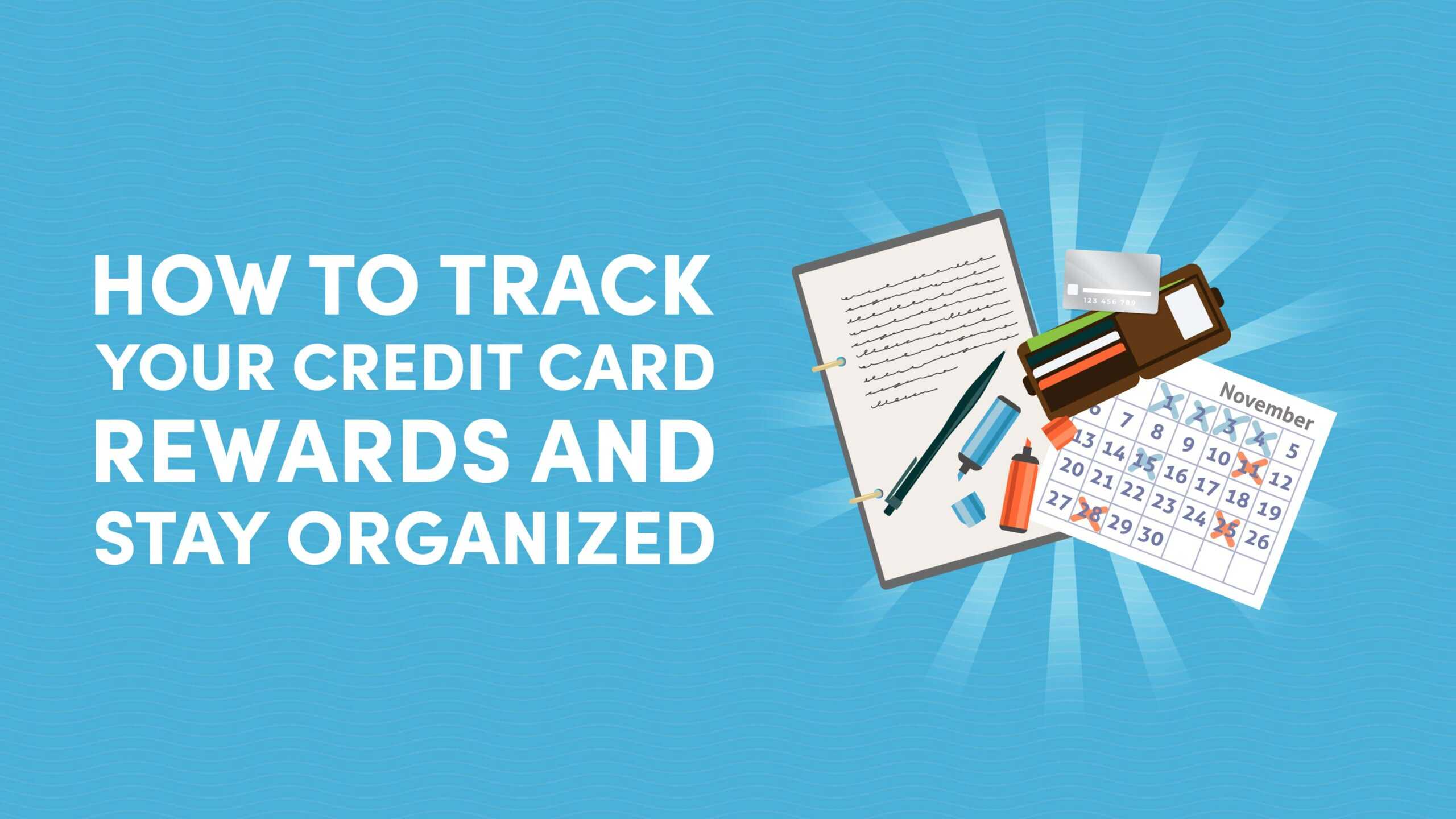
Let’s look at the best ways to track your credit card rewards and stay organized.

Organize Your Cards by Purpose
When you first start out in the world of points and miles, you should open an all-around beginner card like the Chase Sapphire Preferred® Card. The Sapphire Preferred earns points across a wide range of bonus spending categories and gives you solid options when it comes time to redeem your rewards.
As you continue your journey through the world of points and miles, you’ll probably want to open other cards. You might start by opening cards that are designed for specific purchases or cardholder perks.
This credit card specialization enables you to earn more points on specific purchases than you would when paying for all purchases with a single card. But your success in doing this depends on whether you can remember when to use each card. That’s where assigning each of your cards a specific purpose and finding a system to remember them is key.
For example, the American Express® Gold Card offers 4X points per dollar spent on groceries at U.S. supermarkets, up to $25,000 per calendar year (1X points thereafter) plus 4X points per dollar spent on worldwide dining, on up to $50,000 per calendar year (1X points thereafter) (see rates and fees). That makes the Amex Gold Card one of the most lucrative cards you can pay with when it comes to covering your weekly groceries and dining expenses.
However, if you were to charge travel expenses to the Amex Gold Card, you’d earn a mere 1X points per dollar spent—its non-bonus category points multiplier. That’s where using the Chase Sapphire Reserve® card to cover worldwide travel expenses would be optimum, enabling you to earn 4x points on flights and hotels booked direct and 8X on all purchases through Chase Travel℠, including The Edit℠ (after the $300 annual travel credit has been used).
And if you wanted to charge miscellaneous expenses—such as utility bills, online shopping purchases and even your taxes—to a credit card, neither the Amex Gold nor the Chase Sapphire Reserve is going to do much for you. Instead, the Capital One Venture Rewards Credit Card could earn you a mighty 2X miles per dollar spent on all non-bonus category spending, allowing you to earn double points on a range of expenses.
In this example, the Amex Gold would be your dining card, the Chase Sapphire Reserve would be your travel card and the Capital One Venture Rewards Credit Card would be your miscellaneous spending card. Each card has a purpose and enables you to maximize your rewards on every dollar spent.
Once you’re clear on the purpose of each of your cards, your next step is putting a system in place to make sure you remember when you should use each card. When the cashier or waitress asks for your card, it’s easy to crack under pressure and pay with the first one you find in your wallet. And while three cards may not seem like much to remember, many of us hold more than that, making it essential to have a reliable system in place.
You need to do what works for you. There’s nothing stopping you from blowing the dust off your old label maker and labeling each card in your wallet. Alternatively, a simple sticky note on each card works. There are also stickers you can buy on Amazon, Etsy and other websites that are labeled for you with words like “3X” or “2X” and icons like grocery carts and airplanes. You can search “credit card rewards stickers” and typically find several options of these.
You could also consider leaving the cards you don’t need for the day at home, making it less likely that you’ll use the wrong card. But, be careful to store your cards somewhere secure that you can easily remember, otherwise you run the risk of losing your cards altogether.
You could also write a physical list to keep in your wallet or a digital one on your phone.
Whatever method you use, keep it consistent and simple.

Chase Sapphire Preferred® Card
75,000
bonus points
after you spend $5,000 on purchases in the first 3 months from account opening.
Annual Fee: $95

Earn 125,000
bonus points
after you spend $6,000 on purchases in the first 3 months from account opening.
Annual Fee: $795

You may be eligible for as high as 100,000
Membership Rewards® Points
after you spend $6,000 in eligible purchases on your new Card in your first 6 months of Card Membership. Welcome offers vary and you may not be eligible for an offer. Apply to know if you’re approved and find out your exact welcome offer amount – all with no credit score impact. If you’re approved and choose to accept the Card, your score may be impacted.
Annual Fee:
$325
Capital One Venture Rewards Credit Card
LIMITED-TIME OFFER: Enjoy $250
to use on Capital One Travel
in your first cardholder year, plus earn 75,000 bonus miles once you spend $4,000 on purchases within the first 3 months from account opening - that’s equal to $1,000 in travel
Annual Fee: $95

Track Your Card Activity
Tracking your card activity is important and comes with many benefits.
First, tracking your card activity—specifically your spending—enables you to detect fraudulent payment activity more quickly. If you don’t recognize a charge on your card, contact your card issuer immediately to verify the cause.
Second, tracking your card activity enables you to better see exactly how much you’re spending in each category every month. This not only enables you to track your rewards but also gives you an overview for family budgeting purposes, helping you to better manage your household expenses.
Third, tracking your card activity enables you to see how many rewards you’re earning in each category per month. This can also help you track your progress toward minimum spending thresholds for welcome bonuses as well as work out the degree to which you’re offsetting annual fees through card expenditure.
Tracking your cards—from expenditure and rewards earned, to balances and due dates—also helps you to remember the purpose of each card. For instance, if you know that all of your grocery shopping and dining expenditure posts to your Amex Gold Card’s statement, you’ll eventually remember to not to use any other card for this type of spending.
Track Rewards Expiry Dates
There aren’t many things worse in the points and miles world than seeing your hard-earned points expire.
Luckily, Amex Membership Rewards points, Bilt Points, Capital One Miles, Citi ThankYou Rewards and Chase Ultimate Rewards points never expire, as long as your account remains open and active.
However, certain airline and hotel loyalty points expire anywhere between 12 to 36 months after account inactivity. In most cases, you can renew the lifetime of these points by flying with the airline or staying with the hotel, by spending using one of their co-branded credit cards or by any other type of qualifying account activity. In a small minority of cases, certain rewards programs don’t allow you to renew the expiry date of your points.
In any case, you can prevent your points from expiring by using a simple spreadsheet. Note the last date of qualifying account activity as well as the expiry date and the number of points you hold. You can also set up reminders in your calendar as to when points will expire.
This is particularly important for hotels or airlines with whom you hold a significant number of points but don’t often stay or fly with, respectively.

Let Your Wallet Lose Some Weight
There’s no need to walk around town with every card you own weighing your wallet down.
Instead, leave the cards you don’t need at home (in a secure place that you’ll remember) and take only the ones you’ll need for the day with you.
For instance, if you only ever use your co-branded airline or hotel card for the status perks and booking, there’s no need to carry it with you every day of the week. Likewise, leave cards you only use to auto pay recurring subscriptions at home.
This reduces your chances of using the wrong card for the type of purchase you’re making. It also reduces the chances of a card being stolen or lost.
Never Miss a Payment Due Date
As tempting as it can be to pay your balance off before your statement closes, you should generally avoid doing so. When you pay your balance off before your statement closes, your card issuer has zero activity to report to the credit bureaus.
Therefore, you won’t build any positive payment history.
Instead, you want to wait for your statement to close and then pay your balance off in full before the due date. That way, the card issuer will be able to report that you’ve paid off your line of credit in full, which builds your credit score.
Holding multiple credit cards means managing multiple payment due dates. With multiple payment deadlines, it’s easy to miss one payment here and there.
To help prevent missing payments, set your due dates to be the same date across all cards. You can usually do this by calling your card issuer.
It’s also a good idea to set up automated payments for your card balances. Just ensure that you check for unauthorized charges at the end of every statement period and that you have enough money in the account you’re paying from that you don’t run the risk of an overdraft fee.
You can also set up credit card alerts. These will notify you when you’re close to your credit limit, when your bill is due and of other account activity.
Track All Your Cards From One Place: My10x Tool
If you want to track all of your credit cards in one place, the My10x tool could be exactly what you’re looking for.
You can sync your credit card accounts with the My10x tool and track your points balances across all cards. You’ll also get advice on your eligibility for new cards, be able to track your 5/24 status and much more.
Register for My10x today and make credit card management a breeze.
New to the world of points and miles? The Chase Sapphire Preferred® Card is the best card to start with.
With a bonus of 75,000 bonus points after you spend $5,000 on purchases in the first 3 months from account opening. , 5x points on travel booked through the Chase TravelSM Portal and 3x points on restaurants, streaming services, and online groceries (excluding Target, Walmart, and wholesale clubs), this card truly cannot be beat for getting started!
after you spend $5,000 on purchases in the first 3 months from account opening.
Annual Fee: $95
after you spend $6,000 on purchases in the first 3 months from account opening.
Annual Fee: $795
after you spend $6,000 in eligible purchases on your new Card in your first 6 months of Card Membership. Welcome offers vary and you may not be eligible for an offer. Apply to know if you’re approved and find out your exact welcome offer amount – all with no credit score impact. If you’re approved and choose to accept the Card, your score may be impacted.
Annual Fee:
$325
in your first cardholder year, plus earn 75,000 bonus miles once you spend $4,000 on purchases within the first 3 months from account opening - that’s equal to $1,000 in travel
Annual Fee: $95
Editors Note: Opinions expressed here are author’s alone, not those of any bank, credit card issuer, hotel, airline, or other entity. This content has not been reviewed, approved or otherwise endorsed by any of the entities included within the post.
10xTravel is part of an affiliate sales network and receives compensation for sending traffic to partner sites, such as CreditCards.com. This site may earn compensation when a customer clicks on a link, when an application is approved, or when an account is opened. This compensation may impact how and where links appear on this site. This site does not include all financial companies or all available financial offers. Terms apply to American Express benefits and offers. Enrollment may be required for select American Express benefits and offers. Visit americanexpress.com to learn more. All values of Membership Rewards are assigned based on the assumption, experience and opinions of the 10xTravel team and represent an estimate and not an actual value of points. Estimated value is not a fixed value and may not be the typical value enjoyed by card members.
Editors Note: Opinions expressed here are author’s alone, not those of any bank, credit card issuer, hotel, airline, or other entity. This content has not been reviewed, approved or otherwise endorsed by any of the entities included within the post.
bonus cash back
after you spend $6,000 on purchases in the first 3 months from account opening
to use on Capital One Travel
in your first cardholder year, plus earn 75,000 bonus miles once you spend $4,000 on purchases within the first 3 months from account opening - that’s equal to $1,000 in travel
bonus points
after you spend $5,000 on purchases in the first 3 months from account opening.
Membership Rewards® Points
after you spend $6,000 in eligible purchases on your new Card in your first 6 months of Card Membership. Welcome offers vary and you may not be eligible for an offer. Apply to know if you’re approved and find out your exact welcome offer amount – all with no credit score impact. If you’re approved and choose to accept the Card, your score may be impacted.