10xTravel is part of an affiliate sales network and receives compensation for sending traffic to partner sites, such as CreditCards.com. This site may earn compensation when a customer clicks on a link, when an application is approved, or when an account is opened. This compensation may impact how and where links appear on this site. This site does not include all financial companies or all available financial offers. Terms apply to American Express benefits and offers. Enrollment may be required for select American Express benefits and offers. Visit americanexpress.com to learn more. All values of Membership Rewards are assigned based on the assumption, experience and opinions of the 10xTravel team and represent an estimate and not an actual value of points. Estimated value is not a fixed value and may not be the typical value enjoyed by card members.
The American Express Platinum Card® (see rates and fees) has earned a reputation as the go-to travel companion for jet-setters, luxury seekers and anyone who wants their travel experience to feel a little less chaotic and a lot more VIP.
Packed with travel perks, elite status benefits and lifestyle credits, it’s one of the most benefit-rich premium cards available today.
But with an annual fee that stretches well into premium territory, it’s worth asking: How much of that value can you realistically unlock?
Below, we’ll break down everything the card brings to the table—from lounge access and elite hotel status to statement credits, rewards structure and lifestyle perks—and help you determine whether the Amex Platinum is worth it.
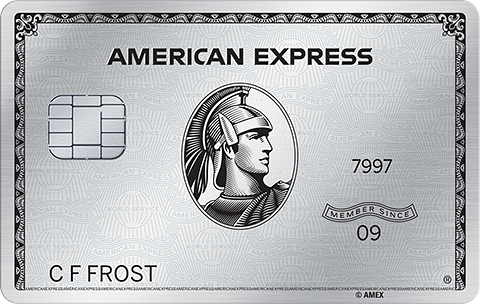
American Express Platinum Card®
You may be eligible for as high as 175,000
Membership Rewards® Points
after spending $12,000 in eligible purchases on your new Card in your first 6 months of Membership. Welcome offers vary and you may not be eligible for an offer.
Annual Fee:
$895

What the Amex Platinum Card Offers
What sets the Amex Platinum apart is the sheer breadth of travel perks, including lounge access, elite loyalty status and lifestyle credits that extend far beyond the airport.
Few premium cards offer such an integrated set of travel benefits, and even fewer extend them to authorized users.
Amex Platinum Travel Benefits and Perks
Nowhere does the Amex Platinum stand out more than when it comes to travel benefits.
Here are some of the card’s key travel perks (excluding statement credits):
- Over $850 worth of annual value with complimentary access to The American Express Global Lounge Collection®
- Complimentary car rental privileges with Avis, Hertz and National
- Complimentary Hilton Honors™ Gold status
- Complimentary Marriott Bonvoy® Gold Elite status
- Complimentary Leaders Club Sterling Status from The Leading Hotels of the World®
- Full suite of travel insurance perks
Among its long list of perks, the most valuable is complimentary access to The American Express Global Lounge Collection®. Enjoy the benefits of the Global Lounge Collection, over $850 of annual value, with access to Centurion Lounges, 10 Delta Sky Club visits (subject to visit limitations) when flying on an eligible Delta flight, Priority Pass™ membership (enrollment required), and other select partner lounges. *As of 01/2026
This network covers more than 1,550 lounges worldwide, including:
- The Centurion® Lounge
- Delta Sky Club®
- Escape Lounges
- Lufthansa Lounges
- Plaza Premium
- Priority Pass™ Select
- Additional Global Lounge Collection partner lounges
Each lounge has different rules regarding entry. For instance, you’ll need to be flying on a Delta-operated or Delta-marketed flight operated by WestJet to enter Delta Sky Clubs, and to enter Lufthansa lounges, you’ll need to be flying with a Lufthansa Group airline. Also, the Amex Platinum has certain caps on lounges such as 10 Delta Sky Club visits each year unless you unlock unlimited access by spending $75,000 in eligible purchases in a calendar year.
However, other lounges, such as those belonging to the Escape, Plaza Premium, Priority Pass and Centurion network, have no specific airline requirements to enter.
With the Amex Platinum in your wallet, airports are no longer a place of chaos, but an opportunity to kick up your feet and enjoy some quiet time (and lots of freebies). The Amex Platinum is by far one of the best credit cards with lounge access.
In addition to unparalleled lounge access, Amex Platinum cardholders enjoy complimentary Hilton Honors™ Gold status, Marriott Bonvoy® Gold Elite status and Leaders Club Sterling status.
This gives you a range of elite benefits with at least two of the largest hotel portfolios in the world, allowing you to say goodbye to subpar hotel stays.
For instance, with Hilton Honors Gold Status, you’ll enjoy access to space-available room upgrades, an 80% earning bonus, the fifth night free on award stays, a daily food and beverage credit at select brands in the United States and a daily continental breakfast for you and up to one additional guest at select brands outside the U.S.
As a frequent traveler, the Amex Platinum also ensures you remain protected. The card comes with a full suite of travel insurance perks with some of the highest industry limits, including the following coverage benefits:
- Trip cancellation and interruption insurance
- Trip delay insurance
- Car rental loss and damage insurance
- Baggage insurance plan*
With these perks at your service, you’re able to travel with peace of mind, knowing that you’re protected.
* Eligibility and Benefit level varies by Card. Terms, Conditions, and Limitations Apply. Please visit Americanexpress.com/benefitsguide for more details. Underwritten by Amex Assurance Company.
Rewards Structure Breakdown
The Amex Platinum is known for luxury travel perks and generous statement credits. However, it falls short compared to other premium cards when it comes to earning rates.
Here’s the Amex Platinum’s bonus spending categories:
- 5X points on flights booked directly with airlines or through American Express Travel® (on up to $500,000 per calendar year)
- 5X points on prepaid hotels booked through Amex Travel
- 1X points on all other purchases (see rates and fees)
If you frequently book cash fares directly with the airline or through American Express Travel, you could earn 5X points back on every dollar spent.
Aside from this, the Amex Platinum lacks a diverse range of bonus spending categories, making it difficult to offset the annual fee through spending. It also means that you’ll need to rely on the card’s welcome offer to earn the bulk of your points.
In comparison, the Chase Sapphire Reserve® earns 8X points on Chase Travel℠ bookings, 4X points on direct purchases with hotels and airlines, 3X points on dining worldwide, and 1X points on all other purchases.
Similarly, the Capital One Venture X Rewards Credit Card offers a flat rate of 2X miles on all spending, ensuring you always get a lucrative return no matter what you pay for.
If you want a card that rewards your spending effectively, the Amex Platinum falls short.
Premium Credits and Statement Credits
The American Express Platinum Card is a heavyweight when it comes to statement credit perks.
As a cardholder, you’ll benefit from the following statement credit perks:
- Statement credit of up to $600, issued in semiannual $300 credits, on prepaid Fine Hotels + Resorts® or The Hotel Collection bookings through American Express Travel®. The Hotel Collection requires a minimum stay of two nights.
- Up to $200 in Uber Cash, issued in monthly $15 credits with a $20 bonus in December, when you add your card to your Uber account and pay for rides or orders in the U.S.*
- Up to $100 credit toward eligible charges with every stay of two nights or more with The Hotel Collection booked through American Express Travel. Eligible charges vary by property.
- Up to $200 statement credits toward airline incidental fees with one preselected eligible airline
- Statement credit toward Global Entry or TSA PreCheck® membership every four years
- $400 Resy Credit + Platinum Nights™ by Resy: Get up to $100 in statement credits each quarter when you use the Platinum Card® to pay for eligible purchases with Resy, including dining purchases at over 10,000 qualifying U.S. Resy restaurants. Enrollment required. As a Platinum Card® Member you have special access to reservations on select nights at participating sought after Resy restaurants in select cities through Platinum Nights™ by Resy. Simply add your Platinum Card® to your Resy profile to book your reservation.
- Up to $300 in statement credits toward eligible digital entertainment purchases, issued in monthly $25 credits
- Up to $300 in statement credits toward purchases at U.S. Lululemon retail stores (excluding outlets) and lululemon.com, issued in quarterly $75 credits
- And several more credits and benefits
* To receive this benefit you must have downloaded the latest version of the Uber app and your eligible Amex Platinum Card must be a method of payment on your Uber account. The Amex benefit may only be used in the United States.
That’s more than $2,500 worth of statement credit perks every year, allowing you to offset the annual fee by almost triple.
However, keep in mind that some of these credits are easier to use than others.
For instance, many of the credits are issued monthly, quarterly or semiannually. If you can’t regularly use these credits within these timeframes, you’ll struggle to fully maximize the card’s value.
So although the Amex Platinum’s statement credits look good on paper, it’s important to calculate the extent to which you’ll be able to fully use each of them.
Likewise, many of these credits are lifestyle-focused credits, such as shopping credits with Lululemon, which won’t be applicable to every cardholder, even if they are frequent travelers.
Therefore, work out the number of credits you’d actually use and how often you could use them to maximize their value and compare your return value against the card’s annual fee.
Amex Platinum Annual Fee Analysis
The Amex Platinum carries an annual fee of $895 (see rates and fees), placing it at the top of the premium travel card category. That fee alone can be enough to scare off casual travelers. However, for the right user, it becomes surprisingly easy to offset through perks, statement credits and point redemptions.
To provide context, here’s how the American Express Platinum Card’s annual fee compares to direct competitors in the same tier of premium travel cards:
- Chase Sapphire Reserve®: $795
- Capital One Venture X Rewards Credit Card: $395
- Citi Strata Elite℠ Card: $595
Although the Amex Platinum is the most expensive premium travel card on the market, it distinguishes itself in two ways:
- The depth of premium travel perks
- The breadth of lifestyle credits
The other factor worth considering is authorized users. Adding supplementary Platinum cards currently costs $195 per additional user, but unlike many competitors, authorized users get:
- Lounge access privileges
- Hotel elite status
- Travel protections
For high-frequency travelers or families who fly often, this dramatically increases the value of the Amex Platinum.
Breaking Down the Cost
While the headline fee is $895 (see rates and fees), the effective annual fee can drop significantly once you account for easy-to-use credits that most cardmembers redeem without changing their behavior. For example:
- CLEAR+ credit
- $200 airline incidental credit
- Uber Cash credit
- Fine Hotels + Resorts / The Hotel Collection credits
These are the credits that many users find easy to use, and maximizing all four would enable you to offset the card’s annual fee.
As long as you can use enough credits and perks to offset the annual fee, holding the card becomes a net gain.
Ultimately, the Amex Platinum is heavily skewed toward high-frequency and luxury travelers who can consistently extract value from lounge networks, hotel status and international award redemptions.
American Express Platinum Card®
You may be eligible for as high as 175,000
Membership Rewards® Points
after spending $12,000 in eligible purchases on your new Card in your first 6 months of Membership. Welcome offers vary and you may not be eligible for an offer.
Annual Fee:
$895

Who Benefits Most from This Card
The Amex Platinum is targeted toward two specific consumer profiles: frequent flyers and luxury travelers.
Let’s see how these groups benefit most from the Amex Platinum and whether you’d fit into these categories.
Frequent Flyers
If you’re hitting the skies on a monthly or even weekly basis, you’ll benefit heavily from holding the Amex Platinum Card. You’ll be able to fully maximize the card’s complimentary lounge access perks at the majority of major domestic and international airports.
You’ll also be able to make use of the $200 incidental fees statement credit as well as benefit from the card’s comprehensive travel insurance perks.
Additionally, if you’re a frequent flyer, chances are that you’re also staying in hotels on a regular basis. That makes the card’s complimentary elite perks with Marriott, Hilton and Leaders Club, as well as its hotel-related statement credits, useful assets for your time on the road.
Luxury Travelers and Premium Service Users
The Amex Platinum is targeted not only to frequent flyers, but also to travelers who prioritize luxury and premium services.
Its lounge access perks get you into some of the most premium airport lounges worldwide and guarantee that you’re well looked after before takeoff.
Its complimentary elite status perks with Hilton, Marriott and Leaders Club also ensure that you’re eligible for premium perks across multiple brands, from room upgrades to food and beverage credits.
Additionally, if you tend to shop with Lululemon, the Amex Platinum’s lifestyle-focused credits will come in handy.
Comparing Value Across Premium Cards
When considering if the Amex Platinum Card is worth it, it’s useful to compare it to other premium travel rewards cards.
Amex Platinum Card vs. Chase Sapphire Reserve
Both the Amex Platinum and the Chase Sapphire Reserve® are heavyweights when it comes to premium travel rewards cards.
Here’s an overview of how the two compare:
| American Express Platinum Card® | Chase Sapphire Reserve® | |
|---|---|---|
| Annual fee | $895 (see rates and fees) | $795 |
| Authorized user annual fee | $195 | $195 |
| Earning rates | • 5X points on flights booked directly with airlines or through American Express Travel® (on up to $500,000 per calendar year) • 5X points on prepaid hotels booked through American Express Travel • 1X points on all other purchases | • 8X points on all purchases made through Chase Travel℠ • 4X points on flights and hotels booked directly with the respective airline or hotel • 3X points on dining worldwide • 1X points on all other purchases |
| Lounge access | Complimentary access to The American Express Global Lounge Collection (including The Centurion® Lounge, Delta Sky Club®, Escape Lounges, Lufthansa Lounges, Plaza Premium, Priority Pass™ Select) | Complimentary Priority Pass Select membership and access to The Chase Sapphire Lounge by The Club |
| Elite hotel status | • Complimentary Hilton Honors Gold status • Complimentary Marriott Bonvoy Gold Elite status • Complimentary Leaders Club Sterling status | • Complimentary IHG® One Rewards Platinum Elite Status (through Dec. 31, 2027) |
| Value of statement credits and additional perks | About $2,500 worth of additional perks (excluding the value of lounge access and hotels status) | About $2,600 worth of additional perks (excluding the value of lounge access and hotels status) |
| Travel insurance coverage | • Trip cancellation and interruption insurance • Trip delay insurance • Car rental loss and damage insurance • Baggage insurance plan | • Trip cancellation and interruption insurance • Trip delay insurance • Auto rental coverage • Baggage loss and delay insurance • Travel accident insurance • Emergency medical and dental benefit • Emergency evacuation and transportation |
As you can see, the Amex Platinum offers greater lounge access and hotel elite status perks while the Chase Sapphire Reserve offers stronger earning rates and more comprehensive travel insurance protections.
Both cards are equal when it comes to statement credit perks, but one may suit you more than the other based on your spending habits. For instance, if you use Uber more than Lyft and have no use with Peloton or Stubhub credits, the Amex Platinum would be a better choice.
One clear advantage the Amex Platinum has over the Chase Sapphire Reserve is that it extends elite status benefits and lounge access privileges to authorized users. This can make paying its additional card user annual fee well worth the extra price tag for frequent travelers.
Overall, deciding between the Amex Platinum vs. the Chase Sapphire Reserve is a case of aligning your travel, spending and lifestyle habits with the card that can support these best.
Amex Platinum Card vs. Capital One Venture X
The Capital One Venture X Rewards Credit Card offers nowhere near as many perks as the Amex Platinum Card, but for many travelers, the Venture X offers the perfect balance of annual fees and value.
The Venture X costs $395 per year to hold, making it $500 cheaper than the Amex Platinum. For this fee, you get:
- A $300 annual travel credit for bookings made through Capital One’s travel booking site
- 10X miles on hotels and rental cars booked through Capital One’s travel booking site (after the $300 credit is used)
- 5X miles on flights and vacation rentals booked through Capital One’s travel booking site (after the $300 credit is used)
- 2X miles on all other purchases
- Complimentary access to Priority Pass network as well as access to Capital One Lounges
- Complimentary Hertz President’s Circle® status
Among its standout perks are 2X miles on all purchases and complimentary access to different lounge networks, including Priority Pass and Capital One’s premium lounges.
While it doesn’t offer a full array of lifestyle and travel-focused credits, the Venture X delivers solid value for an annual fee under $500.
If you’re looking for a card to earn a strong rate of return on everyday purchases, as well as get you into airport lounges, the Venture X is a solid choice. But if you’re after more premium lifestyle and travel focused credits, plus elite status with multiple hotel chains, you’re better off holding the Amex Platinum.
American Express Platinum Card®
You may be eligible for as high as 175,000
Membership Rewards® Points
after spending $12,000 in eligible purchases on your new Card in your first 6 months of Membership. Welcome offers vary and you may not be eligible for an offer.
Annual Fee:
$895

Maximizing Your Amex Platinum Card Value
If you want to make the most of holding the Amex Platinum, you need to maximize its perks, earning rates and redemption opportunities.
Strategic Spending and Perk Maximization
The Amex Platinum’s bonus spending categories offer limited opportunity to earn points on everyday spending. That’s unless you frequently make cash bookings directly with airlines or book flights and hotels through American Express Travel. If that’s the case, you’ll earn 5X points per dollar spent on these purchases.
If you spend $3,000 to $5,000 per year on airfare and hotels, the Amex Platinum could earn you 15,000 to 25,000 points on this spending. Otherwise, you’ll be stuck earning 1X points per dollar spent on all other purchases.
For this reason, you’re best to offset the annual fee through maximizing the card’s perks. With more than $3,500 worth of total perks and statement credits up for grabs, offsetting the card’s $895 annual fee is easily done, as long as the perks align with your spending and travel habits.
Transfer Partners and Redemption Strategies
Another key way to offset the Amex Platinum’s annual fee is through strategic redemptions with Amex’s transfer partners.
Although you can redeem your Membership Rewards points as cash back, statement credits or toward purchases through American Express Travel, the rates are unfavorable.
By transferring your points to one of Amex’s airline or hotel transfer partners instead, you can get between 5 and 10 cents per point redeemed. Using credit card transfer bonuses can generate even more value out of your redemptions.
You can transfer Amex points to the following airline and hotel loyalty programs:
- Aer Lingus AerClub (1:1)
- Aeroméxico Rewards (1:1.6)
- Air Canada Aeroplan (1:1)
- Air France-KLM Flying Blue (1:1)
- All Nippon Airways (ANA) Mileage Club (1:1)
- Avianca LifeMiles (1:1)
- Cathay Pacific Asia Miles (1:1)
- Choice Privileges (1:1)
- Club Iberia Plus (1:1)
- Delta SkyMiles (1:1)
- Emirates Skywards (5:4)
- Hilton Honors (1:2)
- JetBlue TrueBlue (5:4)
- Marriott Bonvoy (1:1)
- Qantas Frequent Flyer (1:1)
- Qatar Airways Privilege Club (1:1)
- Singapore Airlines KrisFlyer (1:1)
- The British Airways Club (1:1)
- Virgin Atlantic Flying Club (1:1)
There are tons of lucrative opportunities to redeem your points with these partner programs.
ANA Mileage Club offers some of the best rates on business-class award fares with Star Alliance partners, opening up a massive network of airlines to choose from.
Air Canada Aeroplan is also a solid bet for booking Star Alliance partner-operated flights, albeit with varying award availability.
Virgin Atlantic Flying Club offers some of the best Saver award fares on transatlantic flights, starting at 6,000 points in economy and 29,000 points in business each way from the East Coast.
In addition to ANA Mileage Club, both Cathay Pacific Asia Miles and Singapore Airlines KrisFlyer offer ample opportunities to book lucrative award travel from the U.S. to Asia as well as partner-operated flights with their respective alliance partners.
Air France-KLM Flying Blue, despite using dynamic pricing, offers cheap business-class fares across the globe on its own metal and SkyTeam partner-operated flights, with a strong presence in Europe and Africa.
Some of these premium-cabin redemptions have retail cash prices between $10,000 and $20,000 per ticket, offering significant cents-per-point value.
So if you redeem your points strategically, you can effectively save thousands of dollars on the retail price of airfare, enabling you to offset the Amex Platinum’s annual fee.
Potential Drawbacks of Amex Platinum to Consider
Despite the Amex Platinum’s lucrative transfer partners and travel perks, the card has two significant drawbacks: limited earning potential on everyday spending and complicated benefits.
Let’s see how these affect our valuation of the Amex Platinum Card.
Limited Everyday Earning Potential
One of the main drawbacks of the Amex Platinum is its lack of diverse bonus spending categories.
Aside from eligible purchases made through American Express Travel and direct spending with airlines, you’re limited to earning 1X point for every dollar spent on all other purchases. This is a measly rate of return that limits your ability to rack up points on your everyday spending.
For example, if you spent $1,000 per month on groceries, you’d earn just 12,000 Membership Rewards points annually on this spending.
In contrast, $1,000 per month on groceries would net you 48,000 points on the American Express® Gold Card (see rates and fees) for less than half of the Amex Platinum’s annual fee (4X multiplier is capped at $25,000 in annual spend, then 1X points thereafter). The Amex Gold’s benefits don’t just stop there and can be a solid choice for those wanting to earn on everyday spending.
Alternatively, the Capital One Venture X Rewards Credit Card offers premium perks like complimentary lounge access—including Capital One Lounges and Priority Pass Select membership—as well as a $300 travel credit for bookings made through Capital One’s travel booking site, all while offering a baseline rewards rate of 2X miles per dollar spent.
If you’re looking for a premium travel rewards card that guarantees 2X points back on every purchase, the Venture X is a solid option.
Overall, this means that your ability to offset the Amex Platinum’s annual fee relies on perk maximization and point redemption opportunities, rather than spending. If you want a card that rewards your everyday spend, the Amex Platinum isn’t for you.
Benefit Complexity and Usage Requirements
As mentioned, the Amex Platinum’s weak earning structure requires you to use its additional perks to offset its annual fee. However, many of these perks come with limitations, such as monthly, quarterly or semiannual timeframes in which each of the credits must be used.
Additionally, many of the perks are lifestyle focused, which may not suit every type of traveler.
While you don’t need to use every credit to offset the card’s annual fee, it’s crucial to calculate whether you’ll be able to maximize enough of the credits to cover the cost of holding the card.
For instance, if you never use Uber and don’t shop at Lululemon or Walmart, you could still offset the annual fee by using the $600 Fine Hotels + Resorts credit, the CLEAR+ credit and the airline incidental fee credit.
By calculating this before applying for the card, you’ll ensure that you get more value out of the card than what you pay in fees.
Making Your Decision
The Amex Platinum isn’t for the casual traveler or individuals wanting a better return on their everyday spending. Its power lies in its perks—lounge access, elite status and statement credits—and these are what ultimately justify its annual fee.
If you’re a frequent flyer or a luxury traveler who appreciates airport comfort, hotel upgrades and frictionless travel experiences, the Amex Platinum delivers massive tangible value. But if you want a card that rewards groceries, gas, dining and daily spending, other premium cards like the Chase Sapphire Reserve® or the Capital One Venture X are a better fit.
Ultimately, the Platinum Card from American Express thrives when paired with the right traveler. If that traveler is you, the return on value is exceptional. If not, the fee will feel steep, and you’ll be better off elsewhere.

New to the world of points and miles? The Chase Sapphire Preferred® Card is the best card to start with.
With a bonus of 100,000 bonus points after you spend $5,000 on purchases in the first 3 months from account opening. , 5x points on travel booked through the Chase TravelSM Portal and 3x points on restaurants, streaming services, and online groceries (excluding Target, Walmart, and wholesale clubs), this card truly cannot be beat for getting started!
after spending $12,000 in eligible purchases on your new Card in your first 6 months of Membership. Welcome offers vary and you may not be eligible for an offer.
Annual Fee:
$895

after you spend $6,000 on purchases in the first 3 months from account opening.
Annual Fee: $795

when you spend $4,000 on purchases in the first 3 months from account opening, equal to $750 in travel
Annual Fee: $395
Editors Note: Opinions expressed here are author’s alone, not those of any bank, credit card issuer, hotel, airline, or other entity. This content has not been reviewed, approved or otherwise endorsed by any of the entities included within the post.
10xTravel is part of an affiliate sales network and receives compensation for sending traffic to partner sites, such as CreditCards.com. This site may earn compensation when a customer clicks on a link, when an application is approved, or when an account is opened. This compensation may impact how and where links appear on this site. This site does not include all financial companies or all available financial offers. Terms apply to American Express benefits and offers. Enrollment may be required for select American Express benefits and offers. Visit americanexpress.com to learn more. All values of Membership Rewards are assigned based on the assumption, experience and opinions of the 10xTravel team and represent an estimate and not an actual value of points. Estimated value is not a fixed value and may not be the typical value enjoyed by card members.
Editors Note: Opinions expressed here are author’s alone, not those of any bank, credit card issuer, hotel, airline, or other entity. This content has not been reviewed, approved or otherwise endorsed by any of the entities included within the post.

bonus cash back
after you spend $8,000 on purchases in the first 4 months from account opening

miles
once you spend $4,000 on purchases within 3 months from account opening, equal to $750 in travel
bonus points
after you spend $5,000 on purchases in the first 3 months from account opening.
Membership Rewards® Points
after you spend $8,000 in eligible purchases on your new Card in your first 6 months of Card Membership. Welcome offers vary and you may not be eligible for an offer. Apply to know if you’re approved and find out your exact welcome offer amount – all with no credit score impact. If you’re approved and choose to accept the Card, your score may be impacted.