10xTravel is part of an affiliate sales network and receives compensation for sending traffic to partner sites, such as CreditCards.com. This site may earn compensation when a customer clicks on a link, when an application is approved, or when an account is opened. This compensation may impact how and where links appear on this site. This site does not include all financial companies or all available financial offers. Terms apply to American Express benefits and offers. Enrollment may be required for select American Express benefits and offers. Visit americanexpress.com to learn more. All values of Membership Rewards are assigned based on the assumption, experience and opinions of the 10xTravel team and represent an estimate and not an actual value of points. Estimated value is not a fixed value and may not be the typical value enjoyed by card members.
Note: Some of the offers mentioned below may have changed or may no longer be available. The content on this page is accurate as of the posting date; however, some of our partner offers may have expired. You can view current offers here.
Choosing the right business credit card isn’t about flashy perks—it’s about whether a card supports how your business operates day to day.
From managing cash flow and tracking expenses to earning rewards on operational costs like advertising, travel and shipping, the right card can deliver meaningful value year after year.
Chase’s lineup of business credit cards stands out for its balance of high-value rewards, flexible redemption options and reasonable annual fees.
Here’s a breakdown of the best Chase business credit cards, where they shine compared to other issuers and how to decide which option—or combination—best fits your business’ spending habits and long-term goals.

Why Chase Business Cards Matter for Small-Business Needs
For small-business owners, a credit card needs to earn rewards and support daily operations without adding friction.
Chase business cards are designed around how businesses actually spend money, from routine operating expenses to larger, planned purchases.
Combined with flexible redemption options, Chase business cards offer a balanced mix of rewards and practicality.
How Chase Business Cards Compare with Other Major Issuers
Compared to other card issuers, Chase’s strategic advantage is balance.
Chase business cards tend to combine solid rewards multipliers in business-specific categories with reasonable fees and broad redemption flexibility. This provides you with the greatest opportunity to maximize rewards while minimizing fees.
In contrast to Chase, American Express business cards often shine when it comes to premium perks and high rewards multipliers in select categories, but those benefits can come with higher annual fees for both the primary cardholder and employees.
Similarly, Capital One business cards tend to keep things simple with flat-rate rewards rates, but they often have fewer category multipliers and business-focused perks.
Chase also enables you to issue your workforce with their own cards free of charge, unlike certain Amex business cards. This not only accelerates the rate at which you earn points, but also helps to streamline your business’s finances and accounting.
Another key advantage of Chase business credit cards is how they complement each other as part of a wider strategy. The ability to turn cashback earnings on $0 annual fee Chase cards into fully transferable Ultimate Rewards points through eligible premium Chase cards offers significant potential for lucrative redemptions.
When a Chase Business Card’s Annual Fee Is Worth It
Chase business card annual fees range between $0 and $795, depending on the card you hold. While three-digit annual fees may sound exorbitant, they can be well worth paying as long as your business can offset the cost through spending and perk maximization.
For instance, the Chase Ink Business Preferred® Credit Card costs $95 per year to hold. Assuming each Ultimate Rewards point was worth 1 cent apiece, you’d need to charge $3,170 per year in the Ink Preferred’s 3X points category to break even on its annual fee. For most businesses, reaching this level of annual spend shouldn’t pose a challenge.
In contrast, to offset the $795 annual fee on the Sapphire Reserve for Business℠, you’d need to spend at least $19,875 in the card’s 4X category or $26,500 in its 3X category.
However, keep in mind that the Sapphire Reserve for Business comes with more than $2,500 worth of cardholder benefits, meaning that you’d realistically need to spend far less than these figures to offset its annual fee, as long as you maximize its perks.
Your business’s annual spending as well as its goals and needs regarding credit rewards will dictate whether an annual-fee-incurring card makes sense.

Chase Business Card Options Explained
Chase offers four Ink Business cards in addition to one Sapphire business card product, all with varying annual fees.
Let’s compare Chase Ink Business cards and the Sapphire Reserve for Business℠ to see which one best fits your needs.
| Chase business card | Annual fee | Best for |
|---|---|---|
| Chase Ink Business Unlimited® Credit Card | $0 | Best for diverse, non-bonus category spending |
| Chase Ink Business Cash® Credit Card | $0 | Best for straightforward expense categories |
| Chase Ink Business Premier® Credit Card | $195 | Best for cashback rewards for high-spend businesses |
| Chase Ink Business Preferred® Credit Card | $95 | Best for flexible, high-value rewards |
| Sapphire Reserve for Business℠ | $795 | Best for high-spending, travel-focused businesses |
Ink Business Unlimited® Credit Card: Best for Diverse, Non-Bonus Category Spending
The Ink Business Unlimited® Credit Card is a top choice for business owners wanting simple yet lucrative rewards.
The Chase Ink Business Unlimited earns a flat rate of 1.5X Ultimate Rewards points on every purchase. It’s a reliable asset, allowing you to earn 1.5X points per dollar spent on all types of business spending, from contractor invoices to tax payments and more.
If you hold only the Ink Business Unlimited card, you can redeem your points as cash back at a rate of 1 cent per point. However, if you hold an eligible premium Chase credit card, you can transfer your points to your premium card account and redeem them for outsized-value travel redemptions.
Aside from its baseline multiplier, the Ink Business Unlimited also offers the following perks:
- 5X points on Lyft rides through Sept. 30, 2027
- Auto rental coverage
- Purchase protection
- Extended warranty protection
As the primary account holder, you can issue employee cards to your staff and set individual spending limits, enabling you to amass thousands of extra points while empowering your workforce.
For a $0 annual fee, the Ink Business Unlimited offers significant value for business owners that prioritize simple yet lucrative rewards.
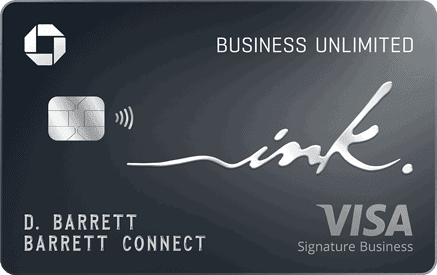
Chase Ink Business Unlimited® Credit Card
Special Limited-Time Offer!
Offer Ending Soon! Earn $1,000
bonus cash back
after you spend $8,000 on purchases in the first 4 months from account opening
Ink Business Cash® Credit Card: Best for Straightforward Expense Categories
The Ink Business Cash® Credit Card rewards business owners on typical operating expenses.
It offers the following rates:
- 5X points at office supply stores and internet, cable and phone service purchases, on the first $25,000 spent per account anniversary year (1X points thereafter)
- 5X points on Lyft rides through Sept. 30, 2027
- 2X points on restaurant and gas station spending on the first $25,000 spent per account anniversary year (1X points thereafter)
- 1X points on all other purchases
Just like with the Ink Business Unlimited, rewards are issued in the form of Ultimate Rewards points that you can redeem either as cash back or transfer to an eligible premium Chase card account for travel partner redemptions.
The ability to earn 5X points on key operating costs offers a significant return on your business’s outgoings. Similarly, 2X points on restaurant and gas station spending enables you to earn a return on client dinners, company get-togethers and daily commutes.
If your business reliably hits the $25,000 spending cap in the 5% and 2% categories, you’d receive 175,000 Ultimate Rewards points every year, enough for a number of business-class award redemptions.
And with the ability to issue employee cards free of charge, racking up hundreds of thousands of points on company spending is easy.
The Ink Business Cash comes with the same travel and spending protections as the Ink Business Unlimited as well as a $0 annual fee.
Overall, if you want strong rewards on key business expense categories, look no further than the Ink Business Cash Credit Card.
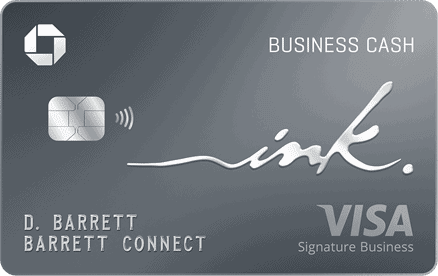
Chase Ink Business Cash® Credit Card
Special Limited-Time Offer!
Offer Ending Soon! Earn $1,000
bonus cash back
when you spend $8,000 on purchases in the first four months after account opening
Ink Business Premier® Credit Card: Best for Cashback Rewards for High-Spend Businesses
The Ink Business Premier® Credit Card offers the most value for high-spending businesses that value cashback rewards.
Unlike the Ink Business Cash and the Ink Business Unlimited, the Chase Ink Business Premier earns cash back exclusively, and at the following rates:
- 2.5% cash back on every purchase worth $5,000 or more
- 2% cash back on all other purchases
You’d need to spend at least $9,750 in the 2% category to break even on the Ink Business Premier’s $195 annual fee. However, if your business spends far more than this, you’d receive a lucrative rate of 2% cash back on all additional spending.
Likewise, the ability to earn up to 2.5% cash back on single transactions greater than $5,000—regardless of the purchase type—is a solid return on non-bonus business spending.
The Ink Business Premier also offers cellphone protection, insuring you up to $1,000 per claim against covered theft or damage (terms apply; maximum of three claims per 12-month period with a $100 deductible per claim).
That said, the Ink Business Premier limits your redemption options compared to other Chase Ink cards and comes with a comparatively hefty annual fee of $195.
So unless you’re focused solely on earning cashback rewards, you’d likely reap more value from other Chase business cards.
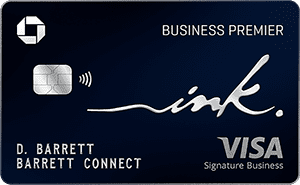
Ink Business Premier® Credit Card
$1,000
Bonus cash back
after you spend $10,000 on purchases in the first 3 months from account opening.
Annual Fee: $195
Ink Business Preferred® Credit Card: Best for Flexible, High-Value Points
The Chase Ink Business Preferred® Credit Card is best for business owners seeking to earn transferable points on a wide-range of business spending categories.
The card offers the following bonus spending categories:
- 5X points on Lyft rides through Sept. 30, 2027
- 3X points on the first $150,000 spent in the following categories (1X thereafter):
- Shipping purchases
- Advertising purchases made with social media sites and search engines
- Internet, cable and phone services
- Travel
- 1X points on all other purchases
If your business hits the $150,000 spending cap in the 3X category, you’d earn a whopping 450,000 Ultimate Rewards points simply by routing your existing operational expenses onto the Ink Business Preferred card.
You can transfer these points to any of Chase’s hotel and airline transfer partners, allowing for outsized value redemptions. Alternatively, you can redeem your points through Chase Travel℠ for up to 1.75 cents apiece when using a Points Boost offer.
In addition to these lucrative redemptions opportunities, Chase Ink Business Preferred cardholders enjoy the following perks and protections:
- Complimentary DashPass for you and your authorized user(s) when you activate by Dec. 31, 2027. Plus, receive a monthly $10 discount on one qualifying non-restaurant order on DoorDash.
- Trip cancellation and interruption insurance
- Cellphone protection
- Auto rental coverage
- Extended warranty protection
- Purchase protection
The Chase Ink Business Preferred is also free of foreign transaction fees, giving your business spending power and lucrative rewards at home and abroad.
Overall, for a $95 annual fee, the Ink Business Preferred offers business owners the biggest bang for their buck with lucrative spending bonuses and redemption options up for grabs.
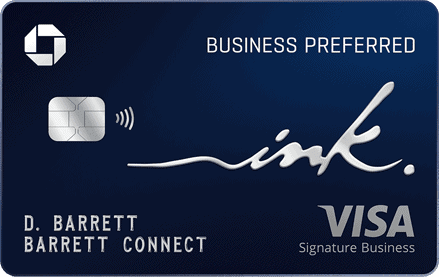
Chase Ink Business Preferred® Credit Card
100,000
bonus points
after you spend $8,000 on purchases in the first 3 months from account opening.
Annual Fee: $95
Sapphire Reserve for Business℠: Best for High-Spending, Travel-Focused Businesses
The Sapphire Reserve for Business℠ is best for high-spending, travel-heavy businesses.
If you’re a consultant who’s constantly on the move or a founder regularly hitting the skies, the Sapphire Reserve for Business ensures you’ll travel in style and comfort.
The card earns the following multipliers:
- 8X points on Chase Travel℠ purchases, including The Edit℠
- 5X points on Lyft rides through Sept. 30, 2027
- 4X points on flights and hotels booked directly
- 3X points on social media and search engine advertising spend
- 1X points on all other spending
These rates allow you to earn points on your company’s advertising and social media marketing expenses as well as on flight and hotel costs, making it perfect if you have a team of sales reps or consultants on the road. Simply issue your staff with employee cards (which are free), set spending limits and let their expenses earn you thousands of extra Ultimate Rewards points.
The Sapphire Reserve for Business also offers more than $2,500 worth of travel perks and business benefits, including:
- Complimentary DashPass membership (worth $120), offering reduced service fees and $0 delivery fees on eligible orders when activated by Dec. 31, 2027. You’ll also receive up to $300 in DoorDash credits per year, including a $5 monthly promo to spend on restaurant orders and two $10 promos each month to save on non-restaurant orders.
- $500 annual statement credit for stays with The Edit℠ issued in semiannual $250 increments (minimum stay of two nights required). Plus, you’ll receive complimentary benefits, such as a $100 property credit, daily breakfast for two, room upgrades and more (subject to availability).
- $400 ZipRecruiter credit, issued in $200 semiannual credits
- $300 annual travel statement credit
- $200 Google Workspace credit
- $120 in annual Lyft credits, issued in $10 monthly increments (through Sept. 30, 2027).
- $100 curated gift card credit, issued in $50 semiannual credits, for purchases from giftcards.com/reservebusiness
- Statement credit every four years toward Global Entry, TSA PreCheck or Nexus membership application fees
- Complimentary IHG® One Rewards Platinum Elite status (through Dec. 31, 2027)
And if you charge $120,000 to your card within a calendar year, you’ll receive the following benefits:
- $500 Southwest Airlines Chase Travel℠ credit
- Complimentary Southwest Airlines A-list status for the remainder of the calendar year plus the following year
- Complimentary IHG One Rewards Diamond Elite status for the remainder of the calendar year plus the following year
- $500 credit for The Shops at Chase
These perks are in addition to some of the most comprehensive travel protection perks offered by any card on the market—allowing you and your staff to stay protected while traveling.
You also receive complimentary Priority Pass Select membership as well as exclusive access to the Chase Sapphire Lounge by The Club, offering a luxurious network of lounges. You can bring up to two guests with you into both Priority Pass and Chase Sapphire Lounges free of charge.
One of the only downsides to the Sapphire Reserve for Business—aside from its eye-watering annual fee of $795—is that the majority of cardholder perks don’t extend to employee cardholders. That means that perks such as lounge access and elite hotel status are exclusive to you as the primary cardholder.
Nevertheless, your employees can still earn the same bonus spending rates and benefit from the same card protections as you.
Overall, if your business spends enough and maximizes the card’s perks, the Sapphire Reserve for Business can be a valuable asset for travel-heavy, high-spending businesses seeking luxury perks and lucrative redemption opportunities.
Sapphire Reserve for Business℠
Special Limited-Time Offer!
Earn 200,000
bonus points
after you spend $30,000 on purchases in your first 6 months from account opening
Annual Fee: $795

Chase Business Card Features That Influence Value
Across all Chase business cards, you’ll enjoy competitive points multipliers combined with free employee cards and spending protections. These features alone make Chase business cards stand out among their competitors.
Beyond these features, each Chase business card is designed to suit different types of business spending and travel profiles.
If you or your employees travel often and you have significant annual expenses, a card like the Sapphire Reserve for Business will go a long way in rewarding your spending and making your travel more comfortable. Perks such as elite hotel status, complimentary airport lounge access, comprehensive travel protections and business-specific statement credits make this card a strong contender for travel-intensive, high-spend businesses.
In contrast, if your business has a diverse spending mix and would prefer to earn a simple rewards currency, a card such as the Ink Business Unlimited or the Ink Business Premier would offer a strong baseline rewards rate and easy-to-navigate redemption options.
If you’re looking for a $0 annual fee option that rewards you in key business expenses, the Ink Business Cash would best reward your spending.
And if your business spends heavily on shipping, eligible advertising purchases, travel and internet, cable and phone services, the Ink Business Preferred will best serve your needs while offering comprehensive redemption options and travel protection benefits.
Approval Requirements and Credit Profiles for Chase Business Cards
When applying for a Chase business credit card, your application will be assessed using a number of factors including your business’s legal structure, credit history and revenue. Your personal credit score may also be taken into account during the application process.
It’s also key to take Chase’s unofficial 5/24 rule into account, which states that you aren’t eligible for a new Chase card if you’ve opened five or more cards from any bank within the last 24 months. While Chase business cards don’t add to your 5/24 count, your 5/24 count is still used to determine your eligibility for a new Chase business card.
So if you’ve maxed out your count, be sure to wait until you’re under 5/24 again.
Key Factors to Evaluate Before Choosing Your Card
Choosing the right Chase business card starts with evaluating how your business spends its money. No single card is best for every business and Chase’s business card lineup is no exception.
Spending volume, category mix, rewards preference and travel frequency all play a role in determining which card delivers the highest long-term value.
The goal isn’t to seek the most premium card, but rather to find the one that best fits your business’s actual behavior.
Spending Volume and Whether It Justifies a Premium Card
Annual fees make sense only when the rewards outweigh the cost. Cards like the Sapphire Reserve for Business come with strong earning rates and cardholder perks, but they require consistent spending.
If your business regularly spends tens of thousands of dollars per year in a specific card’s bonus categories, the math can work in your favor.
However, lower-spend businesses may be better served by a $0 annual fee card that still provides solid rewards without the pressure to break even.
How Business Travel Frequency Shapes the Best Card Choice
For businesses whose employees rarely travel, premium travel perks can quickly become dead weight.
But if you or your staff frequently hit the skies, benefits like travel protections, lounge access and elevated travel earnings can dramatically increase a card’s value.
If travel is only occasional, a simpler rewards structure may be the smarter approach.
Employee Card Needs and Administrative Preferences
Chase allows you to issue employee cards at no additional cost, along with customized individual spending limits and centralized reporting.
If you value clean expense tracking and fewer reimbursement headaches, these administrative tools can be just as important as rewards rates when choosing a card.
Luckily, these are universal across all Chase business cards.
Combining Chase Cards to Maximize Rewards
Chase’s Ultimate Rewards ecosystem benefits business owners who strategically pair cards.
Combining two Ink cards—or pairing an Ink card with the Sapphire Reserve for Business card—can unlock higher redemption value without dramatically increasing complexity.
This approach works best for organized business owners who are comfortable tracking categories and optimizing spend and redemptions.
The Ink Cash or Unlimited and Ink Preferred Pairing Strategy
A classic two-business-card-combo is pairing the Ink Cash or the Ink Unlimited with the Ink Preferred.
The Ink Cash covers everyday operational expenses, while the Ink Preferred handles travel and advertising. When paired, rewards can be pooled into your Ink Preferred account, opening the door to airline and hotel transfer partners while maximizing bonus-category coverage.
This pairing delivers outsized value without adding excessive annual fees.
Alternatively, swapping the Ink Cash for the Ink Unlimited allows you to earn a flat rate of 1.5X points on all non-bonus category spend, which can boost your return on a number of miscellaneous business expenses.
When One Chase Business Card Is the Smarter Choice
For smaller businesses or owners who want simplicity, holding a single Chase business card often wins.
One business card means easier accounting, fewer statements and less time spent optimizing category spending.
If your spending naturally fits one card’s strengths, a single-card setup can deliver reliable returns without unnecessary effort. And if you later wish to upgrade your card setup, you can easily add a second Chase business card to your portfolio to maximize your rewards and redemption opportunities.
Chase Business Credit Card Rewards: How Redemption Impacts Your Choice
The real value of a Chase business card isn’t simply how you earn points but also how you redeem them.
Chase gives business owners multiple redemption options, and the best card choice depends on whether you prioritize flexibility or simplicity.
When Cash Back Works Best
There are two instances in which cash back is the best option for a business.
First, cash back is ideal for businesses that prioritize liquidity and immediate, predictable value.
If rewards are reinvested into operations or used to offset expenses, a straightforward redemption at 1 cent per point eliminates complexity and removes travel planning from the equation.
Second, cash back can be a solid option for businesses that are already earning more points than they can redeem.
If your business is already spending enough on travel rewards cards to net you millions of transferable points every year, diversifying your rewards with a cashback card can often generate more value than extra points would.
In both of these cases, cash back can be a smart option.
When Points and Transfer Partners Offer Better Value
Businesses whose employees travel frequently or owners who enjoy optimizing redemptions, can extract significantly more value through transferring their points to Chase’s travel partners vs. simply redeeming them as cash back.
This approach suits companies that use travel as part of operations or client outreach. It also suits companies that wish to reward their employees with award flights and other travel perks.
If your company can generate six or seven figures worth of points every year, you can offset tens of thousands of dollars worth of company travel, protecting your bottom line.
However, this approach will benefit only businesses and owners who are willing to put in the work to maximize their redemptions.
Using the Chase Travel℠ vs. Transfer Partners
Chase Travel℠ offers ease and consistent value, making it attractive for busy business owners. Depending on the card you hold, you can get between 1 and 1.75 cents per point redeemed.
Alternatively, transferring your Ultimate Rewards points to transfer partners unlocks higher upside—of anywhere between 2 and 10 cents per point—but requires strategic planning and an understanding of transfer partner bookings.
If travel is a priority and you have the time to invest in learning how to maximize your points, transferring them to transfer partners will result in the greatest return on your hard-earned points.
Application and Approval: What to Expect
Applying for a Chase business card is relatively straightforward, but preparation helps. Understanding what Chase looks for and what may be requested after applying can smooth the process.
Personal Credit Score and Business Profile Requirements
Chase typically reviews your personal and/or business credit history, business revenue, time in operation, your business’s legal structure and its overall financial stability.
Depending on the legal structure of your business, you may have different requirements when applying for a card.
Documentation Chase May Request
You should be prepared to verify business information. This may include an EIN or SSN, business address, revenue estimates and basic financial documents.
Requests vary depending on your business’ structure and credit profile.
Timeline from Application to Card in Hand
Although many applicants receive instant decisions, your application may take longer to process. Once approved, cards generally arrive within seven to 10 business days, with expedited shipping often available.
If you’re planning a large purchase or timing a welcome bonus, factoring this timeline into the decision-making process can make a real difference.

Choose a Chase Card That Meets Your Business Goals
The best Chase business credit card is the one that aligns most closely with how your business spends its money.
For some businesses, that means a simple $0 annual fee card that delivers consistent returns without added complexity. For others, it means leveraging premium cards and transferable points to offset major expenses.
Chase’s real strength lies in its ecosystem. Whether you choose a single Ink card or build a multi-card strategy that maximizes Ultimate Rewards, the flexibility to scale your setup over time gives your business room to grow without locking it into a one-size-fits-all solution.
Before applying, evaluate your spending volume and mix as well as your reward preferences. If you match the right Chase business card to your actual business needs, you’ll put yourself in the best position to earn consistent value while keeping your finances simple and efficient.
New to the world of points and miles? The Chase Sapphire Preferred® Card is the best card to start with.
With a bonus of Earn 75,000 bonus points after you spend $5,000 on purchases in the first 3 months from account opening. , 5x points on travel booked through the Chase TravelSM Portal and 3x points on restaurants, streaming services, and online groceries (excluding Target, Walmart, and wholesale clubs), this card truly cannot be beat for getting started!
Special Limited-Time Offer!
after you spend $8,000 on purchases in the first 4 months from account opening
Special Limited-Time Offer!
when you spend $8,000 on purchases in the first four months after account opening
after you spend $10,000 on purchases in the first 3 months from account opening.
Annual Fee: $195
after you spend $8,000 on purchases in the first 3 months from account opening.
Annual Fee: $95
Special Limited-Time Offer!
after you spend $30,000 on purchases in your first 6 months from account opening
Annual Fee: $795
Editors Note: Opinions expressed here are author’s alone, not those of any bank, credit card issuer, hotel, airline, or other entity. This content has not been reviewed, approved or otherwise endorsed by any of the entities included within the post.
10xTravel is part of an affiliate sales network and receives compensation for sending traffic to partner sites, such as CreditCards.com. This site may earn compensation when a customer clicks on a link, when an application is approved, or when an account is opened. This compensation may impact how and where links appear on this site. This site does not include all financial companies or all available financial offers. Terms apply to American Express benefits and offers. Enrollment may be required for select American Express benefits and offers. Visit americanexpress.com to learn more. All values of Membership Rewards are assigned based on the assumption, experience and opinions of the 10xTravel team and represent an estimate and not an actual value of points. Estimated value is not a fixed value and may not be the typical value enjoyed by card members.
Editors Note: Opinions expressed here are author’s alone, not those of any bank, credit card issuer, hotel, airline, or other entity. This content has not been reviewed, approved or otherwise endorsed by any of the entities included within the post.
bonus cash back
after you spend $8,000 on purchases in the first 4 months from account opening

bonus miles
75,000 bonus miles once you spend $4,000 on purchases within the first 3 months from account opening – that’s more than $1,000 in travel value
bonus points
after you spend $5,000 on purchases in the first 3 months from account opening.
Membership Rewards® Points
after you spend $8,000 in eligible purchases on your new Card in your first 6 months of Card Membership. Welcome offers vary and you may not be eligible for an offer. Apply to know if you’re approved and find out your exact welcome offer amount – all with no credit score impact. If you’re approved and choose to accept the Card, your score may be impacted.